Best STEM Toys for Kids: Educational Gifts That Make Learning Fun
11 min read
2035 words
Finding a gift that children will genuinely enjoy while encouraging them to learn can be a rewarding challenge. The best educational toys don’t feel like schoolwork. They invite children to build, experiment, ask questions, solve problems, and discover how the world around them works. That’s where STEM toys come in. STEM stands for science, technology, engineering, and mathematics. These toys turn those subjects into hands-on experiences. From building sets and science experiments to coding activities and solar-powered projects, there are options for a wide range of ages and interests.
Whether you’re shopping for a birthday, Christmas, or simply something new to explore at home, this guide will help you choose educational gifts that make learning fun.
What Are STEM Toys?
STEM toys encourage children to explore concepts related to science, technology, engineering, and mathematics through play. Some introduce simple ideas such as shapes, patterns, and cause and effect, while others challenge older children to build structures, conduct experiments, or write basic computer code.
Not every STEM toy needs batteries, a screen, or a complicated instruction manual. Building blocks, puzzles, measuring tools, and everyday materials can encourage children to think creatively and test their ideas, too.
The most important consideration is finding something that matches your child’s age, interests, and abilities. A toy that is too simple may quickly lose its appeal, while a project that is too challenging can become frustrating without some adult guidance.
Best Types of STEM Toys for Kids
Rather than choosing a toy simply because it carries an educational label, think about what your child enjoys doing. A child who loves building may gravitate towards engineering toys, while a curious nature lover might prefer a science kit.
1. Building and Engineering Toys

Building toys give children opportunities to design, construct, test, and improve their creations. They can experiment with balance, stability, shapes, and spatial relationships while discovering what happens when they change a design.
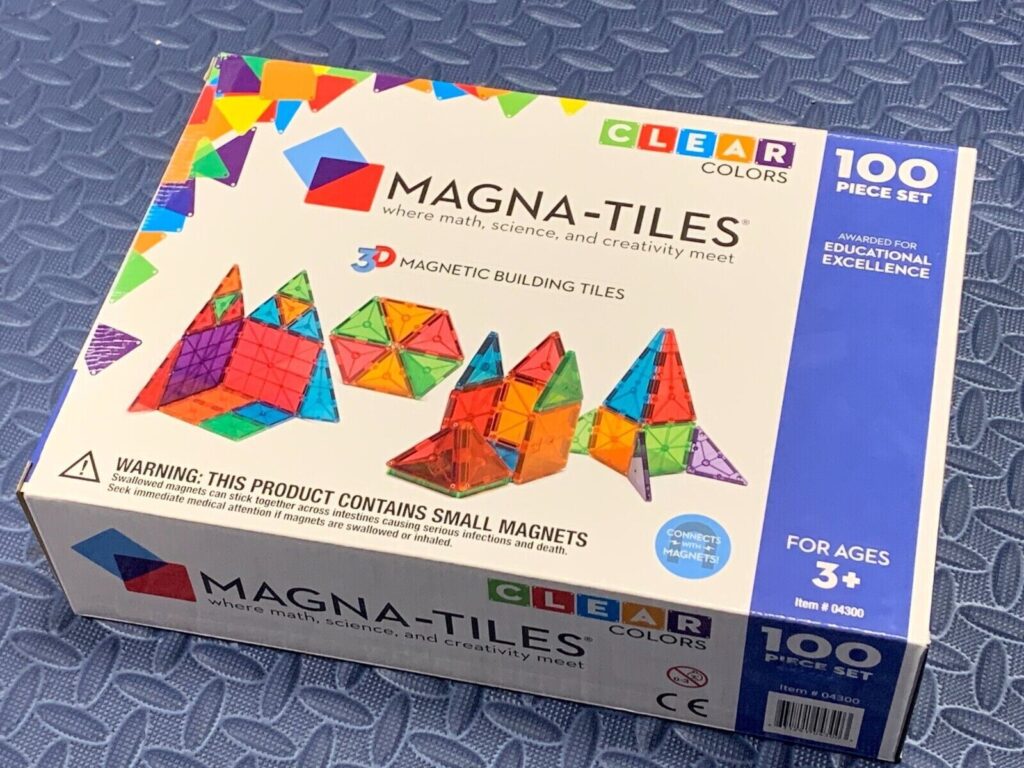
Look for magnetic construction tiles, LEGO building sets, age-appropriate building blocks, bridge-building challenges, marble runs, or mechanical construction kits. Younger children may enjoy making simple towers and imaginative structures, while older children may be ready for more complex designs, moving parts, and engineering challenges.
Gift idea: Choose an open-ended building set that encourages children to create their own designs rather than follow only one set of instructions. Classic LEGO bricks and magnetic construction toys are versatile options that can grow with a child’s imagination and building skills.
2. Science Experiment Kits

Science kits make it possible to explore scientific ideas through practical activities. Depending on the child’s age and interests, a kit might introduce magnets, light, weather, rocks and minerals, plants, or basic chemistry.
One example from Today’s Woman is the Just Add Sun STEAM Kit from Griddly Games. You can read my earlier review for more information about this particular product.
When choosing a science kit, check the recommended age range, the materials included, and whether household supplies are needed. Some experiments require adult supervision, so read the instructions before beginning.
Gift idea: Choose a kit connected to a child’s existing interests, whether that’s space, nature, electricity, or discovering how things work.
3. Coding and Technology Toys

Coding toys introduce children to the logic behind computer programming. Depending on the product, children may arrange instructions, guide a robot through a maze, solve sequencing challenges, or use an app to control a device.
Beginner activities often focus on giving instructions in the correct order and identifying what happens when something changes. Older children may be ready for programmable robots, electronics kits, or beginner-friendly coding projects.
Technology-themed educational toys can also make thoughtful gifts for children who enjoy computers and problem-solving. My earlier article on Tech Will Save Us educational STEM toys explores products designed to encourage children to learn through making and experimenting.
Before purchasing a technology toy, check whether it requires a compatible tablet, smartphone, computer, subscription, or internet connection.
Gift idea: For children who prefer hands-on activities, consider a screen-free coding toy. For those who enjoy digital technology, a programmable robot or beginner coding kit may be a better fit.
4. Solar-Powered and Renewable Energy Kits
Solar-powered building kits introduce children to renewable energy through hands-on construction. Rather than simply reading about solar power, children can assemble models, experiment with small solar panels, and discover how sunlight can power a motor or make a vehicle move.
Look for solar-powered robot kits, model cars, wind turbine construction sets, or renewable energy engineering kits. These projects can introduce children to electricity, energy conversion, mechanical movement, and sustainable technology while encouraging them to build, test, and improve their designs.
When choosing a kit, consider your child’s age and experience. Younger children may enjoy a simple solar-powered vehicle, while older children may be ready for more complex projects involving motors, gears, circuits, or different renewable energy sources.
Gift idea: Choose a renewable energy construction kit that allows children to assemble a working model, such as a solar-powered car or a small wind turbine. Watching their creation work can make abstract science concepts easier to understand and remember.
5. Puzzles, Logic Games, and Mathematical Toys
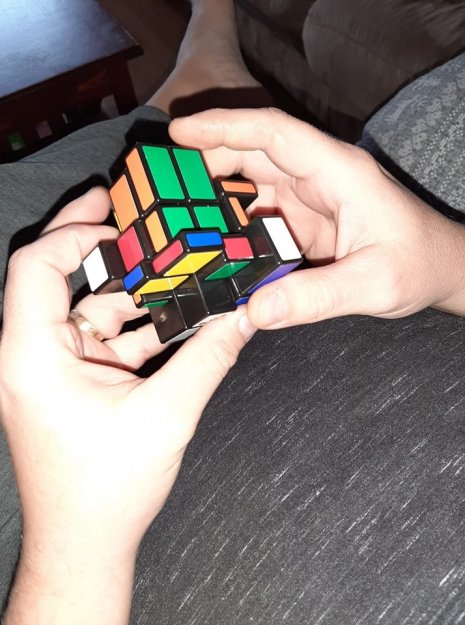
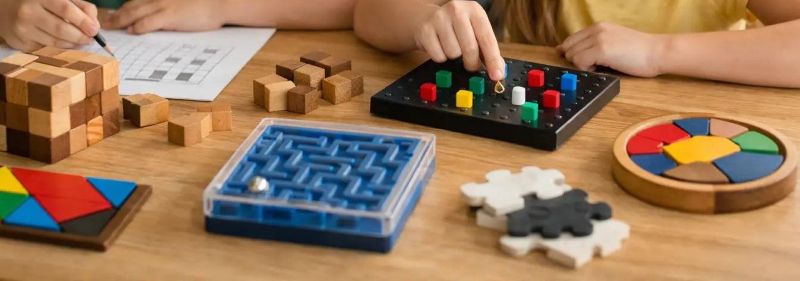
STEM learning isn’t limited to science experiments and electronics. Puzzles and logic games encourage children to recognize patterns, plan their next move, solve problems, and learn from mistakes.
For younger children, counting games, shape sorters, and simple construction challenges can introduce early mathematical concepts. Older children may enjoy strategy games, spatial puzzles, brainteasers, and more complicated building challenges.
These gifts can also be useful for families looking for activities that don’t require a screen.
Gift idea: Choose a puzzle with adjustable difficulty or multiple challenges so children can continue exploring as their confidence grows.
Educational Science Shows Can Inspire Curiosity, Too
Educational gifts don’t have to come in a box. Books, documentaries, and television programs can also introduce children to new subjects and inspire questions they want to investigate.
As a parent, I’ve seen how memorable a favourite childhood show can become. My youngest daughter loved The Magic School Bus when she was little, and now, as a teenager, she loves science. I can’t say that one television series created her interest, but it’s lovely to look back on a show that made scientific ideas entertaining and imaginative.
Ms. Frizzle and her class took viewers on adventures that explored the human body, nature, space, and other scientific topics. For children who enjoy learning through stories, that combination of humour, imagination, and discovery can be an engaging introduction to science.
If your family remembers the series, you can read my review of The Magic School Bus: Revving Up DVD Collection.
You can build on a child’s interest in an educational show by pairing it with a related book, experiment, building project, or visit to a science centre. A child fascinated by space might enjoy a planetarium visit, while a budding nature enthusiast could start a garden or keep a simple observation journal.
How to Choose the Right STEM Toy by Age

Every child develops differently, so age recommendations should be a starting point rather than the only factor in your decision.
STEM Toys for Toddlers and Preschoolers
Young children can explore early STEM concepts through stacking blocks, shape sorters, water play, simple puzzles, and age-appropriate construction toys.
Look for durable materials, easy-to-handle pieces, and activities that encourage children to explore cause and effect. Avoid toys with small parts that pose a choking hazard, and follow the manufacturer’s age and safety guidance.
STEM Toys for Ages 5 to 8
Children in this age group may enjoy beginner science experiments, construction challenges, marble runs, simple coding games, and toys that introduce magnets or basic engineering.
Choose projects with clear instructions and achievable challenges. Some children will want to complete an activity independently, while others will enjoy working alongside a parent or sibling.
STEM Toys for Ages 9 to 12
Older children may be ready for more involved science kits, electronics, robotics, coding activities, and engineering projects. Look for toys that allow them to test ideas, troubleshoot problems, and modify their designs.
If your child already has experience with a particular subject, consider a kit that builds on that knowledge instead of repeating concepts they’ve mastered.
STEM Gifts for Teens
Teenagers who enjoy science and technology may appreciate advanced building kits, electronics projects, robotics, astronomy equipment, or beginner programming resources.
At this age, interests can become quite specific. One teenager may love biology, while another is fascinated by engineering, computers, or environmental science. If you’re unsure, ask what they’d like to explore rather than assuming every teenager wants the same type of educational gift.
What to Look for Before Buying an Educational Toy
Before adding a STEM toy to your shopping cart, consider these practical questions:
- Is it age-appropriate? Check the manufacturer’s recommended age, safety warnings, and supervision requirements.
- Does it match the child’s interests? A toy related to something they already enjoy is more likely to capture their attention.
- What’s included? Check whether batteries, tools, additional materials, or a compatible device are required.
- Can it be used more than once? Reusable materials and open-ended projects can offer more opportunities for exploration.
- Is the learning hands-on? Look for activities that let children make decisions, experiment, and solve problems rather than simply watch something happen.
- Is the price reasonable for what you get? Compare the number of activities, the quality of the components, and the likelihood that your child will use the toy again.
Reading product instructions and recent customer reviews can help you make a more informed decision. Remember that an expensive kit isn’t automatically better than a simple, well-designed toy.
You Don’t Have to Spend a Fortune on STEM Learning
Some of the most enjoyable learning activities begin with materials you already have at home. Children can build towers from cardboard boxes, measure ingredients while baking, observe insects in the garden, create paper airplanes, or test which objects float in water.
Ask questions as you explore together. What do you think will happen? Why did that design fall over? What could we change to make it work better?
These conversations encourage children to make predictions, observe results, and try again. They also show that science isn’t confined to a classroom or a specialized kit.
If your child discovers a particular interest, you can then consider investing in a more advanced toy, book, or experiment set that allows them to explore the subject further.
Frequently Asked Questions About STEM Toys

What is the best STEM toy for kids?
The best choice depends on the child’s age and interests. Building sets are a versatile option for children who enjoy constructing things, while science kits, coding toys, puzzles, and robotics projects can suit children with more specific interests.
Are STEM toys worth buying?
A well-chosen STEM toy can provide opportunities to explore scientific and mathematical ideas through play. However, the educational value depends on how the toy is designed and how the child engages with it. Simple materials and everyday activities can also support learning.
What are good STEM gifts for kids who have everything?
Consider an experience or project rather than another conventional toy. A science kit, a subscription to age-appropriate educational projects, a building challenge, a nature journal, or a visit to a science centre may offer something different.
Can STEM toys be suitable for children who don’t enjoy science?
Absolutely. Start with what the child already likes. A child who enjoys art might appreciate design and construction activities, while a child who loves puzzles may enjoy logic games or beginner coding. STEM can be explored through many different interests.
Final Thoughts: Encourage Curiosity Through Play
The best STEM toys for kids are those that inspire children to explore, experiment, and discover something new. Whether you choose a building set, a science kit, a coding toy, or an activity using everyday household materials, the goal is to make learning enjoyable.
Consider your child’s interests, choose activities that suit their age and abilities, and give them room to experiment without expecting every project to go perfectly. The experience of figuring something out can be just as rewarding as the finished creation.
You never know which activity, book, educational show, or hands-on project might spark a new interest. Sometimes, the best gift is simply an opportunity to explore.