How to Prepare Your Child for a Future With AI
11 min read
2055 words
As my daughter gets ready to head off to high school, I find myself thinking more about her future. Like many parents, I wonder what career she might eventually choose, what opportunities will be available to her and whether the education she receives today will prepare her for the world she will enter as an adult.
My daughter has a processing disorder, which makes me think even more carefully about her next stage of education. I wonder what support and opportunities will help her recognize her strengths, explore her interests and find a direction that suits her abilities. I don’t want her to feel that her learning differences define what she can accomplish. I want her to have choices and the confidence to pursue the things that interest her.
Artificial intelligence adds another layer to these questions. The jobs our children may apply for in 10 or 15 years could look very different from the ones we know today. Some occupations will change, new opportunities will emerge, and the skills employers look for may shift along the way. I don’t expect my daughter to have her future figured out before she even starts high school, but I do think it is worth asking how we can help our children prepare for a working world that is becoming increasingly difficult to predict.
How Is AI Changing the Future of Work?
Artificial intelligence is already changing how people work. Businesses are using AI to analyze information, summarize documents, handle customer enquiries, organize data and assist with tasks that once required considerable time. In some workplaces, employees use AI to work more efficiently. In others, technology is changing the responsibilities associated with existing jobs.
This does not necessarily mean that AI will eliminate every job involving tasks it can perform. Some occupations may change considerably without disappearing altogether. Employees may be expected to understand new technology while bringing their own experience, judgment and knowledge to their work. The ability to use technology effectively may become an expectation in careers that previously had little connection to it.
A Canadian survey commissioned by Embark and conducted in partnership with Angus Reid in July 2026 found that 86% of Canadians expect the skills employers value to change significantly over the next 25 years. Yet only 20% believe children are being properly prepared for the careers that will exist in 2050. The same survey found that 80% believe people will need to invest more in education and training throughout their working lives.
These findings help explain why parents are thinking differently about their children’s education. Rather than trying to predict exactly which jobs will disappear, it may be more useful to help children develop the ability to learn, adapt and make informed decisions as opportunities change. You can read more in the Embark Future Education and Career Paths report.
What Skills Will Children Need for Future Careers?
There is no definitive list of skills that guarantees a successful career. Different occupations will require different qualifications and abilities, but research suggests that a combination of technical knowledge and human skills will remain important.
The World Economic Forum’s Future of Jobs Report 2025 surveyed more than 1,000 employers representing over 14 million workers across 55 economies. Employers identified analytical thinking as their most important core skill, followed by resilience, flexibility, agility, leadership and creative thinking. AI and big data, cybersecurity and technological literacy were among the fastest-growing skills.
The findings suggest that children will need more than familiarity with computers and software. They will also need to understand information, solve problems, communicate and adjust when circumstances change.
Critical Thinking and Problem-Solving

Children need to learn how to think through a situation rather than simply look for the quickest answer. Critical thinking involves asking questions, examining information, recognizing when something does not make sense and deciding what to do next. This becomes especially important when AI can produce answers that sound convincing but may be incomplete or incorrect.
Parents can encourage these abilities through everyday experiences. When a child encounters a problem, give them an opportunity to consider possible solutions instead of immediately stepping in. Ask why they chose a particular approach or whether there might be another way to reach the same result. These conversations help children become more confident in their own judgment and understand that not every problem has one obvious answer.
Communication, Creativity and Teamwork
Even as technology becomes more advanced, people will continue to need to communicate with one another. They will have to explain ideas, listen carefully, ask questions, work with colleagues and resolve disagreements. Good communication involves more than speaking confidently. It includes understanding different perspectives, writing clearly and knowing how to express an idea so others can understand it.
Creativity is equally valuable. AI can generate stories, images, designs and suggestions, but people bring their own experiences, imagination and perspectives to creative work. Creativity is not limited to artistic careers. It can mean finding a better way to complete a task, developing a product or approaching a difficult problem from a different angle. Children benefit from opportunities to make things, experiment, build, draw and explore ideas without worrying about getting everything perfect.
Teamwork brings these abilities together. School projects, friendships, extracurricular activities and family responsibilities give children opportunities to cooperate, share ideas and learn how to handle differences of opinion. These experiences help prepare them for workplaces where people with different skills and backgrounds need to work toward common goals.
Adaptability and a Willingness to Keep Learning
The workplace may continue changing throughout our children’s careers. The education or training they receive when they leave school may not be the only learning they need. Adaptability means being willing to develop new skills, consider different opportunities and adjust when circumstances change.
I think this is an important message for children entering high school. They do not have to know exactly what they want to do for the rest of their lives. They need opportunities to discover what interests them and the confidence to keep learning as those interests develop. Choosing one direction does not mean they can never change their minds.
Should Children Learn Coding to Prepare for the Future?
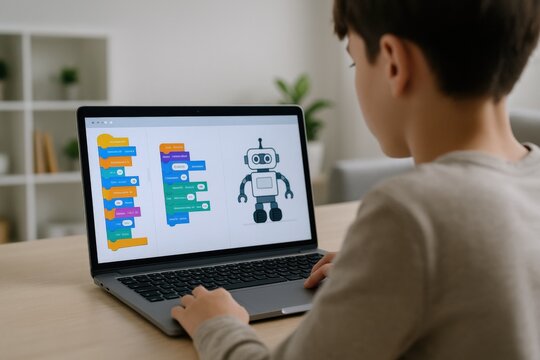
Coding and computer science can open doors to interesting career opportunities, particularly for children who enjoy technology, mathematics and problem-solving. Learning how software works can also help young people understand the digital world around them. However, I don’t believe every child needs to become a programmer to have a successful future.
Technology is relevant to many occupations, but so are communication, practical knowledge, creativity and the ability to work with people. The Royal Bank of Canada’s report, The Coming Skills Revolution: Humans Wanted, examined how technology is changing Canadian employment and highlighted the importance of foundational skills such as critical thinking, coordination, active listening and complex problem-solving.
A child who enjoys working with their hands may find satisfaction in a skilled trade. Another may be interested in healthcare, business, education, design, science or entrepreneurship. These interests deserve encouragement too. The goal should be to help children discover their strengths rather than push them toward a particular career simply because it is associated with technology.
Are University, College and Skilled Trades Still Good Career Choices?
For many families, thinking about a child’s future also means considering what happens after high school. Parents may wonder whether university will still be worthwhile, whether college offers good employment opportunities or whether a skilled trade might be a more practical route. There is no single answer. The right pathway depends on a student’s interests, career goals and the qualifications required for the work they want to pursue.
University remains important for many professions, including medicine, teaching and certain scientific and technical careers. College programs can provide career-focused education and practical training, while apprenticeships and skilled trades combine hands-on experience with technical instruction.
The 2026 Embark and Angus Reid survey found that 50% of Canadians identified trade school or apprenticeships as the best way to prepare a child for a successful career in 2050, compared with 37% who selected a university pathway. These figures reflect the opinions of survey respondents, not a guarantee of future employment opportunities. They do, however, show that families are considering a wider range of education and training options.
I want my daughter to understand that success does not have to look the same for everyone. A meaningful career can come from many different educational and training paths.
Why Reading, Writing and Mathematics Still Matter

With AI tools capable of answering questions, summarizing information and generating written content, some people wonder whether traditional academic skills will become less important. I believe the opposite is true. Children need strong reading skills to understand information, follow instructions, evaluate sources and learn new subjects. Writing helps them organize their thoughts and communicate clearly, while mathematics develops logical thinking and provides a foundation for understanding numbers, measurements, finances and data.
Technology can assist with some tasks, but children still need the knowledge to recognize whether the results make sense. A student who cannot understand the information being presented will have difficulty evaluating whether an AI-generated answer is accurate. These foundational skills will continue to matter regardless of which career a child eventually chooses.
Why Financial Literacy and Independence Matter
Preparing children for adulthood involves more than choosing a career. They will also need to understand how to manage money, make decisions and take responsibility for their lives. Financial literacy is an important skill that can easily be overlooked when conversations focus on technology and future employment. Children benefit from learning about saving, budgeting, spending choices, banking and the difference between needs and wants.
Independence matters as well. Being able to organize responsibilities, manage time, ask for help and make thoughtful decisions can support children both at school and in the workplace. Parents can encourage these abilities by giving children age-appropriate responsibilities and allowing them to make choices. These everyday experiences help build confidence gradually.
How Parents Can Help Children Explore Future Careers

As my daughter prepares for high school, I am reminded that this next stage is about more than moving from one school building to another. It is an opportunity for her to discover new interests, meet different people, explore subjects and begin thinking about the possibilities available to her. I don’t want to put pressure on her to choose a career before she knows what she enjoys. I would rather she have the opportunity to explore.
Parents can encourage this by talking about different occupations, visiting workplaces when opportunities arise, exploring extracurricular activities and discussing the education or training involved in various careers. Asking children what they enjoy doing, which subjects interest them and what kinds of problems they like solving can also help them recognize possible directions.
A child who enjoys helping others might be interested in healthcare, education or community services. Someone who likes building and fixing things may enjoy exploring engineering, construction or the skilled trades. A child who enjoys organizing projects or developing ideas might discover an interest in business or entrepreneurship.
As children get older, high school guidance counsellors can help them understand course selections, prerequisites and possible postsecondary pathways. These conversations are worth having early enough that students can explore their options without feeling pressured to make permanent decisions. For children who learn differently, it is also important to consider what support will help them demonstrate their abilities and pursue their interests. A learning difference should not automatically rule out a career or education pathway.
Preparing Children for a Future We Cannot Predict
I still have many questions about what my daughter’s future will look like. I wonder what jobs will be available when she finishes school, what qualifications employers will expect and how much technology will change the workplace by then. But I also know that she does not need to have all the answers today. As she starts high school, there will be time to learn, explore, make mistakes and discover what she enjoys.
Perhaps the most valuable thing we can give our children is not a carefully chosen career path, but the confidence and skills to find their own way. Encouraging curiosity, critical thinking, communication, adaptability and independence can help prepare them for opportunities we cannot yet imagine.
The future of work may be changing, but our children will still need to understand people, solve problems, make decisions and continue learning. Those are abilities worth developing at every age.