Are Dollar Store Dog Treats Safe? What Every Owner Should Know
10 min read
1868 words
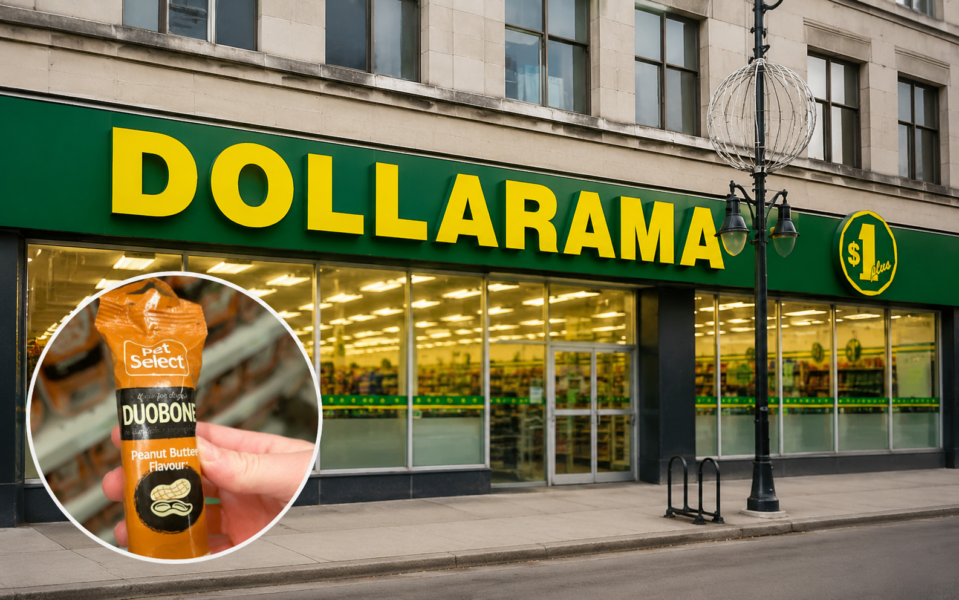
We’ve all been there. You’re strolling through Dollarama or your local discount store, picking up some paper towels, storage bins, and dish soap, when you find yourself drifting down the pet aisle. It’s so easy to drop a few treats into your cart without giving it a second thought. After all, a treat is just a treat, right? But as you head to the checkout, a quiet question might pop into the back of your mind: Do we really know what we’re giving our dogs when we buy unfamiliar, low-cost treats? One unpleasant 72 hours has now taught me to look a little closer at what was going into my dog’s bowl, especially when it comes to dollar store dog treats.
My Experience: When a Treat Didn’t Agree With My Dog
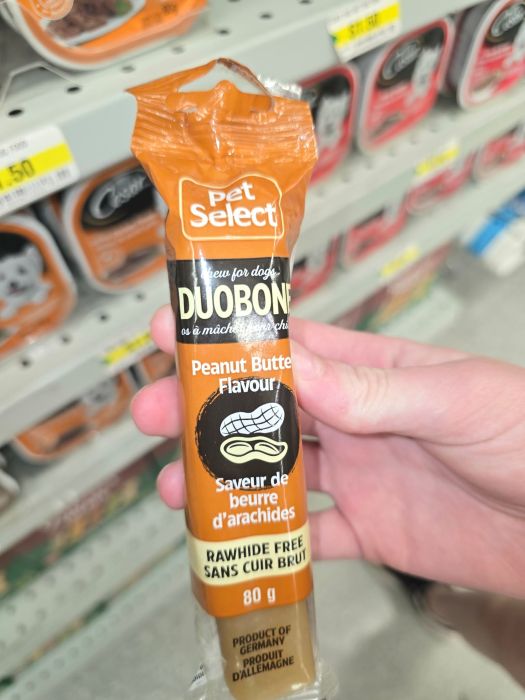
A few weeks ago, I was at Dollarama in Kingston, Ontario, when I picked up a Pet Select Bacon & Cheese Duo Bone. I gave my Shih-Poo only half of the treat. What followed was a miserable 72 hours of sudden, watery diarrhea.
She lost her appetite, her stomach was loudly gurgling, and we were making trips outside every few hours, including in the middle of the night.
This wasn’t actually the first time she had experienced diarrhea after eating this particular bone. There had been a previous occasion when she developed diarrhea after having one, but at the time, we didn’t think much of it. Dogs get upset stomachs for all sorts of reasons, and we hadn’t made a connection between the treat and what was happening.
This time was different. The diarrhea was severe and lasted for more then 72 hours, even though she had only eaten half of the bone. Looking back, the earlier episode made me wonder whether we had overlooked a possible pattern.
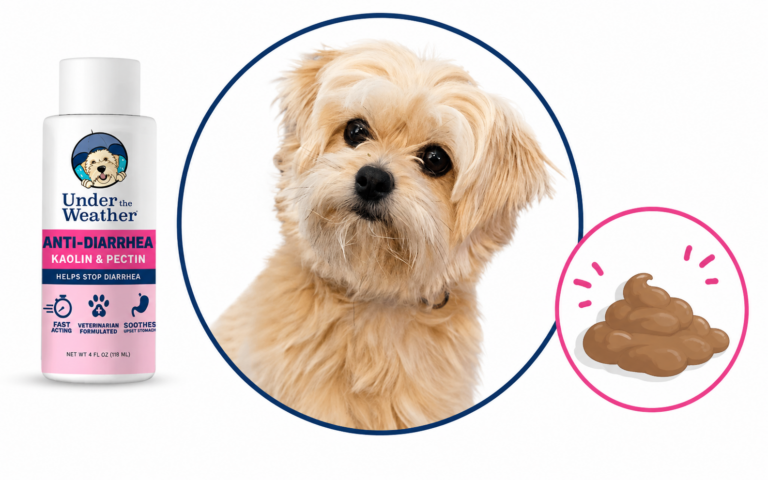
I immediately stopped giving her the treat. Over the next couple of days, I focused on keeping her hydrated and offering food that was gentle on her stomach. Thankfully, her appetite eventually returned, and her stool gradually firmed up with the help of Under the Weather Anti-Diarrhea Liquid for Dogs. She is now getting back to her energetic self.
That experience was enough to make me much more cautious about what I put in my dog’s bowl, regardless of how appealing the price or packaging might be.
Who Actually Makes the Pet Select Dog Treat?
One thing that caught my attention when I looked more closely at the Pet Select Duo Bone was the information about where the product comes from and who is responsible for bringing it into Canada.
The package identifies Dollarama, Montréal, Québec, as the importer. It also states that the product comes from Germany.
What I couldn’t find on the portion of the packaging available to me, however, was the name of the actual manufacturer that produced the dog chew.
That distinction matters.
Being imported by Dollarama does not necessarily mean that Dollarama manufactured the treat. An importer is responsible for bringing a product into the country, while the manufacturer is the company that actually produces it.
For pet owners, knowing who manufactured a food or treat can be useful. If a dog becomes sick after eating a particular product, having the manufacturer’s name, contact information, lot number, and other identifying details can make it easier to ask questions or report a concern.
In this case, the package provided an origin of Germany and identified Dollarama in Montréal as the importer, but I was unable to determine from the labeling who actually manufactured the treat.
There is also some older information that makes the sourcing of Pet Select products worth looking at more closely. A 2014 post published by PIJAC Canada referenced Pet Select products as being imported from Thailand.
Don’t just look at the price and the picture of the dog on the front of the package. Turn the bag over and find out as much as you can about what you’re buying, where it came from, and who is responsible for making it.
What to Check Before Buying Dollar Store Dog Treats
Buying dollar store dog treats doesn’t automatically mean you’re buying something unsafe, but it does mean you should take a closer look at the product before giving it to your dog.
Before dropping an unfamiliar bag of treats into your cart, take a minute to check the following:
- Check the best-before date: Make sure the product is within its recommended date and hasn’t been sitting on the shelf for an unusually long time.
- Read the complete ingredient list: Look for clearly identified ingredients and consider whether anything listed could be a problem for your dog.
- Look for a clearly identified manufacturer or distributor: A legitimate product should provide enough information to identify the company responsible for it.
- Check the product’s origin: Look at where the treat was manufactured or packaged. This can provide useful information about traceability.
- Make sure the package is sealed and undamaged: Avoid products with tears, punctures, broken seals, or other signs of damaged packaging.
- Inspect the treats when possible: Look for anything that appears unusual, including mould, significant discoloration, or an unexpected change in texture or smell.
- Check for recalls or safety advisories: Canadian pet owners can check current recall and safety information from the Canadian Food Inspection Agency (CFIA).
- Consider your dog’s history: If your dog has known food allergies, sensitivities, or a history of digestive problems, pay particular attention to the ingredients.
- Start with a small amount: When introducing an unfamiliar treat, don’t immediately give your dog several pieces. A small amount lets you see how your dog responds.
What I Do Differently Now
My experience with my dog changed my shopping habits completely.
Today, I take a much more mindful approach to buying dollar store dog treats and other unfamiliar pet snacks:
- I read the label first: If I don’t understand what I’m buying or the product doesn’t provide enough information, I leave it on the shelf.
- I look for transparent manufacturers: I prefer companies that clearly identify themselves and provide useful product information.
- I introduce new treats gradually: I start with a small piece rather than giving my dog several new treats at once.
- I keep the original packaging: I keep the bag until my dog has finished the treats. If he becomes sick, I’ll have the lot number, ingredients, manufacturer information, and other details available.
- I pay attention to his response: I watch for changes in appetite, energy, stool, vomiting, itching, or other unusual symptoms after introducing something new.
That doesn’t mean I never buy an inexpensive treat anymore.
It means I’m much less likely to buy something simply because the packaging looks appealing or the price is hard to resist.
What We Used to Help My Dog’s Diarrhea
After my Shih-Poo’s diarrhea continued, my husband called our local Pet Valu to ask what they recommended. We explained what was happening and that she had been experiencing watery diarrhea for about 72 hours.
They recommended Under the Weather Anti-Diarrhea Liquid for Dogs, so we went out and purchased it.
The product is specifically formulated for dogs experiencing occasional diarrhea and digestive upset. It contains kaolin as its active ingredient, along with pectin and other ingredients intended to help firm loose stool and soothe the digestive tract.
We followed the directions on the bottle and gave it to her as recommended. Her stool gradually started to firm up, her appetite returned, and she slowly began acting more like herself.
After dealing with three days of watery diarrhea, seeing an improvement was a huge relief.
Of course, our experience shouldn’t be taken as a guarantee that the product will work for every dog. Diarrhea can have many different causes, and an anti-diarrhea product isn’t a substitute for veterinary care. If a dog has persistent or severe diarrhea, repeated vomiting, blood in the stool, significant lethargy, or signs of dehydration, it’s important to contact a veterinarian.
For us, calling Pet Valu was a helpful step. We weren’t sure what to do next, and rather than simply choosing a product at random, my husband spoke with someone at the store who recommended a product specifically intended for dogs with diarrhea.
When Diarrhea Is More Than Just an Upset Stomach
A single episode of mild loose stool isn’t necessarily an emergency, but diarrhea can sometimes be a sign of a more serious problem. Keep a close eye on your dog and contact your veterinarian if you’re concerned, particularly if symptoms are persistent or severe.
Seek prompt veterinary attention if you notice:
- Diarrhea that persists or is getting worse
- Blood in the stool or black, tarry stool
- Repeated vomiting
- Significant lethargy or weakness
- Signs of significant abdominal pain
- Difficulty keeping water down
- Signs of dehydration
- A major change in appetite or behaviour
Puppies, senior dogs, and dogs with underlying health conditions may become dehydrated more quickly and can require veterinary attention sooner.
When in doubt, it’s always better to contact your veterinarian rather than assuming diarrhea is simply the result of a new treat.
The Bottom Line
This experience has definitely changed the way I will be shopping for my dog’s treats. Now, I will be taking a few extra minutes to turn the package over, read the ingredients, look for the manufacturer and importer information, check where the product comes from, and think about whether I really know what I’m giving my dog.
I also learned an important lesson about paying attention to patterns. The first time my Shih-Poo developed diarrhea after eating this particular bone, we didn’t think much of it. After the second and much more severe episode, I couldn’t ignore the connection. I still can’t say for certain that the bone caused her illness, but two episodes were enough for me to decide that it wasn’t worth taking another chance.
A few dollars saved on dollar store dog treats isn’t much of a bargain if it leaves your dog sick and your family up all night worrying about her. That doesn’t mean every inexpensive treat is bad, or that you need to avoid discount stores altogether. It simply means that when it comes to something your dog is going to eat, it’s worth looking beyond the packaging.
Our dogs can’t read the label or tell us what’s bothering them. We have to do that part for them. Sometimes, spending an extra few minutes checking a treat before putting it in the cart may be the most important thing you do that day.
Disclaimer: This article is based on personal experience and general information and is not intended to provide veterinary or medical advice. Every dog is different, and diarrhea or other symptoms can have many possible causes. Information about products mentioned in this article should not be considered a recommendation or substitute for advice from a qualified veterinarian. If your dog develops severe, persistent, or worsening symptoms, including repeated vomiting, blood in the stool, lethargy, loss of appetite, abdominal pain, or signs of dehydration, contact your veterinarian promptly.
I have also reached out to Dollarama for comment regarding the product’s manufacturer, sourcing, and my dog’s reaction. If the company responds, I will update this article with any information they provide.