
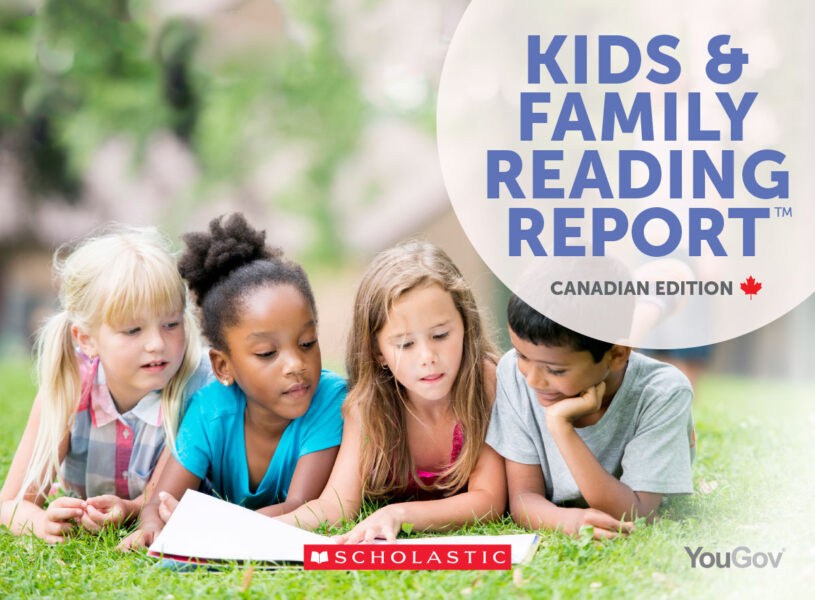
Scholastic Kids & Family Reading Report: National Survey
11 min read
2155 words
There’s a magic to a good book. It transports us, teaches us, makes us laugh, and helps us understand the world and ourselves a little better. For children, this magic is not just entertainment; it’s a cornerstone of their development, their education, and their future success. That’s why the release of the first Kids & Family Reading Report™, Canadian Edition by Scholastic Canada, the nation’s largest distributor of children’s books and educational materials, is such a pivotal moment.
This comprehensive national survey dives deep into the reading attitudes and behaviours of Canadian children aged 6–17 and their parents, even including insights from parents of little ones aged 0–5, across both French- and English-speaking Canada. The findings are a powerful reminder of the profound impact reading has, and a clear call to action for every adult who cares about the next generation. The report shines a light on everything from what children look for in a story to the critical importance of reading aloud and the role of schools and libraries. It’s an invitation to “Open a World of Possible” for every child, but it also reveals some surprising challenges that we, as a community, must address head-on.
Nancy Pearson, Co-President of Scholastic Canada, aptly summarizes the report’s gravity: “The Kids & Family Reading Report, Canadian Edition underscores the importance of reading and making sure kids have access to books they want to read.” She highlights a startling revelation – Canadian homes surveyed reported significantly fewer books than their counterparts in the U.S., U.K., and Australia. Compounding this, Canadian children trend higher when it comes to having difficulty finding books they like, a challenge parents often underestimate. “But the report also shows that schools, libraries and teachers all play an equally important role in guiding children with book selection and reading frequency. It only emphasizes how vital it is for adults to take an active role in raising strong readers,” Pearson concludes.
The message is clear: while the desire for children to be good readers is high, there are tangible gaps in access, choice, and sustained engagement that we, as parents, educators, and community members, have the power to bridge.
The State of Reading in Canada: A Foundation to Build Upon
Let’s start with the good news, which forms a strong foundation for our efforts. The vast majority of Canadians understand the vital role reading plays: a staggering 91% of kids aged 6–17 and 97% of parents agree that being a good reader is inherently important for a child’s future. This widespread belief is a powerful starting point.
And kids are reading! On average, children aged 6–17 devoured 23 books in the last year, and 86% are currently engrossed in a book or have just finished one for fun. This isn’t just about ticking boxes; frequent readers, those who pick up books for fun 5-7 days a week, gain tangible benefits. They report greater inspiration (76%) and a profound sense of accomplishment (90%) from their literary adventures. Furthermore, the report draws a clear correlation: kids who read frequently are more likely to have parents who model this behaviour by reading books 5-7 days per week themselves. This underscores the undeniable influence of parental example and the environment we create at home.
However, beneath these encouraging statistics lie crucial challenges that demand our attention and proactive solutions. The finding that Canadian families report, on average, only 80 books in their homes – a number significantly lower than other surveyed nations – should give us pause. While frequent readers’ homes boast 118 books, infrequent readers’ homes average a mere 61. This disparity in book access is a critical barrier to cultivating a love for reading.
Even more concerning is the struggle children face in finding books they genuinely connect with. Despite 94% of children agreeing that their favourite books, and the ones they are most likely to finish, are those they picked out themselves, almost half (47%) admit they have trouble finding books they like. This percentage skyrockets to 69% for infrequent readers, highlighting how quickly disengagement can set in when choice is limited or difficult to exercise. Alarmingly, parents often underestimate this hurdle, with only 36% acknowledging their child’s difficulty in finding suitable books. This disconnect between parent perception and child reality is a key area where we can make a difference. We must listen to our children, understand their preferences, and empower them to choose.
Empowering Young Readers: Choice, Diversity, and the Magic of Laughter

The report makes it powerfully clear: when it comes to what makes children want to read, choice is paramount. Imagine a child walking into a library or bookstore, eyes gleaming with anticipation, knowing they get to select their next adventure. That self-selected book, according to 94% of children, is their favorite, and the one they are most likely to finish. This isn’t merely a preference; it’s a proven pathway to sustained engagement and a lifelong love of reading.
Yet, nearly half of Canadian children (47%) struggle to find books they like, a figure that jumps to a staggering 69% for infrequent readers. This isn’t a reflection of a lack of interest in reading, but rather a profound unmet need for relevant, engaging, and accessible material. As adults, we often guide children towards what we think they should read, but the data strongly persuades us to shift our approach. Giving children autonomy in book selection isn’t just a kind gesture; it’s an incredibly effective strategy for fostering strong, independent readers. We must ensure robust access to diverse collections, whether through well-stocked home libraries (aim for more than 80!), vibrant school libraries, or accessible public libraries, and empower children to browse, explore, and choose.
Beyond choice, the report also illuminates what children and parents are actively searching for in books. Diversity matters deeply. One in five children and parents actively seek out books with characters that are culturally or ethnically diverse. For 74% of these parents, “diversity in children’s books” means “people and experiences that are different than those of my child.” This isn’t just about representation for representation’s sake; it’s about building empathy, broadening worldviews, and ensuring every child sees themselves and their peers reflected in the stories they read. Diverse stories break down barriers, foster understanding, and prepare children for an increasingly interconnected world. We have a persuasive case to make for publishers, libraries, and schools to prioritize and promote diverse narratives that truly reflect Canada’s rich tapestry and the global community.
And let’s not forget the power of joy! Nearly half of kids aged 6-17 (46%) and parents (45%) want books that make kids laugh. Laughter is a powerful gateway to engagement. Furthermore, parents (41%) and kids (39%) also seek out characters who face a challenge and overcome it. These findings are a blueprint for what truly resonates with young readers. Books don’t always have to be “educational” in the traditional sense; sometimes, the best lessons are learned through laughter, relatable struggles, and triumphant journeys. We must champion books that are entertaining, diverse, and empowering, recognizing that fun is not a distraction from learning, but often its most effective catalyst.
The Enduring Power of Reading Aloud and the School’s Vital Role
The bond forged through a shared story is unique and irreplaceable. The power of reading aloud is unequivocally affirmed in the report. A heartwarming 93% of kids aged 6–8 and 87% of parents attest to enjoying read-aloud time. For parents of children aged 0–5, reading books aloud, telling stories, and simply talking together are recognized as among the most crucial activities for developing language skills. These early interactions lay the critical groundwork for literacy, vocabulary, and a lifelong love of stories.
However, a concerning trend emerges: while more than half (61%) of children aged 0–5 are read aloud to 5–7 days per week, this frequency drops significantly after age 5 (to 41%) and plummets dramatically after age 8 (to a mere 16%). This decline occurs despite a clear desire from children themselves: a striking 58% of kids aged 6–8 who are no longer read aloud to explicitly stated they wished reading aloud had continued. And, notably, boys are more likely than girls to express this longing. This is a powerful, persuasive argument for parents to continue this cherished ritual even as their children grow older and learn to read independently. The top reasons parents and children alike cherish read-aloud time are not just about literacy; they’re about connection: “It is a special time with my child/parent,” “Reading together is fun,” and “It creates a love for reading.” These are benefits that transcend age and continue to nurture the parent-child relationship and a positive association with books. Let’s not let the opportunity for this special connection fade too soon.
The report also sheds light on the critical role of reading in Canadian schools. Sixty-five percent of kids aged 6–17 have the opportunity to read independently during the school day. What’s truly inspiring is their response to this: 42% wish they could do it more often, and 34% declare, “It’s one of my favorite parts of the school day.” This isn’t passive acceptance; it’s active enjoyment and a yearning for more dedicated reading time. The benefits of this independent reading time at school are undeniable: kids who engage in it are more likely to find reading important, like reading for fun, agree that books have inspired them to believe in themselves, and, crucially, read an average of 15 more books per year than their counterparts who lack this opportunity. This provides irrefutable evidence for the profound impact of dedicated, self-selected reading time within the school curriculum.
And let’s not overlook the cornerstone of literacy access within schools: the library. An overwhelming 97% of parents agree that every child deserves to have a school library. This consensus highlights the essential perceived value of these vital resources. School libraries are not merely storage spaces for books; they are dynamic learning hubs, providing access to diverse materials, fostering a love of reading, and serving as a key equalizer for children who may have fewer books at home. We must advocate fiercely for the continued support, funding, and revitalization of school libraries across Canada.
Conquering the Summer Slide: Sustaining the Momentum
The belief in the value of summer reading is strong among Canadians. A resounding 84% of kids aged 6–17, and an even higher 96% of parents, agree that reading books during the summer will help them during the school year. Furthermore, three in four kids (76%) truly enjoy reading in the summertime. These are incredibly encouraging statistics, showing that the motivation is there.
However, consistency remains a challenge. While just over half of parents (54%) report their kids read over the summer without prompting, a significant 34% confess they have to actively encourage their child to pick up a book during the break. This highlights the “summer slide” – the well-documented loss of academic skills during time away from school – a concept that only one in three (31%) parents have heard about. This knowledge gap presents a powerful opportunity for educators and community organizations to inform and empower parents.
Fortunately, parents are employing effective strategies to keep the pages turning: taking kids to the library, bringing books along on vacations or road trips, and stocking up on books for the summer. We must actively promote these and other creative tactics. Summer should be a time for joyful, relaxed reading, not a time for skills to erode. By making books readily available, encouraging choice, and creating a culture of reading for pleasure, we can ensure that the summer months become a period of enrichment, not regression.
A Call to Action: Nurturing a Nation of Readers
The first Kids & Family Reading Report, Canadian Edition, is more than just a collection of statistics; it’s a mirror reflecting our collective strengths and vulnerabilities in fostering a love of reading among our children. It underscores the undeniable importance of reading for their future, the innate desire in children to engage with books, and the profound benefits they reap from doing so.
But it also delivers a clear, persuasive call to action. We must confront the challenge of limited book access in Canadian homes, empower children with the crucial gift of choice in what they read, champion diverse stories that reflect our world, and never underestimate the simple, enduring joy of a good laugh within the pages of a book. We must recommit to the magic of reading aloud, sustaining this special bond and literacy-building activity beyond early childhood. And we must unequivocally support and invest in our schools and libraries, ensuring dedicated independent reading time and accessible book collections are cornerstones of every child’s educational journey.
As Nancy Pearson reminds us, it is “vital for adults to take an active role in raising strong readers.” This report is not just for parents; it’s for educators, librarians, community leaders, and every individual who believes in the power of literacy. Let us use these insights to ignite a renewed passion for reading across Canada, transforming challenges into opportunities and ensuring that every child can “Open a World of Possible” through the boundless joy of books. The future of our children, and indeed our nation, depends on it.







It’s good to start them early, read to the kids as soon as they are born, it helps with bonding and it helps the child to learn more quickly