Learning table: Why Educational Play Matters from Day One
8 min read
1421 words
Choosing toys for babies and toddlers can be both exciting and overwhelming. With so many brightly coloured toys, musical gadgets, and interactive play centres available, parents often wonder which ones will hold their child’s attention while encouraging exploration and learning.
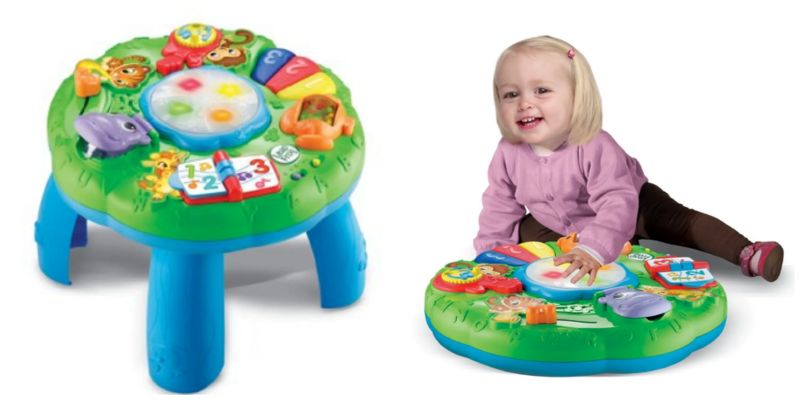
When my daughter was little, she used the LeapFrog Animal Adventure Learning Table, an interactive toy designed to introduce babies and toddlers to music, colours, numbers, letters, and animal sounds through play. Originally featured on Today’s Woman in 2013, this toy is worth revisiting for parents who enjoy exploring educational toys for young children.
LeapFrog has continued to offer educational toys and learning products for children of different ages. However, the Animal Adventure Learning Table is an older model, so its current retail availability may be limited. This article revisits the original product, its features, and what parents should consider when looking for a similar learning toy today.
Introducing the LeapFrog Animal Adventure Learning Table
The LeapFrog Animal Adventure Learning Table was designed to give babies and toddlers a variety of activities to explore in one compact play centre.
Rather than simply watching lights or listening to music, children could interact with different buttons, spinners, and animal characters. These activities introduced early learning concepts through movement, sound, and repetition.
When my daughter used the table, it was part of our experience with educational toys during her early years. Revisiting this product brings back the importance of finding toys that give little ones opportunities to explore through hands-on play.
Every child is different, of course. Some children are drawn to music and lights, while others prefer stacking blocks, looking at books, or playing with everyday household objects. An interactive learning table is one option for families looking to introduce a variety of activities into playtime.
Features of the Animal Adventure Learning Table
The original Animal Adventure Learning Table included several activity stations designed to encourage exploration.
According to the product information available at the time, the table featured seven activity areas, five interactive animal characters, and more than 100 songs and learning responses. These were intended to introduce early concepts through music, sounds, and interactive play.
Music, Sounds, and Animal Characters
Music can make playtime engaging for young children. The table incorporated songs, animal sounds, and spoken responses to encourage children to press buttons and explore what happened next.
As children interacted with the toy, they could hear different sounds and encounter early learning concepts in an entertaining format.
For parents, one consideration with musical toys is volume. Look for products with adjustable sound settings so you can choose a comfortable listening level for your household.
Introducing Letters, Numbers, and Colours
The learning activities were designed to introduce foundational concepts, including letters, numbers, and colours.
Babies and toddlers learn at different rates, and a toy cannot guarantee that a child will master a particular skill. However, interactive activities can give children opportunities to hear words, notice colours, repeat sounds, and explore cause and effect.
Parents can make these moments more engaging by playing alongside their children, naming the colours they see, counting together, or repeating familiar animal sounds.
Hands-On Activities and Motor Skills
Buttons, spinners, and other interactive elements give little hands opportunities to practise reaching, touching, turning, and pressing.
These movements involve fine motor skills, which develop gradually as children interact with objects in their environment.
An activity table can complement other everyday play experiences, including stacking blocks, turning the pages of board books, playing with age-appropriate puzzles, and exploring safe household objects.
The goal isn’t to turn every play session into a lesson. Sometimes, allowing a child to explore freely is the most enjoyable part.
A Learning Table That Adapts to Different Stages
One of the notable design features of the Animal Adventure Learning Table was its removable legs. This allowed the tabletop to be used on the floor and later assembled as a standing activity table.
The product was originally marketed for children from approximately six months to three years, although parents should always follow the age guidance and instructions for the particular toy they own.
A toy that offers different ways to play can be useful as a child’s abilities change. Younger babies may explore activities while sitting with appropriate supervision, while older children may enjoy standing and interacting with the different stations.
However, the table should not be treated as a support for pulling up or standing. The manufacturer’s parent guide warns that the table may tip if a child uses it to pull themselves up. All four legs must be securely attached before the table is used in its standing configuration.
Always supervise young children during play and follow the manufacturer’s instructions.
Our Family’s Experience With LeapFrog
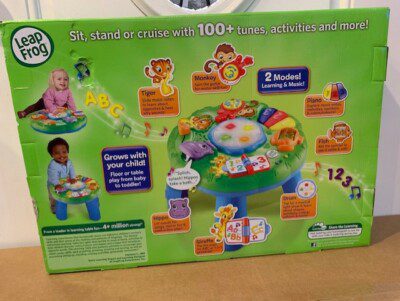
My daughter used the Animal Adventure Learning Table when she was little, which is why I wanted to revisit this product rather than simply write about another toy from a catalogue.
Looking back at toys from our children’s early years is also a reminder that play doesn’t need to be complicated. A simple activity that encourages a child to touch, listen, explore, and repeat can become part of their everyday play routine.
My experience with this product is personal, and every family will have its own perspective. What one child enjoys for months might capture another child’s attention for only a short time.
When choosing an educational toy, I encourage parents to consider their child’s interests, developmental stage, available play space, and tolerance for musical or electronic sounds. A learning table may suit a child who enjoys interactive activities, while another child may prefer quieter, open-ended toys.
Is the LeapFrog Animal Adventure Learning Table Still Available?
Because this review was originally published in 2013, availability is an important consideration.
The Animal Adventure Learning Table remains listed in LeapFrog’s Canadian product-support directory, and a parent guide is available. However, a support listing does not mean that the toy is currently available to purchase new.
If you’re interested in this specific model, you may encounter it through second-hand sellers or resale marketplaces. Availability and condition will vary.
Before purchasing a used electronic toy, check that:
- All four legs and removable components are present.
- The table is stable and has no cracked or damaged parts.
- Buttons, lights, and sound functions work properly.
- The battery compartment is intact and closes securely.
- The toy can be cleaned according to the manufacturer’s instructions.
- The product’s age recommendations and safety guidance are appropriate for your child.
You can consult the manufacturer’s resources here:
- LeapFrog Animal Adventure Learning Table parent guide
- LeapFrog Canada product-support directory
- Explore LeapFrog’s current educational toys
If you cannot find this particular model, LeapFrog’s current product range offers other educational toys to explore. Compare the available activities, age recommendations, safety information, and price before deciding which product is right for your family.
Are Educational Toys Worth It?
Educational toys can provide enjoyable opportunities for children to explore sounds, shapes, colours, words, and movement. However, they don’t need to be expensive or electronic to support learning.
Reading board books together, singing songs, stacking blocks, playing peekaboo, and talking about everyday objects can all provide valuable opportunities for interaction.
When shopping for toys, consider whether the product offers activities suited to your child’s current interests and abilities. Look for durable construction, clear age recommendations, manageable sound levels, and opportunities for hands-on exploration.
Most importantly, remember that you don’t need a house full of educational toys to encourage learning. Children can discover a great deal through ordinary play and positive interaction with the adults around them.
Final Thoughts on the LeapFrog Animal Adventure Learning Table
The LeapFrog Animal Adventure Learning Table was an interactive educational toy designed to combine music, animal characters, and hands-on activities for babies and toddlers. Its removable legs and multiple activity stations were notable features of the original design.
My daughter used this toy when she was young, making it a product with a place in our family’s experience of early childhood play. Although the model dates back to 2013 and its current retail availability is uncertain, parents who are interested in similar toys can still use its features as a starting point when comparing educational play centres.
LeapFrog continues to offer educational toys for different ages, so families looking for a new product can explore the company’s current range rather than assume an older model is still sold in stores.
Whatever toy you choose, the most important thing is to find something that suits your child, encourages exploration, and gives you opportunities to enjoy those little moments of discovery together.
- Originally published: 2013
- Last updated: October 22, 2026