How to Tell if Your Child Has Head Lice
8 min read
1504 words
There is nothing quite like seeing your child scratching their head and immediately wondering, “Could it be head lice?” It is an easy conclusion to jump to, especially when you know lice can spread quickly among children. But scratching alone does not mean your child has head lice. Dry skin, dandruff, eczema, sweat and reactions to shampoo or other hair products can all make a child’s scalp itchy. If you want to know how to tell if your child has head lice, the best thing you can do is check their hair and scalp carefully. Finding a live louse is the clearest way to confirm an active infestation.
What Are the Signs of Head Lice?
Itching is one of the most common symptoms of head lice, but it is not always the first sign. Some children may have lice for a while before they start scratching.
Signs to watch for include:
- An itchy scalp: The itching can be caused by a reaction to bites from the lice.
- Frequent scratching: Your child may scratch more around the ears and the back of the neck.
- A crawling or tickling feeling: Some children say it feels like something is moving in their hair.
- Small irritated areas: Scratching can leave the scalp red or sore.
- Trouble sleeping: An itchy scalp can be especially bothersome at night.
- Lice or nits in the hair: Seeing a live louse is the clearest indication that your child currently has lice.
It is also possible for a child to have head lice without having noticeable symptoms. That is why looking through the hair is more useful than relying on scratching alone.
What Do Head Lice Look Like?
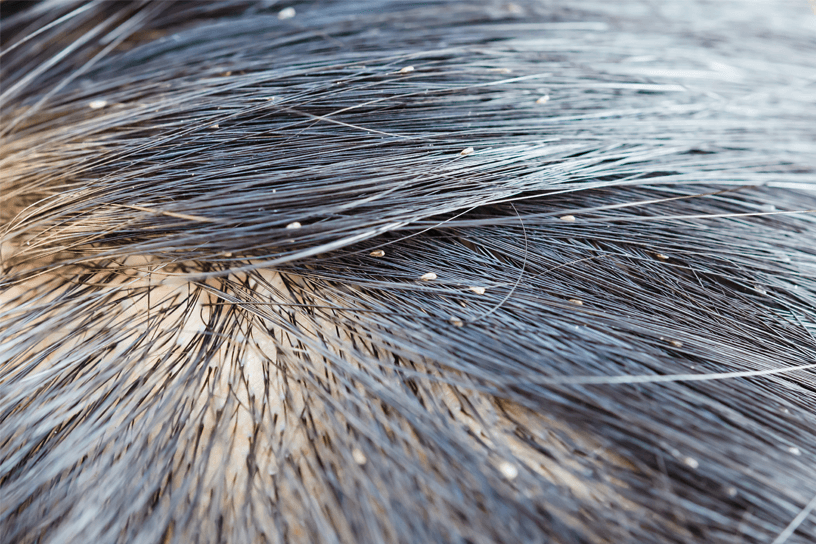
So, what do head lice look like?
Adult head lice are very small insects. They can be grayish, brownish or tan and are about the size of a sesame seed when fully grown.
They move through the hair and can be surprisingly difficult to spot because they are small and quick. Head lice do not jump or fly. They crawl.
If you see a small insect moving through your child’s hair, take a closer look. Finding a live louse is strong evidence of an active infestation.
What Do Lice Eggs and Nits Look Like?
If you are wondering what do lice eggs look like, they are tiny and oval shaped. They can appear yellowish, brownish or whitish.
Nits are attached directly to individual hairs, usually close to the scalp. They are firmly stuck to the hair and are not easily brushed away.
This is one reason nits can be confused with dandruff. Dandruff tends to come away from the hair easily, while nits remain attached.
It is important to remember that finding an old nit does not necessarily mean your child has an active case of head lice. Empty egg shells can remain in the hair after the lice are gone. If you find nits, continue looking carefully for live lice.
Where Should You Look for Head Lice?
When you check for head lice, pay particular attention to areas where lice are commonly found.
Look closely:
- Behind the ears
- Around the back of the neck
- Close to the scalp
- Around the roots of the hair
- In areas where the hair is thick
Good lighting makes a big difference. Sit your child somewhere with plenty of natural light or use a bright light so you can see the scalp clearly.
How to Check for Head Lice
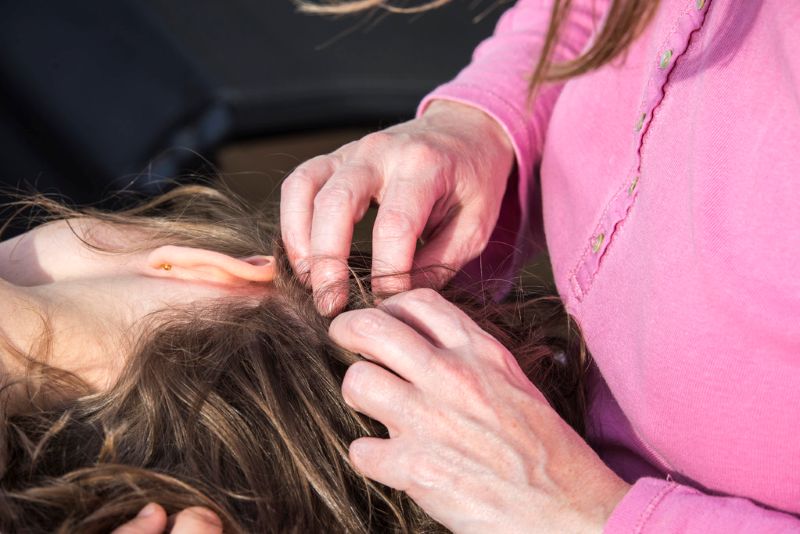
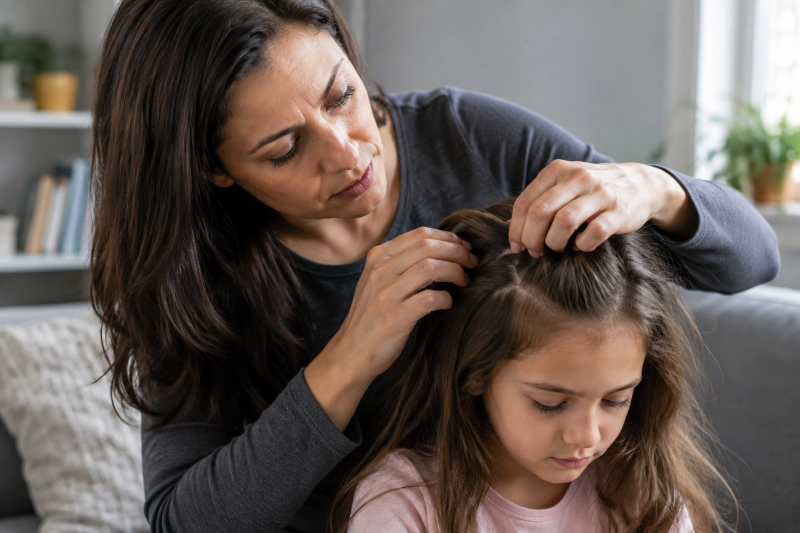
You do not need anything complicated to check your child’s hair. Take your time and work through the hair in small sections.
1. Find a Well Lit Area
Good lighting will make it much easier to see both lice and nits.
2. Separate the Hair
If your child has long or thick hair, divide it into smaller sections. Hair clips can help keep the sections apart.
3. Look Close to the Scalp
Start at the roots and examine the hair carefully. Look for anything moving as well as small objects attached to individual hairs.
4. Use a Fine Toothed Comb
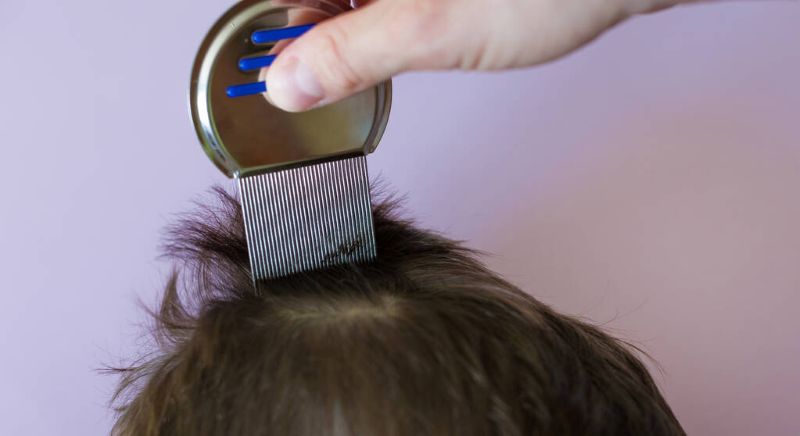
A lice comb can be helpful when checking your child’s hair. Comb through small sections from the scalp toward the ends of the hair.
After each pass, wipe the comb onto a white tissue or paper towel. This can make anything caught in the comb easier to see.
5. Look for Movement
Live lice move. If you see something crawling through the hair, take a closer look to determine what it is.
Head Lice vs. Dandruff: What Is the Difference?
It can be surprisingly difficult to tell the difference between a nit and a piece of dandruff when you first start checking your child’s hair.
Dandruff consists of flakes of skin. It usually comes away from the hair easily when you brush or move the hair.
Nits are attached to the hair shaft. They do not simply brush away and can be difficult to remove with your fingers.
Other things can also look like nits, including hair product buildup, dirt and small pieces of lint.
If you are not sure what you are seeing, look closely rather than assuming it is lice.
Does an Itchy Scalp Always Mean Head Lice?
No. An itchy scalp can have many causes.
Your child could be scratching because of:
- Dry skin
- Dandruff
- Eczema
- Psoriasis
- A reaction to shampoo or another hair product
- Sweat or heat
- Scalp irritation
This is why it is a good idea to check the hair before reaching for a lice treatment.
What Should You Do if You Find Live Lice?
Finding live lice can be upsetting, but there is no reason to blame or embarrass your child. Head lice are common and can affect children with clean hair and good hygiene.
If you find live lice:
- Stay calm: Explain to your child that lice are common and can be treated.
- Check other household members: Anyone who has had close head to head contact with your child should have their hair checked.
- Choose an appropriate treatment: Follow the directions on the product carefully.
- Use a lice comb: Combing can help remove lice and nits from the hair.
- Notify the school or childcare provider: In many cases, the school will send a note home to families when there has been a reported case rather than calling individual parents.
For more information about treatment and prevention, see our comprehensive guide to head lice prevention and treatment.
When Should You Check Your Child Again?
Do not assume the problem is over immediately after treatment.
Depending on the treatment used, a second application may be recommended. Always follow the instructions on the product you are using.
Continue checking your child’s hair for live lice and follow the recommended treatment schedule. A fine toothed comb can also be useful for removing lice and nits.
When Should You Talk to a Healthcare Professional?
If you are not sure whether your child actually has lice, a healthcare professional can help you determine what you are seeing.
You should also seek advice if:
- You are unsure which treatment to use.
- Treatment does not appear to be working.
- Your child’s scalp becomes very sore, swollen or infected.
- Your child has a reaction to a lice treatment product.
- You continue finding live lice despite following the treatment directions.
Frequently Asked Questions
What is the first sign of head lice?
An itchy scalp is one of the most common signs, but some children may have lice without itching. Checking the hair is a better way to determine whether lice are present.
Can a child have head lice without itching?
Yes. Some children do not experience noticeable itching, particularly when they first get lice.
What do head lice look like?
Adult head lice are tiny insects that can look grayish, brownish or tan. They are about the size of a sesame seed when fully grown and crawl through the hair.
How can you tell lice eggs from dandruff?
Nits are firmly attached to individual hairs, while dandruff flakes generally come away from the hair easily.
Should I treat my child if I only find nits?
Finding nits does not always mean there is an active infestation. Look carefully for live lice and consider getting professional advice if you are unsure before starting treatment.
Where are head lice usually found?
Check close to the scalp, particularly behind the ears and around the back of the neck. These areas are often easier to inspect carefully.
The Bottom Line
If your child starts scratching their head, there is no need to assume the worst. How to tell if your child has head lice really comes down to taking a close look at the scalp and hair.
Itching can have many causes, so look for actual evidence. A live louse is the clearest sign of an active infestation. Nits can provide another clue, but they can sometimes remain in the hair after the lice are gone.
Take your time, use good lighting and check the hair carefully. If you are still unsure about what you are seeing, ask a healthcare professional for help.