How to Keep Your Home Clean During a Major DIY Renovation
6 min read
1001 words
Taking on a DIY renovation can be an exciting way to transform your home while saving money. Whether you are updating a kitchen, remodeling a bathroom, replacing flooring, or giving several rooms a fresh new look, there is a great sense of satisfaction in seeing your hard work come together.
The downside is that renovations create dust, debris, and clutter that can quickly spread throughout the house. Without a plan, even a single project can leave every room feeling messy and uncomfortable. Fortunately, you can keep your home much cleaner during a renovation by building a few simple habits into your project from the very beginning.
If you are looking for ways to make post renovation cleanup easier or are considering bringing in extra help once the work is complete, reading Homeaglow feedback can provide useful insight into how professional cleaning services fit into home improvement projects and busy households.
Start With a Cleaning Plan
Before demolition begins, spend a little time thinking about how you will control dust and debris.
Decide where renovation materials will be stored, which areas of the home should remain off limits, and how waste will be removed each day. Having a plan helps prevent small messes from becoming much larger problems as the project progresses.
Cleaning as you go is always easier than trying to clean everything after the renovation is finished.
Isolate the Work Area
One of the most effective ways to keep the rest of your home clean is by separating the renovation zone from the living areas.
Close doors whenever possible and use temporary plastic barriers to reduce the spread of dust. If the project involves a room without a door, hanging plastic sheeting can help contain debris while allowing work to continue.
Limiting the movement of dust protects furniture, flooring, and rooms that are not being renovated.
Protect Your Floors
Even careful renovations can leave scratches, paint spills, and dirt on nearby flooring.
Cover floors leading to the work area with protective paper, heavy duty drop cloths, or reusable floor coverings. These materials catch dust and reduce wear from repeated foot traffic while carrying tools and supplies.
Replacing a protective covering is much easier than repairing damaged flooring.
Create a Shoe Station
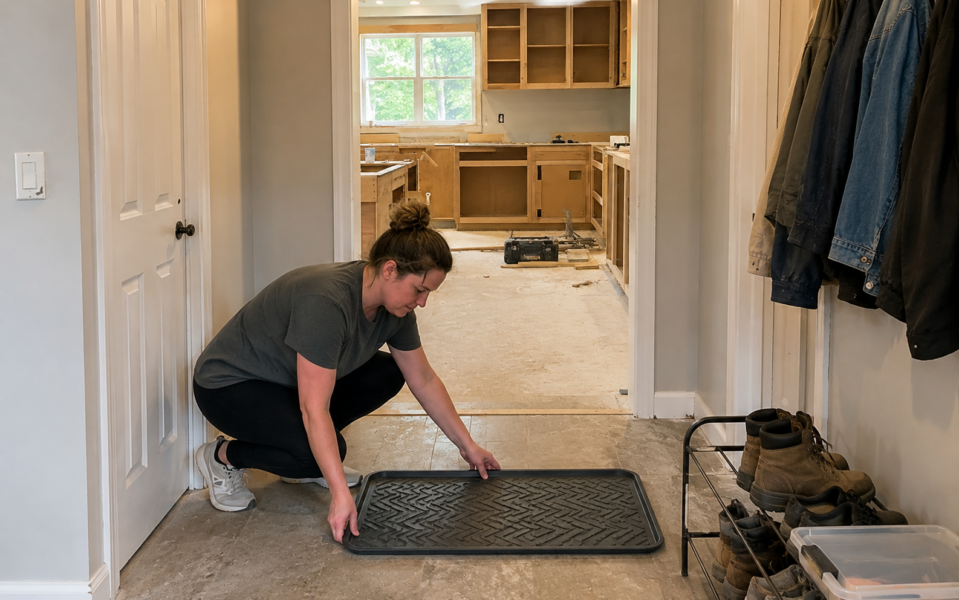
Construction dust easily travels throughout the home on shoes.
Place a mat or tray outside the renovation area where everyone can remove dusty footwear before walking into clean spaces. Keeping a second pair of indoor shoes nearby also helps reduce the amount of dirt tracked through the house.
This small habit makes a surprisingly large difference during longer projects.
Clean Dust Every Day
Dust is one of the biggest challenges during any renovation.
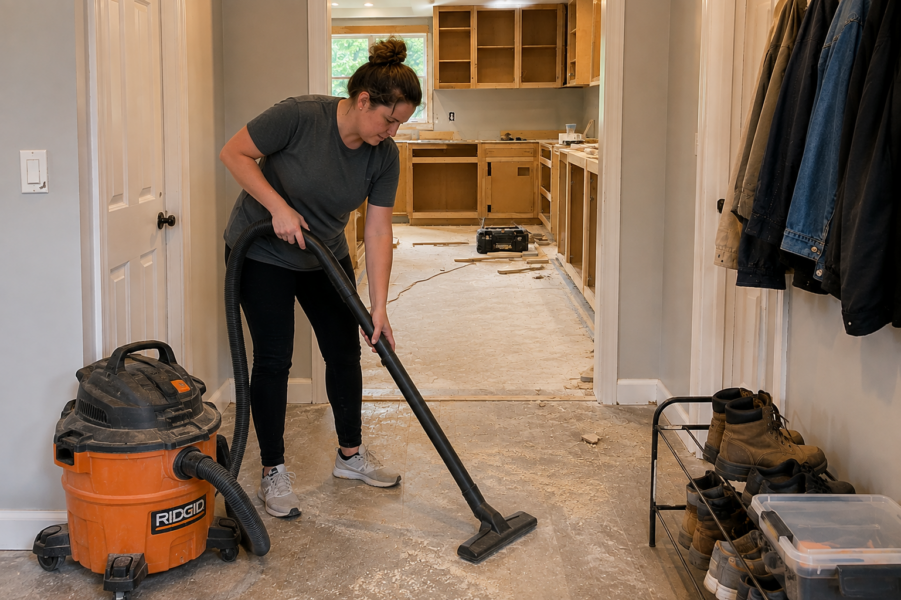
Instead of allowing it to accumulate for days, vacuum and wipe surfaces regularly throughout the project. Use a vacuum equipped for fine dust whenever possible and follow up with microfiber cloths to remove remaining particles from furniture and other surfaces.
Frequent cleaning keeps dust from spreading throughout the home.
Organize Your Tools
A cluttered work area slows progress and creates additional cleanup.
Return tools to a designated storage area after each work session instead of leaving them scattered across the room. Store screws, nails, paint brushes, and small supplies in clearly labeled containers so everything is easy to find.
Good organization also improves safety by reducing trip hazards.
Remove Construction Waste Promptly
Old flooring, drywall pieces, packaging, and other construction waste can quickly take over your workspace.
Rather than creating large piles of debris, remove waste regularly throughout the renovation. Keeping trash bags, recycling containers, and disposal bins nearby encourages quick cleanup as you work.
A cleaner work area is usually a safer and more productive one.
Cover Furniture and Belongings
If furniture cannot be moved out of the renovation area, protect it with plastic covers or clean drop cloths.
Dust can settle into upholstery, electronics, artwork, and decorative items much faster than many homeowners expect. Taking a few minutes to cover these belongings before work begins saves considerable cleaning time later.
It also helps protect valuable items from accidental damage.
Keep Ventilation in Mind
Proper airflow can help reduce lingering dust during your DIY renovation while making the work area more comfortable.
Open windows when weather permits and use fans carefully to encourage air circulation without spreading dust into other rooms. Replacing air filters after major renovation work also helps remove remaining particles from your home’s ventilation system.
Fresh air contributes to a more comfortable environment throughout the project.
Do a Quick Cleanup Before Ending Each Day
One of the best renovation habits is spending a few minutes cleaning before putting your tools away.
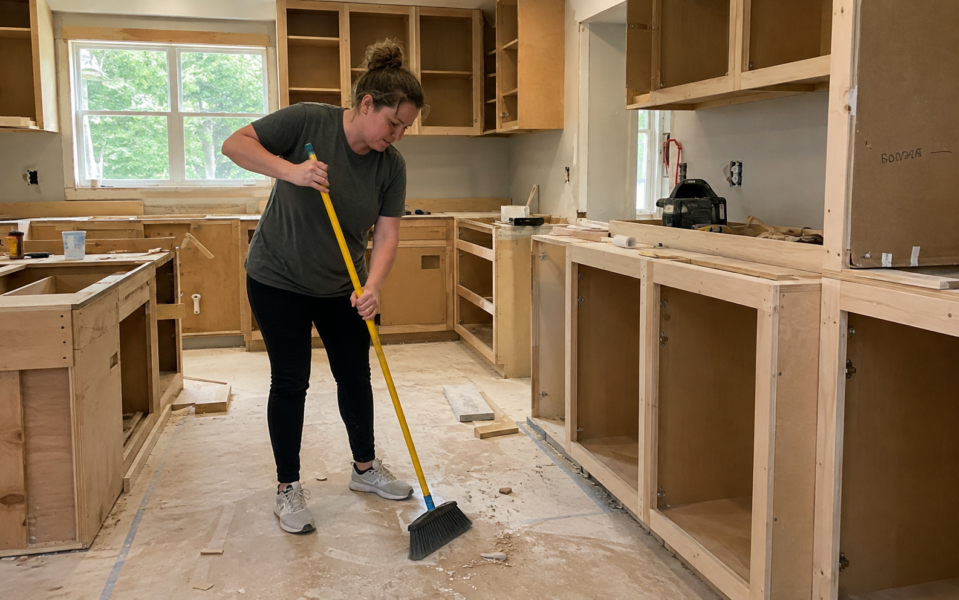
Sweep or vacuum visible debris, gather materials, organize tools, and dispose of trash before ending the day’s work. Starting each morning with a reasonably organized workspace allows you to begin immediately instead of spending valuable time cleaning yesterday’s mess.
These short cleanup sessions also help keep the rest of the house more manageable.
Be Patient With the Final Cleanup
Even after the renovation is complete, fine dust often continues settling for several days.
Take your time with the final cleaning process. Dust high surfaces first, vacuum thoroughly, wipe walls if necessary, clean windows, and finish by mopping hard floors. Washing curtains, cushion covers, and other fabrics may also help remove lingering construction dust.
A thorough final cleaning allows you to fully enjoy the results of your hard work.
Final Thoughts
A DIY renovation is rewarding, but it also creates unavoidable messes. Fortunately, maintaining a clean home throughout the project is possible with thoughtful planning, consistent cleanup, and good organization. Isolating the work area, protecting floors, controlling dust, and cleaning a little each day all make a significant difference.
By staying ahead of the mess instead of waiting until the DIY renovation is complete, you can enjoy the excitement of transforming your home without allowing construction debris to take over your living space. The result is a smoother renovation experience and a cleaner home ready to showcase all of your hard work.