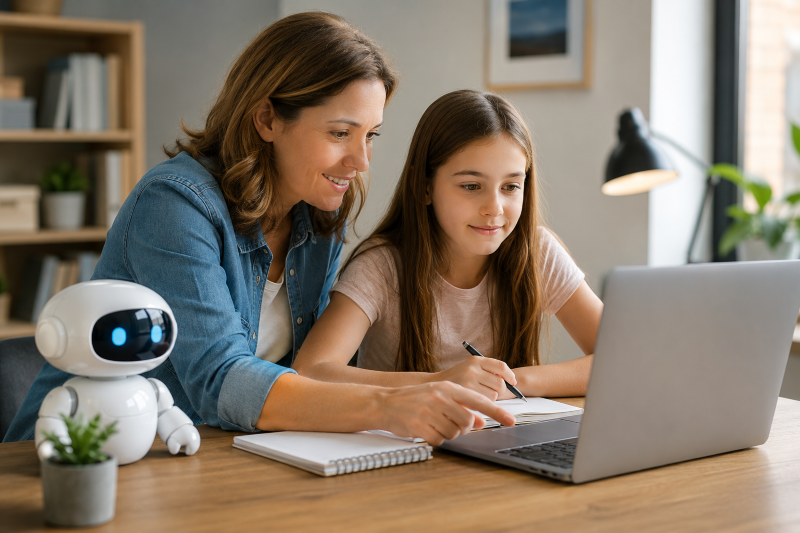
Teaching Kids to Use AI Responsibly: A Parent Guide
7 min read
1246 words
Artificial intelligence is no longer a futuristic concept. It is already part of our children’s everyday lives. From homework tools that help explain math problems to video games that adjust to their skill level and apps that recommend new videos, AI is quietly working behind the scenes. As artificial intelligence becomes more integrated into childhood, parents and caregivers face a new challenge: teaching children how to use AI responsibly, safely, and ethically.
The goal is not to make children afraid of technology. Instead, it is about helping them understand how AI works, recognize its limitations, protect their privacy, and develop the critical thinking skills they need to become responsible digital citizens.
What Is Artificial Intelligence? A Kid-Friendly Explanation
Before teaching children about using AI responsibly, it helps to understand what artificial intelligence actually is.
A simple explanation for children is this: artificial intelligence is technology that learns from information, recognizes patterns, and creates responses based on what it has learned.
AI can seem intelligent, but it does not think, feel, or understand the world the way humans do. It analyzes information and predicts possible answers based on patterns. Understanding how AI works is an important first step in helping children use AI responsibly and make smart choices when using technology.
Children may already use AI every day through:
- Voice assistants like Siri or Alexa
- AI chatbots that answer questions or create stories
- Recommendation systems on YouTube, Netflix, and gaming platforms
- Photo filters and creative tools that change images or create artwork
- Learning apps that adjust lessons based on their progress
Helping children understand that AI is a tool and not a person makes the technology less mysterious and encourages better decision-making.
AI tools can also support children who learn in different ways by providing alternative methods for understanding information. Some children benefit from hearing information repeated, breaking lessons into smaller steps, or using tools that support memory and comprehension skills.
For children who struggle with listening, remembering instructions, or understanding spoken information, learning supports such as Auditory Memory Learning Aids for Kids & Comprehension can help strengthen listening skills, improve information retention, and build confidence with learning.
Teach Children That AI Is a Tool, Not a Replacement for Thinking
One of the most important lessons children can learn is that AI should support their thinking, not replace it. Teaching children to use AI responsibly means helping them understand that technology can be a helpful tool for learning, creativity, and problem-solving, while their own ideas, judgment, and critical thinking remain essential.
AI can be helpful for:
- Brainstorming ideas
- Explaining difficult concepts
- Practicing new skills
- Creating study questions
- Improving writing through suggestions and feedback
However, children need to understand that simply copying AI-generated answers is not the same as learning. Using AI responsibly means using it as a guide while still developing their own understanding, creativity, and problem-solving skills.
Critical thinking, creativity, personal opinions, and the ability to make decisions are skills that technology cannot replace.
For example, AI can help a child brainstorm ideas for a science project, but their own research, understanding, and presentation are what make the project meaningful and uniquely theirs.
Explain That AI Can Make Mistakes

Many children assume that computers are always correct. Parents should explain that AI can make mistakes.
AI tools may:
- Provide outdated information
- Misunderstand a question
- Give incorrect answers
- Create information that sounds believable but is completely false
Teach children to become careful fact-checkers. Encourage them to:
- Compare information with trusted sources
- Use educational websites, books, and reliable resources
- Ask a parent, teacher, or librarian when they are unsure
Learning to question information is one of the most important digital skills children can develop.
Teach Privacy and Online Safety
Privacy is a major part of responsible AI use.
Children need to understand that AI tools are not private diaries. Information entered into online tools may be stored or used according to the service’s privacy policies.
Teach children never to share:
- Full names
- Home addresses
- School information
- Passwords
- Private family details
- Personal documents or photos without permission
Parents should also review privacy settings on apps and have regular conversations about what information is safe to share online.
Using AI for School Without Cheating
The use of AI in education is becoming an important conversation for families and schools. Children should understand the difference between using AI as a learning assistant and using it to avoid doing their own work.
AI can support learning by helping students:
- Understand difficult topics
- Practice new skills
- Generate ideas
- Create study guides
- Improve grammar and writing
AI can be a helpful learning companion when used correctly. Whether a child needs help understanding a challenging concept, practicing skills, or developing better study habits, the goal is to use technology as a support while continuing to build independent thinking and problem-solving abilities.
However, submitting AI-generated work as their own can prevent real learning and may violate school rules. Encourage children to use AI as a helper, while making sure they are still doing the thinking, researching, and creating themselves.
Help Children Recognize AI-Generated Images, Videos, and Deepfakes

Technology can now create realistic-looking images, videos, and voices that may not be real.
Children need to understand that not everything they see online is accurate.
Encourage them to ask questions such as:
- Who created this content?
- Is there another reliable source confirming this information?
- Does this seem too surprising or unbelievable?
- Could this have been created using AI?
Teaching children to pause and think before believing or sharing online content helps protect them from misinformation.
Create Family Rules for AI Use

Clear family guidelines can help children develop healthy technology habits.
Some helpful AI rules may include:
- Ask permission before downloading new AI-powered apps
- Use AI tools in shared family spaces when children are younger
- Talk about how AI was used during homework or creative projects
- Never share personal information with AI tools
- Balance screen time with reading, outdoor activities, hobbies, and face-to-face friendships
The goal is not to eliminate technology but to create healthy boundaries.
Encourage Creativity With AI
When used responsibly, AI can encourage creativity and exploration.
Children can use AI to:
- Create story ideas and characters
- Practice new languages
- Explore science topics
- Brainstorm art projects
- Prepare presentations
- Experiment with music and writing
The key message is that AI should inspire imagination and not replace it.
Be a Technology Role Model
Children learn by watching the adults around them.
Parents can model responsible technology habits by talking about how and why they use AI tools in everyday life.
It is perfectly normal to admit that you are still learning about new technology. Open conversations are often more effective than simply creating rules and restrictions.
Preparing Children for an AI-Powered Future
Artificial intelligence will continue to influence education, careers, and everyday life. Preparing children for this future means teaching them both the benefits and responsibilities that come with using powerful technology.
Children who understand AI’s strengths and limitations will be better prepared to make smart choices, protect their privacy, and use technology ethically.
Conclusion
AI can be a valuable learning companion when children understand how to use it responsibly. Parents, teachers, and caregivers play an important role in helping children develop confidence, curiosity, and good judgment in a digital world.
Responsible AI use begins with ongoing conversations, clear boundaries, and teaching children to think critically. By guiding them today, we help prepare them for a future where technology and human creativity work together.