
6 min read
1071 words
Take a quick scan of your child’s play area. If you’re like most parents, you’ll see a mountain of colorful plastic, a chorus of battery-operated characters, and a collection of super-soft stuffed animals. We invest so much in toys that promise to be “educational” or “developmental,” hoping to give our little ones the best possible start. But what if I told you the most powerful, brain-building, skill-honing tool in that entire collection is probably the quietest and most unassuming?
I’m talking about the humble puzzle.
It’s easy to overlook puzzles as simple, old-fashioned pastimes. They don’t light up, they don’t sing songs, and they certainly don’t connect to an app. But this simplicity is their secret weapon. For toddlers and preschoolers, engaging with a puzzle is not just a way to pass the time; it is a comprehensive workout for their developing minds and bodies. It’s time to stop seeing puzzles as mere toys and start recognizing them for what they truly are: an essential investment in your child’s foundational skills. If you want to unlock your child’s potential, it’s time to put the power of puzzles to work.
Building a Resilient, Problem-Solving Brain
Before a child can tackle a complex math problem or write a coherent sentence, they need to build the underlying mental architecture. Puzzles are the literal and figurative blueprint for this construction, laying the groundwork for critical cognitive skills that will serve them for a lifetime.
First and foremost, puzzles are a masterclass in problem-solving. Every single piece presents a mini-challenge: Where does this go? Does it fit here? What happens if I turn it? Your child is formulating a hypothesis, testing it, and learning from the result. This cycle of trial and error, conducted in a low-stakes, playful environment, teaches them that there is a solution to every problem if they just keep trying. This builds persistence and what educators call “grit”—the invaluable ability to stick with a task even when it’s difficult.
Beyond that, puzzles are a powerhouse for developing spatial reasoning and visual discrimination. As your toddler handles a chunky wooden piece, they are learning about shapes, orientation, and how objects relate to one another in space. A preschooler sorting through a 24-piece floor puzzle is actively scanning for subtle differences in color, pattern, and shape. They are learning to categorize and analyze visual information—skills that are direct precursors to recognizing letters and numbers, understanding geometry, and even reading maps later in life. Completing a puzzle isn’t just about matching pictures; it’s about training the brain to see the world in a more organized, logical way.
The Surprising Physical and Emotional Victories
While the cognitive benefits are astounding, the magic of puzzles doesn’t stop there. The physical act of manipulating puzzle pieces provides a crucial workout for small hands, building skills that are essential for future independence and academic success.
Every time your child picks up a puzzle piece, they are refining their fine motor skills. The pincer grasp—using the thumb and forefinger to pick up a small object—is the very same grip they will later use to hold a pencil, use scissors, or button a coat. As they twist and turn a piece to make it fit, they are developing wrist rotation and dexterity. This is paired with a serious dose of hand-eye coordination, as their eyes guide their hands to a specific spot on the board. This intricate dance between seeing and doing is fundamental to everything from catching a ball to learning to write their name.
But perhaps the most compelling reasons to embrace puzzles are the emotional ones. In a world saturated with instant gratification and digital distractions, puzzles teach two increasingly rare skills: patience and focus. A child can’t rush a puzzle; they must sit, concentrate, and work through the challenge methodically. This ability to sustain attention is one of the single greatest predictors of future success.
And then comes the moment of triumph. The final piece clicks into place, and your child’s face lights up with a pure, unadulterated sense of accomplishment. That “I did it!” moment is an incredible boost to their self-esteem. They learn that they are capable, competent, and can achieve a goal through their own effort. This builds an internal confidence that no amount of praise can replace. Whether they complete it on their own or with your gentle guidance, that shared victory strengthens your bond and creates a positive association with learning and challenge.
How to Make Puzzles a Success in Your Home
Convinced? The key is to introduce puzzles in a way that is engaging, not frustrating.
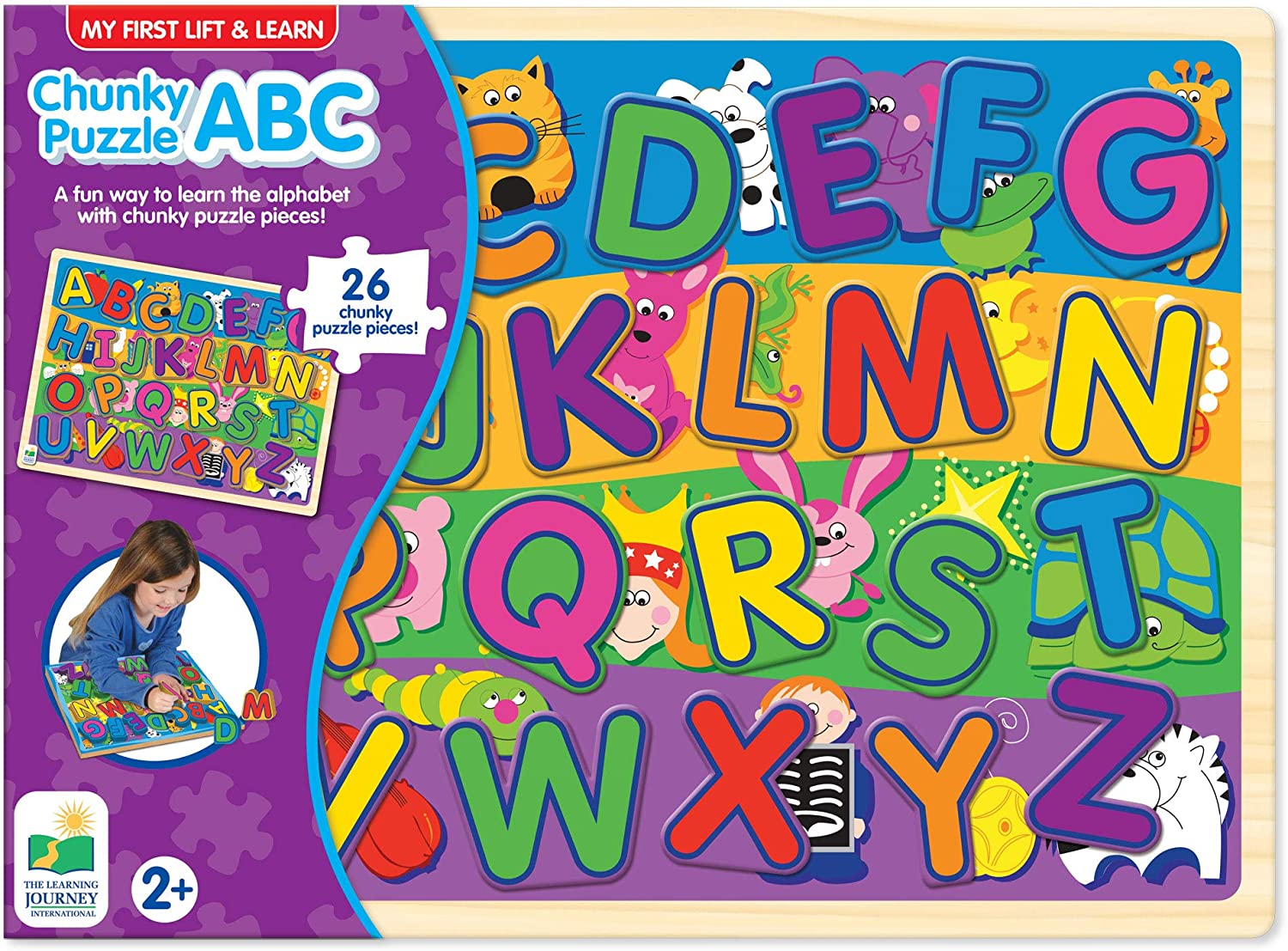
- Start Simple and Age-Appropriate. For young toddlers (12-24 months), begin with chunky wooden puzzles that have large knobs. These single-piece inset puzzles (like fitting a circle into a circle-shaped hole) are the perfect introduction.
- Follow Their Interests. Does your preschooler love dinosaurs, trucks, or princesses? Find a puzzle that features their favorite things. Their intrinsic motivation will drive them to finish it.
- Level Up Gradually. Once they’ve mastered a 4-piece puzzle, don’t immediately jump to a 50-piece box. Move logically to 8, 12, and 24-piece puzzles. Floor puzzles are fantastic for this age as their large size feels epic and engaging.
- Be a Guide, Not a Solver. Sit with them, but resist the urge to solve it for them. Instead, model problem-solving language. Say things like, “Hmm, this piece has a straight edge. I wonder if it goes on the side?” or “I see blue on this piece. Let’s look for other blue parts in the picture.”
- Store Them Wisely. Keep puzzles in their original boxes or in zippered pouches to ensure no pieces get lost. Nothing is more frustrating for a child (or a parent!) than a missing piece.
In the grand scheme of childhood development, puzzles are not just another toy. They are a perfectly designed learning tool that simultaneously builds cognitive, physical, and emotional skills. They encourage quiet focus, celebrate persistence, and deliver a tangible sense of achievement.
So, the next time you’re looking for a meaningful activity, push the noisy gadgets aside. Pull out a puzzle, sit down on the floor with your child, and watch the magic unfold. You’re not just fitting pieces together—you’re building a stronger, smarter, and more confident kid, one piece at a time.
 Christy Jernigan
  April Franke
  Rose DesRochers