Pro-Xylane in Skincare: What It Is and What the Evidence Says
8 min read
1431 words
Ingredient names can make premium skincare seem more technical than it is. Yet they offer useful clues about what a formula contains and what kind of evidence may sit behind its claims. Pro-Xylane in skincare is a trade name associated with hydroxypropyl tetrahydropyrantriol, a sugar-derived cosmetic ingredient. It is commonly discussed in relation to skin firmness, fine lines, and comfort. Those claims deserve to be read alongside the formula, the test protocol and the type of study cited.
What is Pro-Xylane in skincare, and does it work? Pro-Xylane is the trade name associated with hydroxypropyl tetrahydropyrantriol, a cosmetic ingredient derived from xylose. Laboratory and reconstructed-skin studies support biological activity relevant to skin structure. Visible results in a finished product depend on the complete formula, use conditions and the quality of human cosmetic efficacy testing.
What is Pro-Xylane, and what does its ingredient name mean?
Pro-Xylane is a proprietary name rather than the standard ingredient name consumers will usually find on an ingredient list. The International Nomenclature of Cosmetic Ingredients (INCI) name is hydroxypropyl tetrahydropyrantriol. Learning to spot this distinction helps when comparing products sold under different brand stories.
The molecule was developed from xylose, a sugar found in plant material including beech wood. Its design is often described through green-chemistry language because the starting material can come from renewable plant feedstock. That origin does not establish performance on its own. It explains the ingredient’s chemical family and manufacturing route, rather than its visible effect on skin.
Within a formula, hydroxypropyl tetrahydropyrantriol is generally paired with humectants, emollients, film-formers and other cosmetic actives. Glycerin may support surface hydration, while niacinamide can be included for its own cosmetic profile. The finished texture and the skin’s immediate feel therefore cannot be assigned to one ingredient alone.
Which sources help assess Pro-Xylane claims?
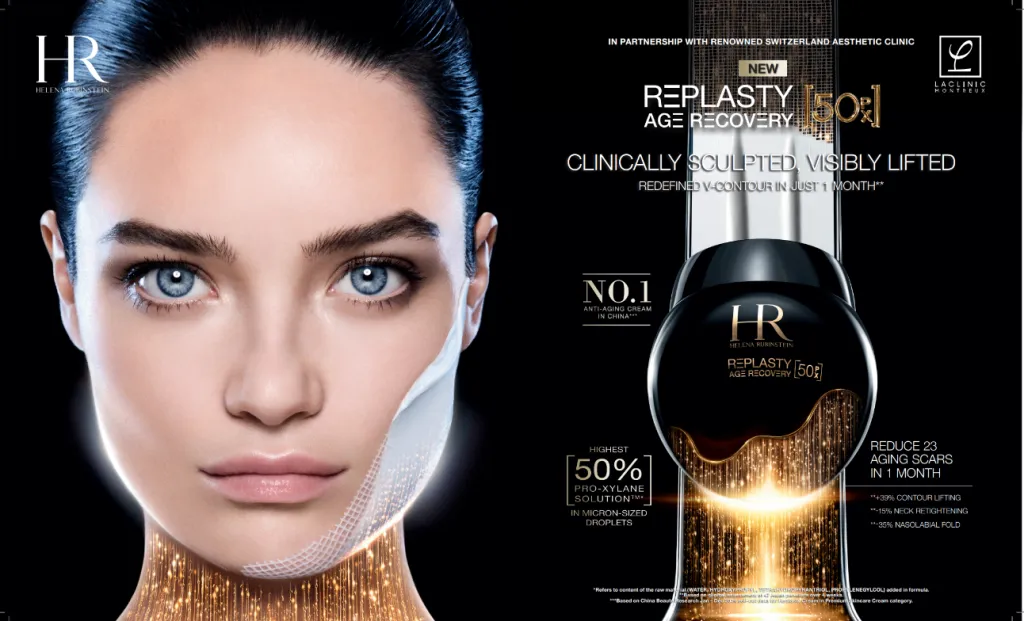
A useful starting point is Helena Rubinstein’s explanation of Pro-Xylane, but it is a brand source and should be read accordingly. It describes development beginning in 2003 at Advanced Research Laboratories in Chevilly-Larue, France, and says the work involved 70 experts over seven years. The page also refers to more than 12 scientific publications.
Brand material can identify the research history and the intended cosmetic role of an ingredient. It should sit beside independent reading of the published record. One named reference is the 2008 paper by Sok J. and colleagues in the European Journal of Dermatology (volume 18, issue 3, pages 297-302), which examined the dermal-epidermal junction in human reconstructed skin.
That distinction matters. A peer-reviewed journal article can provide useful methodological detail, but reconstructed skin remains an in vitro model. It cannot answer every question about a cream or serum used daily by a varied group of people. Readers should also distinguish research conducted on an ingredient or laboratory preparation from clinical testing of a finished cosmetic product.
How is Pro-Xylane claimed to affect skin’s appearance?
The usual Pro-Xylane benefits are framed around hydration, suppleness, visible firmness and the appearance of wrinkles. The proposed pathway involves components of the extracellular matrix, the support-rich environment around skin cells. Proteoglycans are water-binding compounds associated with that matrix, while glycosaminoglycans contribute to its hydrated character.
Research described by L’Oréal Paris reports that the ingredient stimulated proteoglycan production in human reconstructed skin. The company connects that finding with the appearance of elasticity and firmness. This is a plausible cosmetic rationale, but it remains distinct from a measured result in people using a specific finished formula.
The dermal-epidermal junction is another frequent point of reference. It is the interface between the epidermis and dermis, two layers with different roles in skin’s visible surface and support. Findings in a model of that junction may help explain why an ingredient was selected, yet they do not predict a uniform outcome across all skin types.
Skin comfort is easier to misread. A formula may leave skin feeling softer or less tight because of water-binding ingredients and emollients, even before any longer-term appearance assessment. Such effects can be valuable, but the claim should state whether it concerns immediate perception, instrument readings or a graded clinical evaluation.
What does cosmetic efficacy testing actually show?
Cosmetic efficacy testing can be well designed, but its language needs close reading. A claim based on an ingredient solution does not automatically apply to the pure active. Likewise, a result for a finished serum cannot be separated cleanly from the contribution of its vehicle and companion ingredients.
When a supplier or brand reports a percentage, readers should check what was measured. The figure may refer to the commercial ingredient solution, not the amount of pure hydroxypropyl tetrahydropyrantriol in the product. Without that clarification, comparisons between products are unreliable.
| Question to ask | Why it changes the meaning of a claim |
|---|---|
| Was the test in vitro, ex vivo, or conducted with volunteers? | Laboratory findings indicate activity, while volunteer studies assess visible or measured cosmetic effects. |
| How many people took part? | A small panel can provide an early signal but offers less confidence than a larger, well-described group. |
| How long did the study last? | Immediate hydration and changes assessed after several weeks answer different questions. |
| Was there a comparator? | A vehicle control or a base formula without the tested ingredient helps isolate the product’s effects. |
| Who performed the assessment? | Instrumental readings, expert grading and self-assessment each capture different outcomes. |
A robust consumer test also describes participant age range, skin condition, application frequency and the endpoint being assessed. “Skin looks firmer” may be based on a dermatologist’s visual score, a consumer questionnaire or an instrumental measure. Those are not interchangeable forms of evidence.
Short studies have a place in premium anti-aging skincare because comfort, hydration and surface smoothness can change quickly. Claims about the appearance of fine lines are more persuasive when they use a defined photographic or clinical grading method and a duration long enough to observe consistent use. A before-and-after image alone is weak evidence unless lighting, positioning and assessment criteria are controlled.
How should readers compare premium anti-aging skincare?
Three practical checks can make a crowded shelf easier to read.
- Read the full ingredient list. Find hydroxypropyl tetrahydropyrantriol, then look at the broader formula. Humectants, lipids and fragrance can shape both the experience and tolerance of a product.
- Match the claim to the test. A claim about immediate comfort should be supported differently from one about the appearance of firmness after regular use. Seek a stated panel size, study duration and assessment method.
- Compare like with like. Set two serums, or two creams, beside each other rather than comparing unlike formats. Price, packaging and a patented name do not reveal the amount of evidence behind skincare ingredient claims.
An ingredient name is best treated as the first line of inquiry, not as a verdict. Pro-Xylane has a documented research history and a coherent cosmetic rationale. The most useful comparison still rests on transparent testing of the final product and on whether its texture and claim suit the reader’s routine.
What are common questions about Pro-Xylane in skincare?
Is Pro-Xylane good for skin?
Pro-Xylane may contribute to hydration, comfort and a smoother-looking, firmer appearance when it is included in a well-formulated product. Its support comes largely from laboratory and reconstructed-skin research, plus product-specific cosmetic tests. The visible effect varies with the formula, the test conditions and regular use.
Is Pro-Xylane the same as retinol?
No. Pro-Xylane refers to hydroxypropyl tetrahydropyrantriol, while retinol is a form of vitamin A used in cosmetic products. They have different chemical structures and are supported by different bodies of evidence. A formula may contain either ingredient or combine several actives, but each claim should be assessed separately.
What is Pro-Xylane skincare?
Pro-Xylane skincare describes cosmetics formulated with hydroxypropyl tetrahydropyrantriol or an ingredient solution containing it. These products commonly make appearance-based claims about wrinkles, firmness or comfort. The trade name itself does not tell a reader how much pure active is present or how the finished product was tested.
What is the best anti-aging ingredient in skincare?
There is no single best ingredient for every cosmetic goal or skin preference. Hydration-focused formulas may rely on humectants and barrier-supporting lipids, while formulas addressing the appearance of lines may use other well-studied cosmetic actives. The strongest choice is one with claims supported by a clear test method and a formula that the user can apply consistently.
Research note: This article examines published ingredient research and manufacturer information for educational purposes. It is not an independent clinical trial of a Pro-Xylane skincare product. Laboratory findings, reconstructed-skin studies and finished-product consumer testing provide different levels of evidence, and manufacturer claims should be considered in that context.