
Salt vs. Sand for Gravel and Concrete Driveways
9 min read
1672 words
When winter arrives, keeping a driveway safe can become a regular chore. Snow, freezing rain and fluctuating temperatures can leave behind slippery patches that make walking and driving difficult. If you have been wondering whether salt or sand is better for your driveway, the answer depends partly on the surface you have and what you need the material to do.
Salt and sand are often mentioned together, but they serve different purposes. Salt helps melt ice, while sand provides traction. One can help loosen an icy surface, while the other gives tires and footwear something rough to grip. Knowing when to use each can help you manage winter conditions without creating unnecessary problems for your driveway.
What Is the Difference Between Salt and Sand?
Salt is a de-icing product. Ordinary rock salt, which is primarily sodium chloride, lowers the freezing point of water and helps melt ice. It can also loosen the bond between ice and the driveway, making it easier to remove with a shovel or snowblower. However, salt does not work equally well in every temperature. As the temperature drops, ordinary rock salt becomes less effective.
Sand works differently. It does not melt snow or ice, and it will not prevent another layer of ice from forming. Instead, it adds grit to the surface, improving traction for vehicles and people walking across the driveway. This makes it useful when temperatures are too cold for ordinary salt to work effectively or when you want traction without applying a chemical de-icer.
The simplest way to remember the difference is that salt helps deal with ice, while sand helps you get a better grip on top of it.
Is Salt or Sand Better for a Gravel Driveway?
If you have a gravel driveway, sand is often the more practical choice when your main concern is traction. Gravel surfaces can be challenging in winter because snow may cover uneven areas, loose stones and ruts. When temperatures fluctuate, melting snow can create wet, muddy or slushy sections that become slippery again when the temperature drops.
Salt can help melt ice on a gravel driveway, but that does not necessarily make it the best choice for every situation. Melting snow and ice can leave the surface wet, and repeated freeze-thaw conditions may create additional maintenance problems. Salt can also wash away with melt water, potentially affecting nearby grass, plants and drainage areas.
Sand provides traction without relying on a chemical de-icer. I would pay particular attention to slopes, curves, entrances and places where vehicles need to stop or turn. These areas can become especially slippery when snow is packed down by tires.
If your gravel driveway has a hill, traction is particularly important. A vehicle that can manage a snow-covered driveway may struggle when the surface becomes polished with packed snow or ice. Spreading sand over the problem areas can give tires additional grip when climbing or descending.
One thing to remember is that sand does not stay visible forever. Additional snowfall, vehicle traffic and melting conditions can cover or move it, so you may need to reapply it during the winter.
Is Salt Safe to Use on a Concrete Driveway?
Concrete requires a little more consideration. Although salt is commonly used on sidewalks and driveways, repeated exposure to de-icing chemicals and freeze-thaw cycles can contribute to surface deterioration. One problem homeowners may notice is scaling, which occurs when the surface begins to flake or peel.
New concrete needs particular care. Concrete Ontario’s Ready Mixed Concrete Association of Ontario recommends avoiding de-icers during the first winter after construction and using sand for traction instead. Newly placed concrete may be more vulnerable to surface damage while it is still developing its durability.
If your concrete driveway was recently installed, ask your contractor when it is appropriate to begin using de-icing products. Do not assume that a product marketed as safe for concrete is suitable for newly poured concrete.
For an established concrete driveway, salt may still be used when needed, but applying more than necessary is not a good approach. Follow the product’s directions, clear away loosened snow and ice, and avoid leaving piles of salty slush sitting on the surface.
Sand is a useful alternative when you want to improve traction without adding another de-icing chemical to the concrete. It will not remove the ice, but it can make slippery sections easier to walk across.
For additional guidance, homeowners can consult Concrete Ontario’s information on de-icing salt usage.
Does Salt Work in Extremely Cold Weather?
One reason homeowners sometimes become frustrated with rock salt is that they spread it on the driveway and see very little improvement. Temperature may be part of the problem.
Ordinary sodium chloride becomes less effective as temperatures fall. The Region of Peel advises that salt works above approximately -10°C and recommends alternatives such as sand or grit when it is too cold for salt to work effectively.
This is where keeping sand available can be especially helpful. Rather than continuing to apply salt when the temperature is outside its effective range, you can use sand to improve traction. Different de-icing products have different temperature limits, so always check the label instead of assuming that every product works the same way.
You can read more in the Region of Peel’s guidance on reducing and managing salt use.
How Much Sand Should You Put on a Driveway?
You do not need to cover your entire driveway with a thick layer of sand. Start with a light, even application over the slippery sections, concentrating on areas where people walk or vehicle tires need additional grip.
Pay attention to sloped sections, the area near your garage, the entrance to your driveway and places where packed snow tends to form. If you notice that a particular section becomes slippery repeatedly, keep some sand nearby so you can treat it when necessary.
If another snowfall covers the sand or vehicle traffic pushes it aside, check the surface again and add more where needed. Applying too much can create its own nuisance. Excess sand can be tracked into the house, collect along the edges of the driveway or wash into nearby drains when the snow melts.
On a concrete driveway, you can sweep up excess sand when conditions improve. On gravel, some of the material may become mixed into the surface, although it is still worth avoiding unnecessary piles.
Why I Like Keeping Sand in a Salt Bin

I like having sand readily available during the winter rather than having to search for it when the driveway becomes slippery. I purchased a yellow salt bin with a hinged lid from Home Depot, and it gives me a convenient place to keep sand throughout the season.
When freezing rain or changing temperatures create slippery conditions, I can simply open the lid and take out what I need. It is a small practical detail, but having sand stored in one accessible location makes winter driveway maintenance easier.
A covered bin also helps protect the sand from rain and snow. This matters because damp sand can freeze together and become difficult to scoop or spread. Keeping the lid closed and placing the container somewhere convenient can make it easier to use throughout the winter.
If you are planning to store sand outdoors, choose a sturdy container with a lid that closes properly. You want to be able to reach the material when you need it, not spend time breaking apart a frozen lump after an icy night.
Should You Use a Handheld Salt Spreader for Sand?
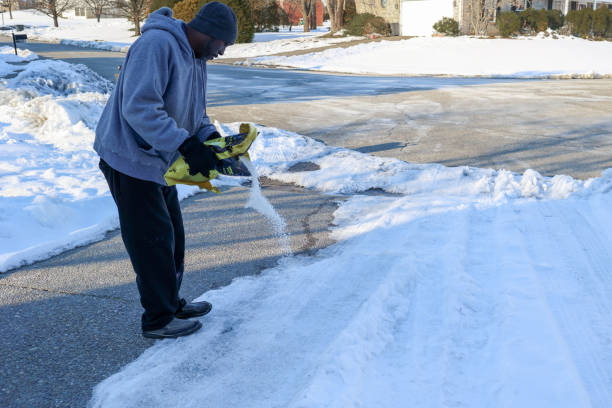
A handheld spreader can make applying granular products easier, particularly if you have a large driveway. However, do not assume that every salt spreader can handle sand.
Sand is generally heavier and coarser than many de-icing products. Depending on the spreader’s design, it may clog the opening or fail to distribute the material evenly. Check the manufacturer’s instructions to see whether the model is suitable for sand before putting it inside.
For smaller areas, a scoop or shovel may be all you need. You can distribute sand by hand over the sections that require extra traction, without purchasing additional equipment.
How Can You Reduce the Amount of Salt You Use?
Whether you have a gravel or concrete driveway, clearing snow promptly can reduce the need for de-icing products. Salt is not a substitute for shovelling or snow removal. Removing snow before it becomes packed down makes it easier to manage ice and can reduce the amount of product needed afterwards.
Apply salt only where it is necessary for safety, and follow the recommended application rate. Avoid spreading it over areas where nobody walks or drives. Salt can also affect nearby plants and contribute to chloride entering soil and waterways when snow melts.
Sand is not completely maintenance-free either. It can collect in drains and along driveway edges, so sweeping up excess material when conditions allow is worthwhile. Ontario’s guidelines on snow disposal and de-icing operations encourage conservative use of de-icing chemicals and proper protection of stored salt and sand from precipitation and runoff.
Salt or Sand: Which Should You Choose?
There is no single answer for every driveway. For gravel, sand is often a practical choice when you need better traction, especially on slopes and areas where vehicles have difficulty getting a grip. For concrete, sand can help reduce slipping without exposing the surface to another de-icing product, making it particularly useful during the first winter after installation.
Salt has its place when you need to melt or loosen ice, but temperature, concrete age and the amount applied all matter. If ordinary rock salt is too cold to work effectively, adding more is unlikely to solve the problem.
For my own winter driveway maintenance, I like having sand stored in a covered bin so it is ready when slippery conditions develop. Having it close at hand makes it easier to deal with trouble spots as they appear. A little preparation before the next snowfall or freezing rain can make winter driveway maintenance more manageable.