How to Clean a Yoga Mat and Keep It Fresh Longer
9 min read
1728 words
I have learned that keeping a yoga mat clean is one of those small chores that is easy to put off. You use it, roll it up and put it away, and before you know it, it has been through quite a few workouts without getting a proper cleaning.
A yoga mat comes into contact with your hands, feet, sweat, body oils, dust and whatever is on the floor underneath it. Even when mine looks clean, I know that doesn’t necessarily mean it is.
The good news is that cleaning a yoga mat doesn’t have to be complicated. I prefer to keep things simple rather than turning it into another big household chore. A quick wipe after use, a more thorough cleaning when needed and proper storage can make a big difference.
One thing I would recommend before trying any cleaning method is checking the care instructions for your particular mat. Yoga mats aren’t all made from the same material, and what works for one may not be appropriate for another.
Why I Clean My Yoga Mat
When I exercise, I know sweat and body oils are going to end up on the mat. Dust and dirt can also collect on the surface, especially when I’m using it at home.
Over time, that can leave a mat smelling less than fresh. It can also leave a film on the surface that I don’t particularly want to be lying on during my next workout.
If you’re taking your mat to a gym or yoga studio, regular cleaning becomes even more important. I don’t want to carry dirt home with me, and I certainly don’t want to leave sweat and grime behind on equipment that other people may use.
For me, regular cleaning is simply part of looking after the mat.
What I Use to Clean a Yoga Mat
I don’t think you need a lot of supplies.
I would keep a soft, clean cloth and a yoga mat cleaner on hand. I also like having a second dry cloth available if I need to remove excess moisture.
A dedicated yoga mat cleaner is convenient because it is made for this particular type of surface. I would rather use a product designed for yoga mats than grab a strong household cleaner without knowing how it might react with the material.
Of course, you don’t have to spend a fortune either.
Can You Use a Natural Yoga Mat Cleaner?
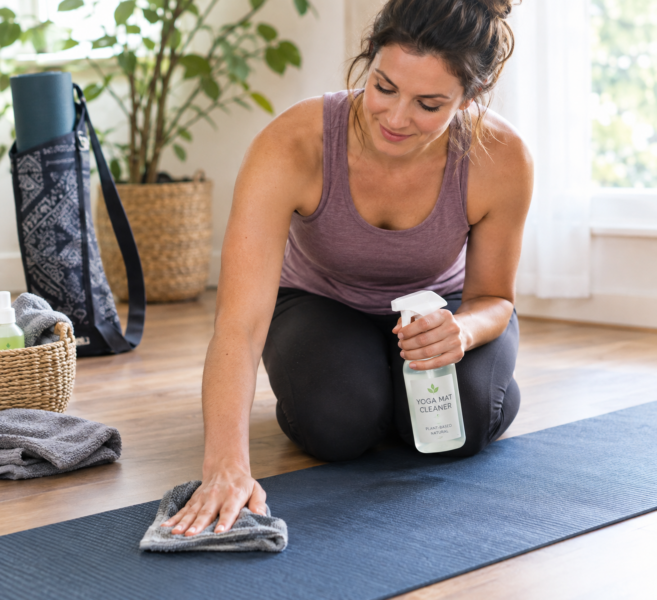
If you’re like me and prefer more natural cleaning products when possible, there are yoga mat cleaners made with plant-based or naturally derived ingredients.
One product I would consider is Manduka Organic Yoga Mat Cleaner. It is specifically made for yoga mats and is an option for someone who wants a commercially prepared cleaner rather than making one at home.
I would still read the label and check whether it is suitable for your particular mat.
I’ve seen plenty of homemade yoga mat cleaning recipes that use ingredients such as vinegar, essential oils or citrus. While those ingredients may sound harmless, I wouldn’t automatically assume they are safe for every type of yoga mat.
Natural doesn’t always mean compatible with every material.
If I’m unsure about a product, I’d rather check the manufacturer’s care instructions first.
How I Clean My Yoga Mat After Using It
For regular cleaning, I don’t think you need to completely wash the mat after every workout.
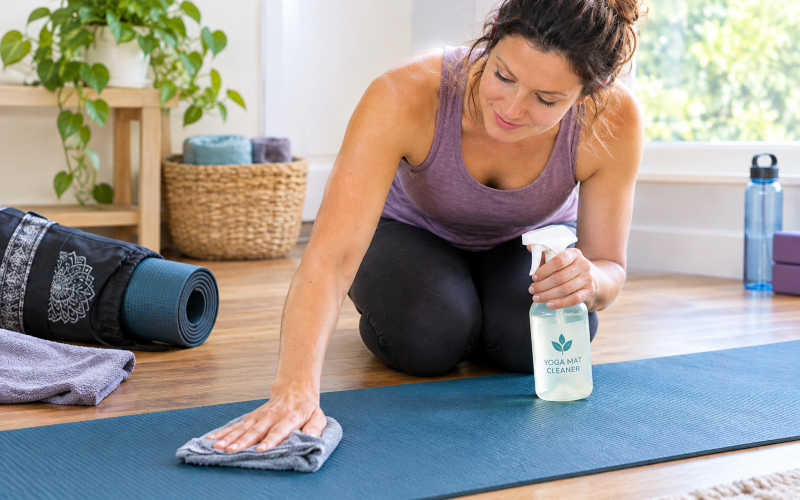
After I’m finished, I would start by wiping the surface with a clean, soft cloth. If the mat needs more attention, I use a cleaner specifically intended for yoga mats and follow the directions on the bottle.
I pay particular attention to the areas where my hands and feet spend the most time. Those areas naturally receive more sweat and body oils.
I also avoid soaking the mat unless the manufacturer specifically says that it is safe to do so.
Once I’ve finished cleaning it, I let the mat dry completely before rolling it up.
That last part is important.
Don’t Roll Up a Wet Yoga Mat
This is something I think is easy to overlook.
If I clean a mat and immediately roll it up while it is still damp, I’m trapping that moisture inside. That’s not what I want.
Instead, I let it air dry somewhere with good airflow. Depending on the material and how wet it is, that can take some time.
I would much rather wait for the mat to dry properly than put it away damp and end up with an unpleasant smell later.
How Often Should You Clean a Yoga Mat?
There isn’t a magic number that works for everyone.
If I’m using a mat occasionally and don’t sweat much, a quick wipe after use may be enough for routine maintenance.
Someone who practices yoga several times a week or does hot yoga will obviously need to clean their mat more frequently.
My approach is simple: the more I use it and the more I sweat, the more often I clean it.
I think it is easier to spend a few minutes cleaning the mat regularly than to ignore it for months and then have to deal with accumulated dirt and odour.
Don’t Forget the Bottom
I have to remind myself not to concentrate only on the surface where I exercise.
The bottom of a yoga mat can collect dust, hair and dirt from the floor. If you have pets, you probably know exactly how quickly pet hair can find its way onto just about everything.
Every so often, I turn the mat over and clean the underside according to the manufacturer’s instructions.
It also helps to keep the floor underneath the mat reasonably clean. There’s not much point in carefully cleaning your yoga mat and then putting it straight onto a dirty floor.
Does a Yoga Mat Bag Help Keep It Clean?

I think a yoga mat bag is a useful accessory, particularly if you take your mat outside the house.
A yoga mat bag doesn’t actually clean the mat. Instead, it helps protect it.
If I carry a rolled-up mat without a bag, it can come into contact with the floor, the trunk of my vehicle, walls or other dirty surfaces. A bag gives the mat an extra layer of protection while I’m transporting it.
It can also make carrying the mat much easier.
There is one thing I would never do, though: put a wet yoga mat inside the bag.
The mat should be completely dry first. Otherwise, the bag can trap moisture around it.
And remember that the bag needs cleaning too. If the bag is collecting sweat, dust and dirt, I’m not really accomplishing much by putting a clean mat inside a dirty bag.
For that reason, I like the idea of a washable yoga mat bag.
What About a Yoga Towel?
If you tend to sweat a lot during exercise, I think a yoga towel is another useful option.
A washable yoga towel sits on top of the mat and absorbs sweat during your workout. Instead of all that moisture going directly onto the mat, the towel takes some of it.
The big advantage for me is that I can simply wash the towel after use.
A towel doesn’t eliminate the need to clean the yoga mat, but it can help keep the mat fresher between cleanings.
What I Wouldn’t Use on a Yoga Mat
I wouldn’t automatically reach for bleach, strong disinfectants or harsh household cleaners.
I also wouldn’t assume that dish soap, laundry detergent or another everyday cleaning product is safe simply because it cleans other surfaces in my home.
Some yoga mats can be damaged by harsh chemicals or excessive moisture.
I also wouldn’t scrub aggressively. A soft cloth should be sufficient for routine cleaning in most cases.
And I definitely wouldn’t put a yoga mat into the washing machine unless the manufacturer specifically says that it is safe.
Natural Rubber Mats Need Extra Care
If you have a natural rubber yoga mat, I would pay particular attention to the manufacturer’s instructions.
Natural rubber mats can have different cleaning requirements from other types of mats. Some manufacturers recommend specific cleaners and advise against soaking the mat.
I wouldn’t experiment with a natural rubber mat using a homemade cleaner without checking first.
This is one situation where spending a few minutes reading the care instructions could save you from damaging a fairly expensive yoga mat.
Simple Things I Do to Keep a Mat Fresher
For me, keeping a yoga mat fresh isn’t just about cleaning it. A few simple habits help too.
I try to use the mat on a clean floor, allow it to air out after a workout and avoid rolling it up while it is damp.
If I’m transporting it, a yoga mat bag helps keep it away from dirty surfaces.
A yoga towel can also help if I’m having a particularly sweaty workout.
And if I’m storing the mat for a while, I want it somewhere dry rather than in a damp area where moisture can become a problem.
My Takeaway
I’ve found that taking a few minutes to look after a yoga mat is much easier than trying to rescue one that has been neglected for months.
I don’t think you need an elaborate cleaning routine. I would start with a simple wipe after use, use a yoga mat cleaner when necessary and make sure the mat is completely dry before putting it away.
If you prefer natural products, a commercially made natural or organic yoga mat cleaner can be a good option. Manduka Organic Yoga Mat Cleaner is one product I would look at, but I would still check that it is suitable for your particular mat.
I also think a yoga mat bag is worth considering if you regularly take your mat to a gym, studio or other location. It won’t clean the mat, but it can help protect a clean mat from picking up more dirt during transportation.
Most importantly, I would check what your yoga mat is actually made from before choosing a cleaner. PVC, TPE, natural rubber and other materials can have different care requirements.
For me, the goal isn’t to have a complicated cleaning routine. It’s simply to keep the mat fresh, protect the material and get as much use out of it as possible.