Karaoke Machines: What’s Trending for Home Karaoke?
7 min read
1336 words
Karaoke has come a long way from the machines many of us remember from years ago. You no longer need a stack of karaoke CDs, a television with a special connection, and a pile of wires just to sing a few songs. Today’s karaoke machines are much more connected. Many work with Bluetooth, streaming, smartphones and smart TVs. Some have their own screens, while others are designed to use the television you already have.
And now artificial intelligence is becoming part of the karaoke experience.
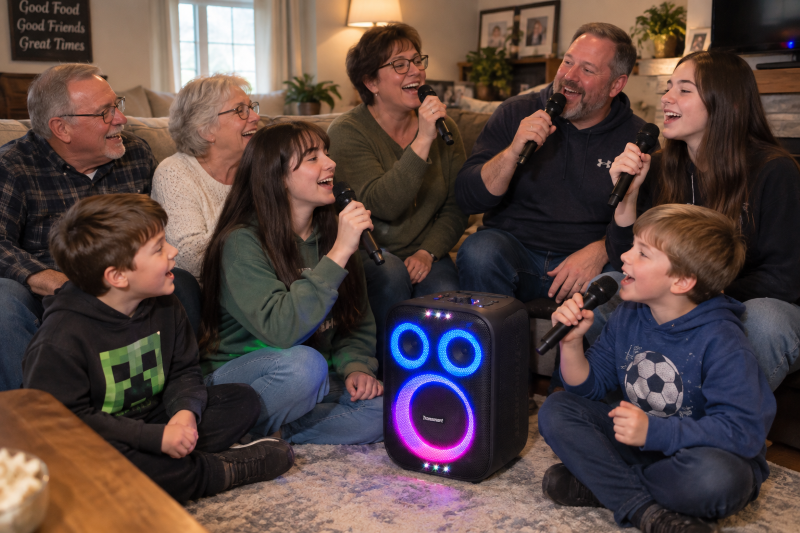
Tronsmart brings AI karaoke to the Halo 210
One of the newest examples is the Tronsmart Halo 210, announced in September 2026.
The portable party speaker combines karaoke features with AI technology, including Tri-level AI Vocal Removal. Instead of having to find a separate karaoke or instrumental version of a song, the system can adjust or remove the original singer’s vocals in real time.
It also includes Smart Lead Vocal, which Tronsmart describes as a virtual singing guide that provides cues for melody, timing and lyrics. That could be particularly useful for people who enjoy singing but are not necessarily confident karaoke performers.
The Halo 210 also reflects several other trends showing up in newer karaoke equipment. It has optional dual wireless microphones, Bluetooth 6.0, Auracast connectivity, microphone and guitar inputs, app controls and a rechargeable battery rated for up to 18 hours of playtime.
The speaker is priced at US$179.99 without the wireless microphones or US$219.99 with two microphones according to Tronsmart’s announcement. Canadian pricing and availability can vary.
What makes the Halo 210 particularly interesting is that it shows how karaoke is moving beyond simply playing a special karaoke track. AI can now become part of the actual singing experience.
AI vocal removal could change how we use karaoke machines
The idea of removing vocals from music is not completely new, but newer AI based systems are making the feature more sophisticated.
Instead of searching for an instrumental version of a favourite song, AI can separate the original vocals from the music and allow the singer to control how much of the original voice remains.
Tronsmart’s three level system is one example. You can leave the original vocals intact, reduce them or remove them completely.
For people who know the words to hundreds of songs but cannot find karaoke versions of them, this could make a big difference.
It also means the music library available for karaoke does not necessarily have to be limited to traditional karaoke tracks.
Wireless microphones are becoming standard
One of the biggest changes is the move away from wired microphones.
Many newer karaoke systems come with two wireless microphones, making it easier for two people to sing together without worrying about cables running across the floor.
Rechargeable microphones are also becoming more common.
For a home setup, wireless microphones can make the whole experience feel much less complicated.
Built in screens are getting smarter
Some newer all in one karaoke machines include a built in screen.
Depending on the model, the screen may display lyrics, song choices, controls, apps or videos. Some systems are designed to provide a more complete karaoke experience without requiring a separate television.
If you are considering one with a screen, check exactly what the screen does before buying. A large display does not necessarily mean you have access to songs without a phone, subscription or another device.
Your television can become the karaoke screen
Another popular approach is using a karaoke machine with your existing television.
Instead of reading lyrics from a small built in display, you can put the words on your big screen. Modern karaoke machines designed for TV use may connect through HDMI or other audio and video connections.
This can make sense for anyone who already has a good smart TV and does not want another large screen taking up space.
Streaming has replaced the old CD collection
Remember buying karaoke CDs?
That is becoming much less important.
Today’s systems increasingly rely on streaming, karaoke apps and internet connected devices rather than physical song collections.
That means you can have access to a much larger selection without storing dozens of discs.
There is a catch, though.
Some karaoke services require a subscription. Before buying a machine, find out whether the advertised song library is included or whether you will need to pay separately for access.
Portable karaoke is becoming more practical
Karaoke machines are also becoming portable.
Instead of a large dedicated system sitting permanently in the living room, there are now compact party speakers with rechargeable batteries and wireless microphones.
The Tronsmart Halo 210 is a good example of this direction. It is designed as a portable party speaker as well as a karaoke system, with up to 18 hours of battery life and IPX4 splash resistance.
That makes the newer generation of karaoke equipment useful for more than singing in front of the television.
Bluetooth is now an important feature
Bluetooth has become a major part of the karaoke experience.
It allows you to connect phones, tablets and other compatible devices without running another cable across the room.
It also means a karaoke machine can double as a regular Bluetooth speaker when nobody feels like singing.
That is worth considering when comparing models.
A machine that can be used for everyday music may get considerably more use than one that only comes out for karaoke night.
What is actually trending in karaoke machines?
Looking at the latest products, several features are becoming particularly noticeable:
AI vocal removal: New systems are using AI to reduce or remove the original singer’s voice.
Smart singing assistance: Features such as Tronsmart’s Smart Lead Vocal are designed to help singers stay with the melody, timing and lyrics.
Wireless microphones: Two microphone setups are increasingly common for duets and group singing.
Built in screens: Some machines are moving toward all in one designs with their own lyric displays.
TV connectivity: Other systems let you use the television you already own for lyrics.
Streaming and apps: Physical karaoke discs are giving way to digital music libraries.
Portable speakers: Rechargeable battery powered systems make karaoke easier to move around.
Better connectivity: Bluetooth and technologies such as Auracast are making it possible to connect devices and, in some cases, multiple speakers.
The result is a karaoke machine that is increasingly more like a portable entertainment system than the karaoke machines many people remember.
What should you look for?
Before buying a karaoke machine, think about how you will actually use it.
Ask yourself:
- Do I want a built in screen?
- Will I use my television for lyrics?
- Does it include two wireless microphones?
- Are the microphones rechargeable?
- Can I connect my phone?
- Does it work with the karaoke apps I want to use?
- Does it require a subscription?
- Can it play regular music through Bluetooth?
- Does it have a rechargeable battery?
- Can it connect to a TV?
- How easy is it to move?
- Does it offer AI vocal removal?
- Can I get replacement microphones if one stops working?
The answers will probably narrow down your choices more than a long list of technical specifications.
Karaoke machines are becoming entertainment systems
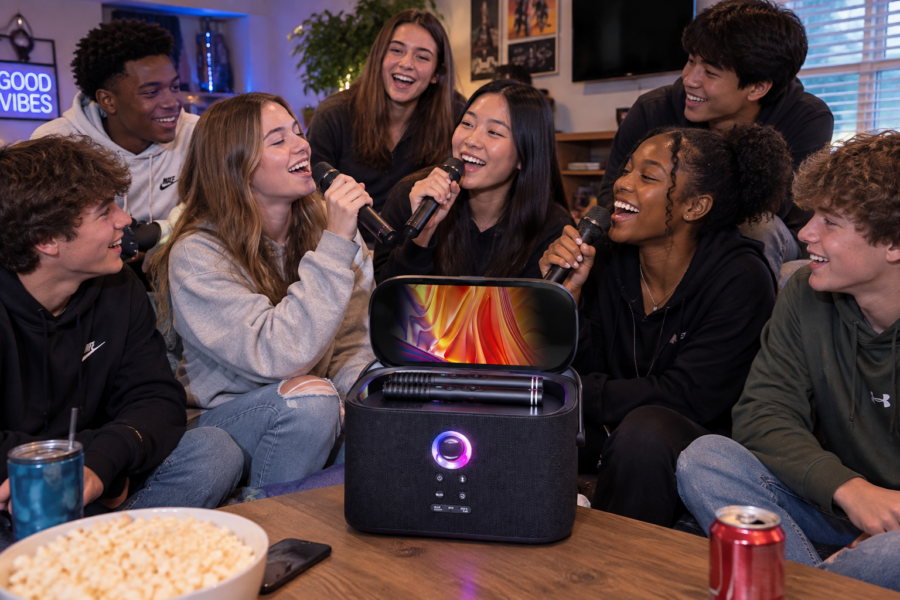
The most interesting change in karaoke is that the machines are no longer just karaoke machines.
They are becoming entertainment systems that combine speakers, microphones, streaming, Bluetooth, lighting, apps and increasingly sophisticated audio technology.
The arrival of products such as the Tronsmart Halo 210 shows that AI is now becoming part of that evolution too.
For someone who simply wants to sing along with friends, a basic Bluetooth karaoke speaker may be plenty.
For someone who wants a more advanced setup, features such as AI vocal removal, smart singing assistance, wireless microphones and multi speaker connectivity are opening up possibilities that were not available on the karaoke machines of the past.
Karaoke is still about singing, of course.
The technology around it is simply getting a lot smarter.
This article is for general information only. Features, compatibility, pricing and subscription requirements vary by manufacturer and model. Check the manufacturer’s specifications before purchasing.