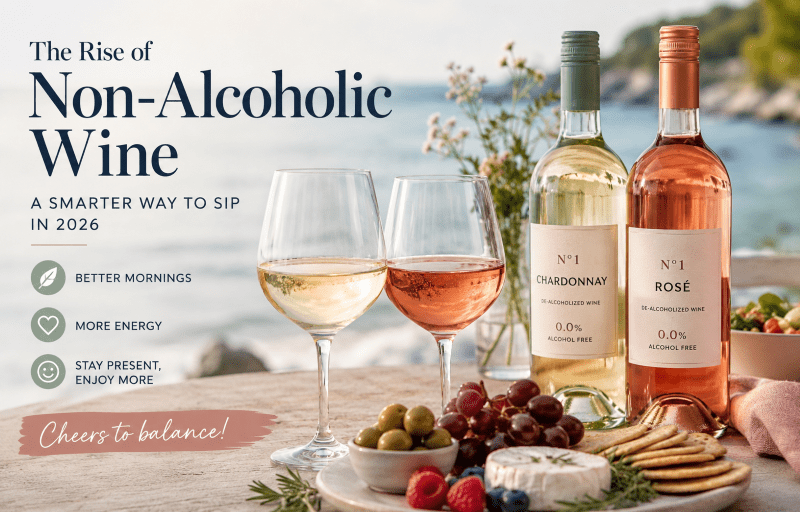
Why Non-Alcoholic Wine is the Must-Have for Summer 2026
4 min read
621 words
The way people approach social drinking is evolving quickly. In 2026, more individuals are embracing alcohol-free lifestyles or reducing alcohol consumption without giving up the social experience of drinking. What once peaked during “Dry January” has now become a year-round movement known as the sober-curious lifestyle. This shift is not about restriction—it’s about balance. Many people want to stay present at social events, maintain energy, and avoid the negative effects of alcohol the next day. As a result, non-alcoholic wine (NA wine) has become one of the fastest-growing beverage categories worldwide.
What is Non-Alcoholic Wine?
Non-alcoholic wine is real wine that has had most or all of the alcohol removed after fermentation. Unlike grape juice, it starts as traditionally fermented wine before undergoing a dealcoholization process.
Modern NA wines are significantly more advanced than early versions, offering improved flavour, aroma, and complexity.
Why Non-Alcoholic Wine is Growing in Popularity
Health and Wellness Trends
Consumers are increasingly focused on sleep quality, mental clarity, hydration, and calorie control. Non-alcoholic wine allows enjoyment of a familiar beverage without alcohol-related side effects such as hangovers or fatigue.
Social Inclusion
NA wine allows individuals to participate fully in social events such as weddings, dinners, and summer gatherings without feeling left out.
Lifestyle Flexibility
The sober-curious movement is not about strict abstinence. Many people reduce alcohol intake rather than eliminate it entirely, making NA wine a flexible choice.
How Non-Alcoholic Wine is Made
Modern alcohol-free wine production uses advanced methods designed to preserve flavour while removing alcohol.
- Spinning Cone Column Technology
- Vacuum Distillation
- Reverse Osmosis
These techniques carefully extract alcohol while retaining aroma compounds, acidity, and flavour structure.
Why Sparkling Non-Alcoholic Wine is So Popular
Sparkling non-alcoholic wine is one of the fastest-growing segments in the category. The bubbles enhance texture and recreate the celebratory feel of traditional sparkling wine.
It is especially popular for weddings, summer parties, outdoor dining, and holiday celebrations.
Best Food Pairings for Non-Alcoholic Wine
Patio Pairings
- Fresh salads
- Seafood dishes
- Grilled vegetables
- Light appetizers
BBQ Pairings
- Grilled skewers
- Smoky vegetables
- Plant-based burgers
- Barbecue platters
Tips for Choosing the Best Non-Alcoholic Wine
- Look for low added sugar and clean ingredient lists
- Choose reputable or specialized NA wine producers
- Try tasting packs before buying full bottles
- Serve chilled for best flavour (even reds)
The Future of Alcohol-Free Wine Culture
The rise of non-alcoholic wine in 2026 reflects a broader cultural shift toward mindful drinking and intentional living. Instead of removing social rituals, NA wine is reshaping them by offering more flexibility and control.
For many, it represents expansion rather than restriction—more choices, more balance, and more enjoyable social experiences.
Frequently Asked Questions (FAQ)
What is non-alcoholic wine?
Non-alcoholic wine is real wine that has undergone a process to remove most or all of its alcohol while retaining flavour and aroma compounds.
Does non-alcoholic wine contain any alcohol?
Most non-alcoholic wines contain a very small trace amount of alcohol, usually under 0.5%, depending on the production method and region.
Is non-alcoholic wine healthy?
Non-alcoholic wine may offer benefits such as fewer calories and no alcohol-related side effects like hangovers. However, it should still be consumed as part of a balanced lifestyle.
Why is non-alcoholic wine becoming popular?
Its popularity is driven by wellness trends, improved production quality, and a growing interest in mindful drinking and alcohol-free lifestyles.
What does non-alcoholic wine taste like?
Modern non-alcoholic wines are designed to mimic traditional wine, offering fruit-forward flavours, acidity, and aroma, though they are often lighter in body.
Conclusion: Alcohol-free wine is no longer a niche alternative—it is becoming a mainstream choice for people seeking balance, wellness, and flexibility in their social lives. Starting with a single bottle is an easy way to explore this growing category.