Why Family Dinners Still Matter for Families
7 min read
1230 words
Remember the classic image of family dinners? A bustling table, the aroma of home-cooked food, laughter, and stories shared around a central hub. It was a time for connection, for checking in, and for simply being together.
For many families, that picture can feel increasingly difficult to achieve. Today’s families are often juggling work, school, commuting, sports, appointments, homework, and other commitments. Dad might be eating a “laptop lunch” at his desk, while Mom navigates the drive-through, passing burgers to children eating between hockey practice and dance class. By the time everyone gets home, there may be little time or energy left for everyone to sit down together.
The family table, once a natural gathering place, can easily become a temporary landing spot for mail, backpacks, and homework. Yet while family life has changed considerably, the value of sharing a meal hasn’t necessarily disappeared.
The Changing Family Dinner
The challenge of finding time for family meals isn’t new. An older Canadian study commissioned for M&M Meat Shops found that nearly 10 percent of Canadians reported that they never sat down for dinner with their partner or family, while fewer than 40 percent said their family sat down together for a daily meal.
Because this research dates back to the early 2010s, these figures should be considered a historical snapshot rather than a current measure of Canadian family eating habits. What the study does illustrate is an issue that remains familiar to many parents: busy schedules can make regular family meals difficult to maintain.
Rather than expecting families to recreate a traditional dinner every night, it may be more realistic to focus on creating regular opportunities to eat and connect whenever schedules allow.
More Than Just a Meal: Why Family Dinners Matter
A family meal is about more than the food on the plate. Research has found associations between regular family meals and several positive outcomes for children and adolescents, including healthier dietary patterns and greater family connectedness. However, family meals are only one part of a much larger picture. Family relationships, household circumstances, food choices, and the overall home environment can also influence these outcomes.
In other words, sitting down together isn’t a magic solution to every parenting challenge. It can, however, create a valuable setting for connection, conversation, and healthy routines.
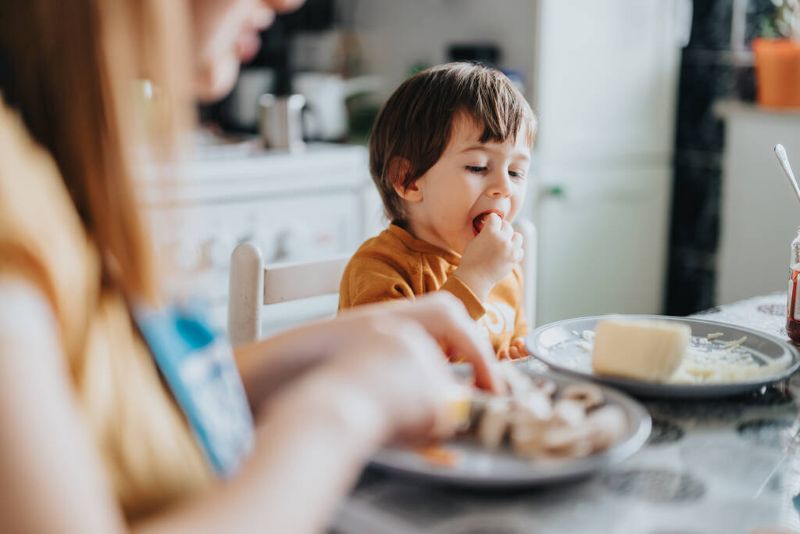
The dinner table can provide a natural opportunity for communication. It’s a place where children can talk about something that happened at school, parents can hear about their child’s day, and everyone can share a laugh or discuss what’s happening in the family. These conversations may seem ordinary, but regular opportunities to check in can help family members stay connected.
The meal doesn’t have to be elaborate, either. Soup, sandwiches, leftovers, frozen meals, or takeout can provide the same opportunity to sit together and talk.
Family Meals and Healthy Eating Habits

One of the more consistent findings in research on family meals is an association with healthier dietary patterns among children and adolescents. Children who regularly eat with their families may consume more fruits and vegetables and fewer sugar-sweetened beverages and some less nutritious foods. Shared meals can also expose children to a greater variety of foods and allow them to observe the eating habits of other family members.
That doesn’t mean every family meal needs to be perfectly balanced. Real families have busy evenings. Sometimes dinner is pizza. Sometimes it is cereal. Sometimes it’s yesterday’s leftovers.
The goal isn’t perfection. Establishing a sustainable routine is far more realistic than creating another source of pressure for parents.
Creating Routine and Family Traditions
Children often benefit from predictable routines, and regular meals can be one small part of that structure. Knowing that there is usually a time when the family comes together can provide consistency, even when the rest of the day feels hectic.
For some families, dinner will naturally be the easiest shared meal. For others, breakfast or weekend lunch may work better. There is no single right schedule for every family.
Food also has a powerful connection to memory. A favourite family recipe, Friday-night pizza, Sunday breakfast, or a meal prepared together can become part of a family’s traditions. These simple rituals can help create a sense of family identity and memories that children may carry into adulthood.
And family traditions don’t have to involve elaborate cooking. Sometimes the simplest meals become the ones everyone remembers.
Family Meals Don’t Have to Happen Every Night
This is perhaps the most important point for busy parents: you don’t have to eat together every night for family meals to have value.
Families have different schedules, cultures, work arrangements, budgets, and responsibilities. Some parents work evenings. Children may have sports or activities during dinner. Some families have multiple households or other circumstances that make a traditional family dinner difficult.
None of this means a family is failing to connect.
Instead of aiming for a perfect dinner every evening, consider finding one or two realistic opportunities each week to sit down together. It might be breakfast before school, a weekend lunch, Friday-night pizza, a simple weekday dinner, preparing a meal together, dessert and conversation after dinner, or even a technology-free snack at the kitchen table.
The goal isn’t perfection. It’s connection.
What About Phones and Screens?
If you’re making time for a shared meal, reducing distractions can help everyone be more present. That might mean putting phones aside, turning off the television, or agreeing that the dinner table is a place for conversation.
But this doesn’t need to become another battle for parents. Real life happens. Someone may need to answer an important call, a teenager may be waiting for information about practice, or a parent may need to check something for work.
The value of family meals comes from the overall pattern of connection, not from achieving a perfect, completely screen-free dinner every night.
Making Family Meals Work in Real Life
If your family’s schedule is already packed, start small. Choose one meal that is realistically manageable and make it a regular opportunity to eat together. Keep simple ingredients available for busy nights, and involve children in age-appropriate tasks such as washing vegetables, setting the table, or helping choose between two dinner options.
Don’t be afraid to rely on convenience foods when you need them. A frozen meal, rotisserie chicken, prepared salad, leftovers, or takeout can still bring everyone to the same table.
A shared meal doesn’t have to be homemade from scratch to count.
What matters is creating a little space in the day to sit down, eat, talk, laugh, and check in with one another.
The Family Table Still Has a Place
The traditional family dinner may look different than it did a generation ago, but the underlying idea remains valuable.
Families don’t need a picture-perfect dining room or a home-cooked meal every evening. They need opportunities to pause the rush of daily life and spend time together.
Sometimes that happens around a dinner table. Sometimes it happens over breakfast, takeout, or a Saturday morning snack. What matters is finding realistic ways to create those moments.
In a world where everyone’s schedule seems to be moving in a different direction, making room for small moments of togetherness can be meaningful.
The most important part of a family meal isn’t what’s on the plate.
It’s the opportunity to connect with the people sitting around the table.
Originally published: 2013 | Updated October 22, 2026