
Signs Your Child May Need a Tutor and How to Help
5 min read
947 words
As parents, we all want our children to succeed academically and feel confident in their learning journey. But sometimes, despite our best efforts, a child might struggle. This often leads to the question: Does your child really need a tutor? The answer isn’t always straightforward. It involves understanding the root cause of their struggles, exploring various support systems, and making an informed decision that truly benefits your child.
When to Consider a Tutor: Identifying the Signs
Before jumping into tutoring, it’s crucial to observe your child’s academic and emotional behavior. Here are some key indicators:
Academic Struggles
- Consistent Low Grades: If your child’s grades are consistently below their potential or significantly lower than the class average, it’s a clear sign they might need extra support.
- Difficulty Understanding Core Concepts: They might pass tests by rote memorization but struggle to explain fundamental concepts, indicating a weak foundation.
- Unfinished or Rushed Homework: Regularly turning in incomplete or poorly done assignments can signal a lack of comprehension or motivation.
Behavioral & Emotional Indicators
- Frustration or Anxiety About Schoolwork: Crying, tantrums, or expressing extreme stress when faced with homework or studying are red flags.
- Loss of Confidence: A child who once enjoyed a subject but now seems disheartened or gives up easily might be struggling internally.
- Avoidance of Schoolwork: Constantly procrastinating, making excuses, or actively avoiding tasks related to school could mean they feel overwhelmed or inadequate.
Specific Learning Challenges
- Diagnosed Learning Disability: Children with conditions like dyslexia, ADHD, or dyscalculia often benefit immensely from specialized, one-on-one instruction.
- Gaps from Missed School: If your child missed significant schooling due to illness, relocation, or other reasons, a tutor can help them catch up quickly.
Before Hiring a Tutor: Explore Alternatives
Tutoring can be highly effective, but it’s not always the first or only solution. Consider these alternatives:
School Resources
- Teacher Conferences: Talk to their teacher. They can offer insights into classroom performance, identify specific problem areas, and suggest strategies.
- After-School Help: Many schools offer free after-school clubs, homework help, or peer tutoring programs.
- School Counselor/Psychologist: If emotional or behavioral issues are prominent, these professionals can provide guidance and support.
Home Strategies
- Consistent Study Routine: Establish a dedicated, distraction-free time and space for homework and studying.
- Parental Involvement: Offer support, not just answers. Help them break down tasks, review material, and practice. Avoid doing the work for them.
- Encouraging Independent Problem-Solving: Guide them to find answers themselves rather than providing them directly.
Improving Study Habits
- Time Management Skills: Teach them how to prioritize tasks and allocate time effectively.
- Organization: Help them organize their notes, binders, and study space.
- Active Learning Techniques: Introduce methods like creating flashcards, summarizing chapters, or explaining concepts in their own words.
Exploring Online Tutoring & Learning Platforms
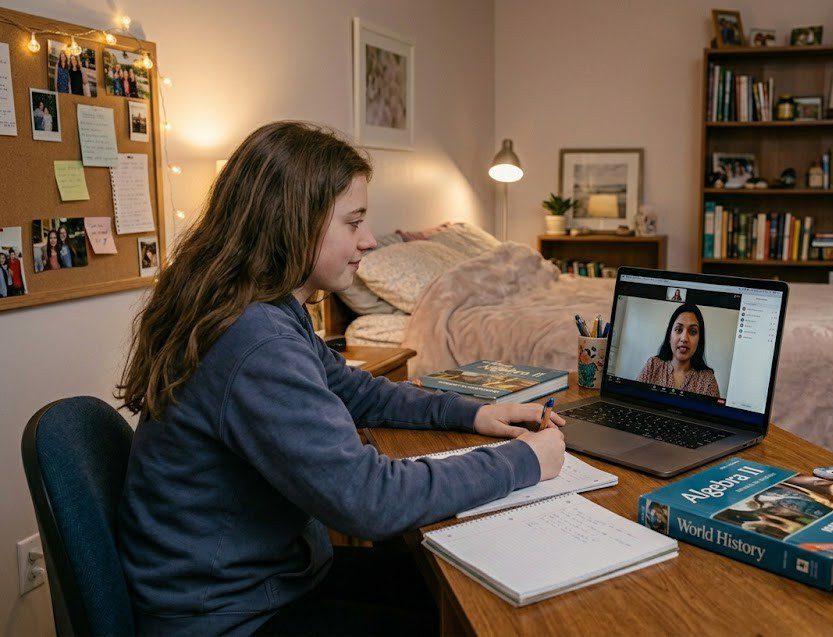
In addition to traditional in-person tutoring, the landscape of education has expanded significantly to include online tutoring services and specialized learning platforms. These digital options offer unique advantages that may suit your family’s specific needs:
- Unmatched Convenience: Online platforms eliminate travel time, allowing your child to receive support from the comfort of home—a major benefit for busy families juggling after-school activities.
- Access to Specialized Expertise: You are no longer limited to local tutors. Online services connect your child with experts in niche subjects or specialized areas like coding, advanced mathematics, or test preparation, regardless of geography.
- Interactive Technology: Many modern learning platforms utilize gamification, adaptive AI, and interactive whiteboards. These tools can make learning feel less like “extra school” and more like an engaging, personalized experience, which is particularly effective for reluctant learners.
- Flexible Scheduling: Many online services offer on-demand tutoring or highly flexible booking options, making it easier to get help exactly when a tough assignment arises or during peak exam preparation periods.
- Comprehensive Progress Tracking: These platforms often provide dashboards for parents, offering clear insights into your child’s progress, areas of improvement, and engagement levels, keeping you informed every step of the way.
How to Choose the Right Platform: When exploring these options, look for platforms that offer a “trial session” so you can gauge your child’s comfort level with the interface and the instructor. Research whether the platform provides live, one-on-one video instruction or if it is a self-paced curriculum, as each child will respond differently to these formats.
When a Tutor is the Right Choice
After exploring alternatives, you might find that a tutor is indeed the best path forward. Here’s why:
- Personalized Learning: A good tutor can tailor their approach to your child’s unique learning style and pace, something often impossible in a busy classroom.
- Bridging Knowledge Gaps: Tutors can meticulously go back to foundational concepts, ensuring a strong understanding before moving forward.
- Boosting Confidence: One-on-one attention in a supportive environment can significantly improve a child’s self-esteem and motivation.
- Preparing for Key Milestones: For standardized tests, entrance exams, or challenging courses, a tutor can provide targeted preparation.
Choosing the Right Tutor
If you decide to hire a tutor, consider these factors:
- Qualifications and Experience: Look for tutors with subject-matter expertise and experience working with children in your child’s age group.
- Teaching Style: Ensure their approach aligns with your child’s learning preferences. Some children thrive with a patient, encouraging tutor, while others need a more structured, direct style.
- Personality Fit: A good rapport between your child and the tutor is crucial for effective learning.
- References: Ask for testimonials or references from other parents.
Ultimately, the decision to hire a tutor is a personal one, unique to each child and family. By carefully observing your child, exhausting school and home-based resources, and then considering the benefits of personalized instruction, you can make the most informed choice to support their academic growth and overall well-being.