Tree Removal: What Homeowners Need to Know
15 min read
2893 words
There is an old tree in my neighbour’s yard next door that appears to be dying. With the house now for sale, I have found myself wondering whether the current owners will have it assessed before they move or whether the new homeowners will eventually have to deal with it. It is not something I would normally give much thought to, but when a mature tree begins to look unhealthy and stands close to neighbouring properties, it naturally raises questions about safety, responsibility and what might happen if it needs to be removed.
A large tree can be a beautiful feature in a yard, providing shade, privacy and character, but there can be a lot involved when it starts to decline. How do you know whether it is actually dying? Who is responsible for having it inspected? Does removing it require a municipal permit, and how much should homeowners expect to pay? These are questions worth understanding before making arrangements, particularly when the tree is close to a home or another property.
In this article, I look at what homeowners in Canada and the United States should know about tree removal, from recognizing potential hazards and understanding local regulations to choosing a reputable tree removal company and knowing what costs may be involved.
When Should a Tree Be Removed?
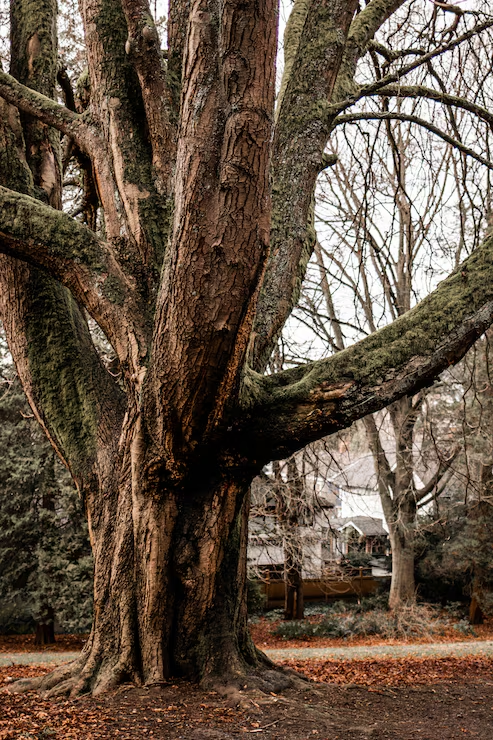
A tree that looks unhealthy does not necessarily need to be removed. Some trees develop damaged bark, lose branches or show signs of disease but can continue to grow with appropriate care. The important consideration is whether the tree has become a safety risk and whether the problem can be managed through pruning, treatment or other professional care.
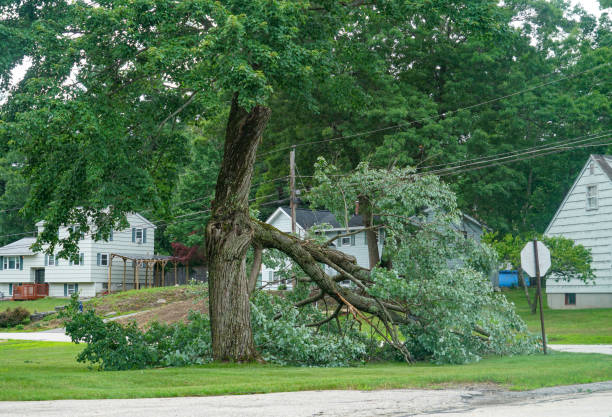
Homeowners should pay attention to changes in a tree’s appearance, particularly when several warning signs occur together. Large dead branches, cracks in the trunk, hollow areas, fungal growth and a noticeable change in the tree’s lean may indicate underlying problems. Soil that appears to be lifting around the roots can also be a concern because it may suggest that the tree is becoming unstable. Recent storm damage, hanging branches and sections of the canopy that appear to be dying are other reasons to have a tree examined.
The Town of Whitby’s Canadian guide to Tree Risk Assessment identifies potential warning signs such as dead branches, large cracks, hollow areas, fungal growth, leaning trunks and damaged roots. The guide recommends having concerning conditions assessed by an ISA Certified Arborist who is qualified to evaluate tree risk. These signs do not automatically mean a tree must be removed, but they are good reasons to seek professional advice.
An experienced arborist can examine the tree, identify possible causes and determine whether pruning or other treatments may be sufficient. If the tree is structurally unsound or could cause serious damage if it falls, removal may be the safest option. Getting a professional opinion is particularly important when a large tree is close to a house, garage, driveway or neighbouring property.
What Happens If a Neighbour’s Tree Appears to Be Dying?
Having a declining tree next door can be unsettling, especially when its branches extend over your yard or it appears tall enough to reach your home if it falls. Even if the tree belongs to someone else, you may understandably worry about what could happen during a strong windstorm or heavy snowfall.
If you notice that a neighbour’s tree appears to be deteriorating, a friendly conversation is often a sensible place to start. Your neighbour may already know about the problem and may have arranged for someone to inspect it. If they are unaware, bringing your concerns to their attention gives them an opportunity to look into the situation before it becomes more serious.
The circumstances can be a little more complicated when the neighbouring property is for sale. You may wonder whether the current owner will arrange for the tree to be assessed before moving or whether the new owners will inherit the concern. A real estate listing does not tell you whether a tree has been inspected, and its appearance alone cannot establish whether it presents a danger. If you are concerned, it is better to focus on the condition of the tree rather than make assumptions about what the current or future owners intend to do.
If you believe the tree poses a genuine safety risk, keep a record of the concerns you have observed and contact your municipality for guidance about the appropriate next steps. If it is close to electrical wires, do not attempt to trim it yourself. Contact the utility company or the appropriate service, as working around power lines requires specialized training and equipment.
How Can You Tell Which Side of the Property Line a Tree Is On?
One of the things I find myself wondering about the tree next door is exactly where it sits in relation to the property line. When looking at a tree from a neighbouring yard, it can be difficult to judge whether the trunk is entirely on one side or whether it is growing directly along the boundary. That distinction can be important because ownership and responsibility may depend on the location of the trunk.
A fence is not necessarily an accurate indication of where a legal property boundary falls. Some fences are installed several inches or even feet inside the owner’s property, while others may have been moved over the years. If there is uncertainty about the boundary, a current property survey is a more reliable way to establish where one property ends and another begins. Homeowners should avoid relying solely on the position of an existing fence when making decisions about tree removal.
In some jurisdictions, a tree growing directly on a boundary line may be treated differently from one located entirely on a single property. Ontario’s Forestry Act contains provisions dealing with trees growing on the boundary between adjoining properties. However, laws differ across Canada and the United States, so homeowners should check the legislation that applies in their own location before arranging any work.
If you are dealing with uncertainty about a fence, property boundary or neighbouring land, you may also find my article on property line disputes, fence law and survey rights helpful. Understanding the legal boundary before arranging tree work can help prevent misunderstandings and costly disputes.
Who Is Responsible for a Neighbour’s Tree?
When a tree is entirely on a neighbour’s property, the property owner will generally be responsible for its care and maintenance, subject to the laws that apply in that area. However, the situation can become more complicated when branches extend over a property line or when the trunk itself sits on the boundary.
In some places, homeowners have limited rights to trim branches that extend over their property. Those rights do not necessarily allow someone to cut back branches in a way that damages or kills the tree. Local bylaws and provincial or state legislation may also place restrictions on what can be done. Before cutting branches from a neighbour’s tree, it is wise to check the applicable rules and speak with the neighbour.
A tree growing directly on a boundary may be subject to shared ownership or specific legal requirements. Ontario’s rules, for example, should not be assumed to apply throughout Canada or the United States. The law can vary considerably between provinces, states and municipalities, making it important to obtain local guidance when ownership is unclear.
There can also be questions about responsibility if a neighbour’s tree falls and damages your home. A tree coming down during a severe storm does not automatically mean the property owner was negligent. However, if the owner knew about a serious hazard and failed to take reasonable steps to address it, that may be relevant when responsibility is considered. If a tree damages your property, take photographs, keep records of the damage and contact your home insurance provider. If there is a disagreement about liability, legal advice may be helpful.
Do You Need a Permit to Remove a Tree?
Before arranging to have a tree removed, homeowners should find out whether a permit is required. Tree protection rules vary between municipalities, provinces, states and local communities. Some areas allow the removal of certain trees on private property without a permit, while others regulate removal according to the tree’s size, species, condition or location.
In Canada, many municipalities have tree protection bylaws that apply to trees on private property. Some require permits when a tree reaches a specified trunk diameter, while others have additional protections for heritage trees, environmentally sensitive areas, conservation lands or properties undergoing development. A homeowner should not assume that a tree can be removed simply because it is located in their backyard.
Ontario homeowners should contact their local municipality before arranging removal. Requirements can differ from one community to another, and a rule that applies in one city may not apply in a neighbouring town. Some municipalities also have restrictions on removing healthy trees, even when the property owner would prefer to replace them with a different type of landscaping.
Similar rules exist in parts of the United States, where local governments may have tree ordinances protecting mature trees, historic trees and trees located in designated areas. Some communities require approval before trees can be removed during construction or major landscaping projects. Homeowners may also be required to plant replacement trees when removal is approved.
A tree removal company may be familiar with local requirements, but homeowners should confirm who is responsible for obtaining any necessary permits. It is much better to check before work begins than to discover afterward that the removal was not authorized.
How Much Does Tree Removal Cost?
The cost of tree removal can vary considerably, and there is no single price that applies to every property. Removing a small tree in an open backyard is generally a different job from taking down a large, mature tree that is growing close to a house, garage or fence. The size and condition of the tree, the difficulty of accessing it and the amount of work involved all influence the final price.
A tree that is easy to reach may be removed using relatively straightforward equipment, while one surrounded by buildings, gardens or overhead obstacles may require a more complicated approach. In some situations, workers must remove the tree in sections and lower branches and pieces of the trunk carefully to avoid damaging nearby structures. This takes additional time, equipment and experience.
The condition of the tree can also affect the cost. A dead or unstable tree may be more difficult and dangerous to work on than a healthy tree because its branches or trunk could break unexpectedly. Trees close to electrical wires can create additional complications and may require coordination with the utility company or specially trained professionals.
Homeowners should also consider what is included in the quoted price. Some companies include hauling away branches and logs, while others charge extra for disposal. Stump grinding, removing wood chips, filling the remaining hole and cleaning up the yard may also be separate services. A quote that initially appears less expensive may not represent the best value if several additional charges are added later.
Getting written estimates from more than one reputable company is a sensible way to compare costs. Make sure each estimate covers the same work, and ask the contractor to explain any services that are not included. The lowest price is not necessarily the safest or most economical choice when dealing with a large tree that could cause serious property damage if removed improperly.
Is Stump Removal Included in the Price?
One detail homeowners sometimes overlook is what happens after the tree has been cut down. Removing the trunk and branches does not necessarily mean the remaining stump will be taken out. Some tree removal companies include stump grinding in their estimates, while others offer it as an additional service.
Stump grinding uses specialized equipment to grind the remaining stump below ground level. The roots are usually left in place to decay naturally over time. If you plan to replant a tree in the same location, install a garden or make use of the space, it is worth discussing stump removal before the work begins. You should also find out whether the company will remove the resulting wood chips and fill the area with soil.
Leaving a stump is not always a problem, particularly if it is in an out-of-the-way part of the yard. However, an old stump can interfere with lawn maintenance, create a tripping hazard or attract unwanted insects. Deciding whether to have it removed at the same time as the tree can help you avoid arranging another service later.
How Do You Choose a Tree Removal Company?
Tree removal can be dangerous, especially when a large tree is close to a home, garage, fence or neighbouring property. It is not a job that should be handed to someone simply because they own a chainsaw or advertise inexpensive services. Professional tree work requires appropriate training, equipment, insurance and an understanding of how trees behave when they are cut.
When looking for a tree removal company, take the time to check its experience and reputation. Ask whether the workers have the appropriate training and whether a qualified arborist will assess the tree before removal. Professional credentials, such as certification through the International Society of Arboriculture, can help homeowners identify individuals with relevant knowledge of tree care and risk assessment.
Insurance is another important consideration. Ask the company for proof of liability insurance and confirm that workers are covered by the appropriate workplace insurance or compensation system in your jurisdiction. Tree removal can involve heavy equipment, falling branches and potential damage to nearby property, so it is important to know that the contractor has suitable coverage.
A reputable company should also be willing to provide a written estimate that explains the work involved. Before agreeing to the job, discuss whether the price includes cutting down the tree, removing branches and logs, stump grinding and cleanup. If a permit is required, confirm who will obtain it and whether the company has included any related fees in the estimate.
It is also reasonable to ask how the workers plan to protect your home, driveway, garden and neighbouring property during removal. A professional contractor should be able to explain the process and identify any potential complications before work begins. Be cautious of anyone who pressures you into making an immediate decision or offers a price without properly assessing the tree and surrounding area.
Can a Tree Be Saved Instead of Removed?
Tree removal should not always be the first option. Mature trees provide shade, privacy and shelter for wildlife, and replacing a large established tree can take many years. If a tree appears to be declining, an arborist may be able to recommend care that improves its condition or extends its useful life.
Depending on the problem, options may include removing dead or damaged branches, addressing structural weaknesses, improving the growing conditions or monitoring the tree over time. Some trees can tolerate a surprising amount of damage and continue to grow, while others may have serious structural problems that are not immediately obvious to someone looking at them from the ground.
The decision should take into account the tree’s overall condition, its location and the potential consequences if a branch or the entire tree were to fall. A tree in an open area of a large property presents a different level of concern from one growing beside a house, over a driveway or close to a frequently used walkway.
A professional assessment can help homeowners understand whether a tree can reasonably be retained or whether removal is the more responsible choice. The goal should be to make an informed decision that considers both the value of the tree and the safety of people and property nearby.
Final Thoughts on Tree Removal
The old tree next door has certainly given me something to think about, particularly now that the house is for sale. My husband actually called the city to clarify the property boundary, so we know the tree is on our neighbour’s property. What remains to be seen is whether the current owners will have it assessed or whether the new homeowners will have to decide what to do about it. It is one of those things you might not give much thought to until a tree close to your own home starts looking unhealthy.
For homeowners, the important thing is not to jump to conclusions based on appearances. A tree that looks unhealthy may not need to be removed, while one that appears fine from a distance may have hidden structural problems. Having a qualified arborist assess a concerning tree can help determine whether it can be saved or whether removal is the safer option. It is also worth checking local bylaws and understanding who is responsible before arranging any tree work.
Whether you are dealing with a tree in your own yard or are concerned about one growing next door, knowing what questions to ask can make the situation easier to navigate. Tree removal involves more than simply cutting down a tree. There are safety considerations, costs, regulations and sometimes neighbouring property concerns to think about. Taking the time to understand these details can help homeowners make informed decisions and avoid unnecessary problems.