
Do You Need Dental Implants? Here’s How to Know
6 min read
1183 words
Over 35 million Americans are living with missing teeth, according to the American Dental Association’s own figures. Tooth loss hits hard. Appearance suffers, obviously. But eating becomes more complicated, speech can change, and the basic mechanics of oral health can quietly unravel. Lost a tooth? Or several? Dental implants have likely entered your thinking. Understanding which signs actually point toward candidacy can spare you a lot of confusion long before you ever end up in a dentist’s chair.
Understanding What Dental Implants Are
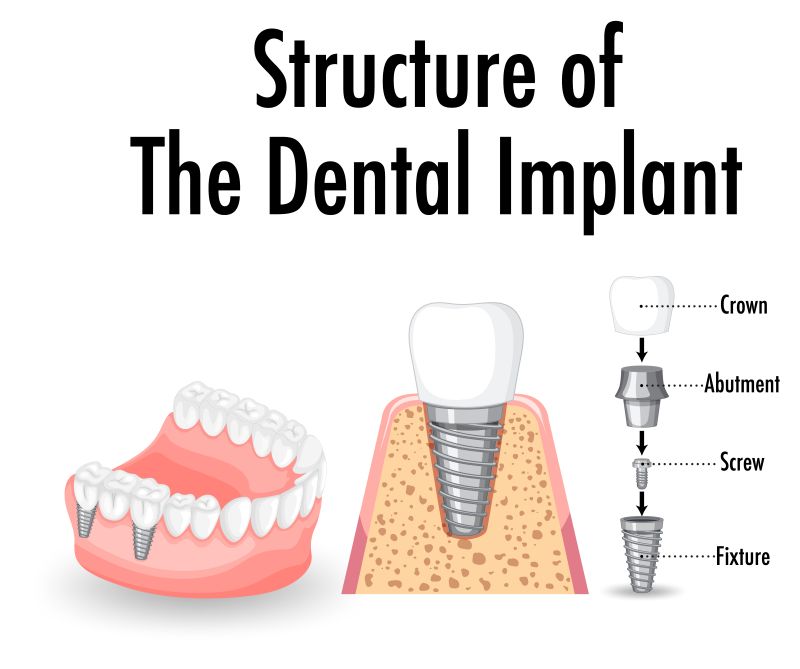
Titanium posts are surgically placed into your jawbone and act as artificial tooth roots. Over time, the surrounding bone fuses to the implant in a process called osseointegration. This fusion creates a stable foundation for crowns, bridges, or dentures.
There is no need for overnight soaking or adhesives. Dental implants function much like natural teeth. You brush them, floss them, and go about your daily routine without giving them much thought.
With proper care and maintenance, dental implants can routinely last 25 years or more. Success rates exceed 95 percent, giving them one of the strongest long-term track records in modern dentistry.
You Have One or More Missing Teeth
Worth stating plainly, even if it seems obvious. A single missing tooth can often be replaced with an implant-supported crown. Missing several teeth? Implant-supported bridges or dentures may be an effective solution.
But statistics alone don’t tell the whole story. They don’t capture the people who stop smiling in photos or cover their mouths mid-sentence out of embarrassment. That part matters too.
Many people who complete the dental implant process describe a significant boost in confidence afterward. It’s not just about restoring function. It’s about feeling comfortable smiling, speaking, and living without self-consciousness again.
Your Jawbone Has Adequate Density and Volume
Dental implants require a strong, healthy foundation. When a tooth is lost, the jawbone beneath it gradually begins to deteriorate due to a lack of chewing stimulation. Without that stimulation, the body receives fewer signals to maintain bone density in the area.
To determine whether there is enough bone to support an implant, your dentist will typically use X-rays or a CT scan to evaluate the condition of your jawbone. If bone loss has occurred, it doesn’t necessarily mean you’re not a candidate for dental implants. In many cases, a bone graft can rebuild the area and create the support needed for successful implant placement.
Timing is often more important than many patients realize. The sooner an implant is placed after tooth loss, the more natural bone can often be preserved, potentially simplifying treatment and improving long-term outcomes.
Other Tooth Replacement Options Haven’t Worked Well
Traditional dentures can slip, feel bulky, and require nightly removal and maintenance. Conventional bridges come with a different drawback: healthy neighboring teeth often need to be reshaped to support the restoration, permanently altering otherwise healthy tooth structure.
Dental implants offer an alternative that avoids many of these concerns. Because implants are anchored directly into the jawbone, they function independently without relying on adjacent teeth for support. They remain securely in place and closely mimic the feel and function of natural teeth.
For patients who have lost most or all of their teeth and are looking for a fixed, non-removable solution, all on 4 quality dental implants in Yuba City, CA provide a full-arch restoration supported by just four strategically placed implants. This innovative approach has transformed the lives of many patients who previously struggled with the limitations of traditional dentures, offering greater stability, improved comfort, and renewed confidence. Those who make the switch from removable dentures often describe the difference as life-changing.
You Are in Good Overall Health
Your overall health plays an important role in both the success of dental implant surgery and the healing process that follows. Certain medical conditions, including uncontrolled diabetes, cardiovascular disease, and disorders that affect bone health, can increase the risk of complications or interfere with the implant’s ability to properly integrate with the jawbone.
However, having a chronic health condition does not automatically rule out dental implants. In many cases, patients with well-managed medical conditions are still excellent candidates for treatment. Your dentist will carefully review your medical history and, when necessary, may consult with your physician to ensure implant placement can be performed safely.
Smoking is another important consideration. Tobacco use can slow healing, reduce blood flow to the gums, and increase the risk of implant failure. For patients considering dental implants, quitting smoking before treatment can significantly improve healing and enhance the likelihood of long-term success.
You Have Healthy Gums and Practice Good Oral Hygiene
Healthy gums are essential for successful dental implant treatment. Active gum disease must be treated before implants can be placed, as infection in the surrounding tissues can interfere with healing and significantly increase the risk of implant failure.
Long-term success also depends on maintaining excellent oral hygiene after the implant is placed. Without proper care, patients can develop peri-implantitis, an inflammatory condition that affects the gums and bone surrounding the implant. If left untreated, peri-implantitis can lead to bone loss and, in severe cases, implant failure.
To protect your investment and support long-term oral health, daily brushing, regular flossing, and routine dental checkups are essential. Patients who maintain good oral hygiene habits are far more likely to enjoy healthy, functional implants for many years to come.
You Are Ready to Invest Time and Money
Dental implants represent a significant investment, both financially and in terms of time. The cost of a single implant can vary widely depending on factors such as geographic location, the complexity of the procedure, and whether additional treatments, such as bone grafting, are required.
The treatment process also requires patience. From the initial consultation to implant placement, healing, and final restoration, the timeline can range from several months to nearly a year. Multiple appointments are typically needed to ensure the implant integrates properly with the jawbone and provides a stable foundation for the final crown, bridge, or denture.
For many patients, however, the long-term benefits outweigh the upfront commitment. Dental implants are designed to provide a durable, functional, and natural-looking solution for missing teeth. If you are prepared to invest in your long-term oral health and follow through with the recommended treatment plan, you may be well-positioned to benefit from dental implant therapy.
Conclusion
Determining whether you’re a candidate for dental implants involves more than just replacing a missing tooth. Factors such as the number of missing teeth, jawbone health, overall medical condition, gum health, and your commitment to long-term oral care all play important roles in the decision-making process.
If traditional tooth replacement options have been disappointing, or if you’re tired of living with gaps in your smile, scheduling a consultation with a qualified dental professional is a practical next step. A thorough evaluation can provide clear answers about your treatment options and whether dental implants are the right solution for your needs.
For many patients, that initial consultation offers valuable insight and peace of mind. Rather than relying on assumptions or online research alone, you’ll receive personalized recommendations based on your unique oral health situation and long-term goals.