

Why Solar Energy is a Brighter Choice for Everyone
8 min read
1439 words
In the 21st century, few technological concepts have captured the public imagination and garnered economic investment quite like solar energy. It is often touted as the definitive solution for our climate crisis and a necessary pillar of future energy security. But beyond the modern-day hype surrounding rooftop panels and massive solar farms, the journey of harnessing the sun’s power is a fascinating story spanning millennia, driven by both immediate needs and fundamental scientific curiosity. This post delves into the undeniable merits of solar energy—why it is so crucial today—and traces its remarkable evolution from ancient architectural theory to the cutting-edge silicon wafers powering our digital world.
Part I: The Good News – Why Solar is Indispensable Today
Before exploring the past, it is essential to ground ourselves in the present. Modern solar energy—specifically photovoltaic (PV) technology—offers a cascade of benefits that position it as more than just an energy source; it is an economic stabilizer, an environmental savior, and a tool for global decentralized development.
1. The Environmental Imperative: Zero Emissions
The most frequently cited benefit of solar energy is its exceptional environmental profile. Once installed, solar panels generate electricity without producing any greenhouse gases, air pollutants, or toxic byproducts during operation. This contrasts sharply with fossil fuel combustion, which releases millions of tons of carbon dioxide and other harmful particulates annually.
By shifting global reliance toward solar, nations can drastically reduce their carbon footprints, mitigating the worst effects of climate change and improving local air quality, leading to better public health outcomes.
2. Economic Independence and Stability
For residential homeowners, the calculation is simple: installing solar panels is a direct investment that serves as a hedge against rising and volatile utility prices. Once the initial investment is recouped—often within 5 to 10 years, depending on location and incentives—that electricity is essentially free.
At a macro level, solar power enhances national energy security. Nations blessed with abundant sunlight can reduce their dependency on imported fuels, insulating their economies from geopolitical instability and the sudden price shocks characteristic of global oil and gas markets.
3. Decentralization and Accessibility
Solar energy is perhaps the most inherently scalable energy technology in existence. It works equally well powering a remote village clinic, charging a single street light, or supplying gigawatts to a major city grid.
This decentralized nature makes it revolutionary for development in remote and off-grid communities. Installing a small solar kit can instantly provide reliable power for lighting, communication, and refrigeration, transforming education and opportunity where traditional grid infrastructure is either too costly or geographically impossible to implement.
Part II: Sunlight Through the Ages – History and Early Discoveries
The concept of harnessing the sun is not new. While the breakthrough that allowed for electricity generation is a modern feat, the practical use of solar principles dates back to the dawn of civilization.
Ancient Roots: The Passive Solar Age
Ancient Greeks and Romans understood the practical applications of solar architecture. They built homes and public baths with specific orientations and south-facing windows (in the Northern Hemisphere) to maximize winter heating and minimize summer overheating. This concept, known as passive solar design, was an early form of energy management.
Legend suggests that Archimedes used polished bronze shields to concentrate sunlight and set fire to Roman ships during the Siege of Syracuse in 212 BC, demonstrating an early, if militaristic, understanding of focused solar thermal power.
The Scientific Enlightenment: Defining the Photovoltaic Effect
The move from thermal applications (heat) to electrical ones (PV) began in the 19th century with fundamental discoveries in physics and chemistry.
1839: The Initial Spark
The year 1839 marks the watershed moment for modern solar technology, though its discoverer was focused on electrochemistry. French physicist Alexandre-Edmond Becquerel, while experimenting with an electrolytic cell, observed that the voltage generated increased when the cell was exposed to light.
This was the first recorded instance of the photovoltaic effect—the process by which light energy is directly converted into electrical energy—though Becquerel’s cell was incredibly inefficient and impractical.
Selenium and the Birth of the Cell
Further steps were taken in 1883 when American inventor Charles Fritts developed the first true solar cell using selenium coated with a thin layer of gold. This cell was a physical demonstration of the PV effect in a solid state. Although only about 1% efficient, it was the direct ancestor of the modern silicon cell.
Around the same time, others were working on solar thermal engines. August Mouchout developed a solar-powered steam engine for use in industrial applications, highlighting the burgeoning interest in non-combustion energy.
Part III: From Lab to Orbit – The Silicon Revolution
The 20th century provided the rapid scientific and economic pressure needed to transition solar from a scientific curiosity into a viable technology.
1954: Bell Labs and the Game Changer
The greatest leap came from the prestigious Bell Laboratories in the United States. While working on semiconductor materials, three scientists—Daryl Chapin, Calvin Fuller, and Gerald Pearson—developed the first truly practical silicon solar cell.
Unlike the cumbersome selenium cells, this new device achieved an efficiency of around 6%. Crucially, silicon was abundant and could be treated with impurities (doping) to create the necessary electronic structure. This 1954 breakthrough is considered the birth of the commercial solar cell.
The Catalyst: The Space Race
Initially, silicon solar cells were prohibitively expensive, costing hundreds of times more than conventionally generated electricity. However, they possessed one undeniable advantage: they worked perfectly in the vacuum of space.
The burgeoning Space Race of the late 1950s and 1960s provided the necessary financial impetus to refine the technology. Satellites required a reliable, lightweight power source that could operate indefinitely without refueling. Solar cells were the only answer.
In 1958, the U.S. Vanguard I satellite became the first solar-powered spacecraft, setting a precedent. The space program’s demand drove down manufacturing costs, improved efficiency, and standardized production processes, slowly paving the way for terrestrial application.
Part IV: The Great Leap Forward – Evolution and Grid Parity
For decades following the Space Race, solar remained a niche technology, primarily used for remote applications like calculators, navigational buoys, and remote telecommunications. The oil crises of the 1970s provided a brief surge in interest, but the technology remained too costly for widespread adoption.
The true evolution of solar into a global energy force has occurred largely since the turn of the millennium.
The Learning Curve and the Chinese Manufacturing Boom
The exponential growth of solar capacity since 2000 is directly tied to two factors: government subsidies and profound manufacturing optimization, particularly in Asia.
As global demand rose, fueled partly by European feed-in-tariff programs (which guaranteed producers a set price for solar electricity), manufacturing scaled up dramatically. This rapid scaling demonstrated the “learning curve” effect: for every doubling of cumulative installed capacity, the cost of PV modules drops by a consistent percentage.
This intense competition and industrialization led to a staggering reduction in costs. In 2010, solar modules cost over $1.50 per watt; today, that figure is often less than $0.20 per watt. This dramatic price collapse has enabled solar to achieve grid parity—the point where solar electricity is as cheap, or cheaper, than electricity generated by local utilities using conventional means.
Modern Technological Advancements
The evolution continues at a rapid pace, pushing efficiencies higher and manufacturing costs lower:
- Thin-Film Technology: These cells use less material (like cadmium telluride) and are cheaper and faster to manufacture, though generally less efficient than traditional silicon crystalline cells.
- Bifacial Cells: These modern cells can absorb sunlight from both the front and the back side, capturing reflected light (albedo) from the ground, significantly boosting overall energy yield.
- Perovskite Cells: A revolutionary and cheap material currently being refined in labs, Perovskites promise ultra-high efficiencies and low-cost production methods like liquid printing, potentially representing the next great leap in solar performance.
The Future is Inherently Bright
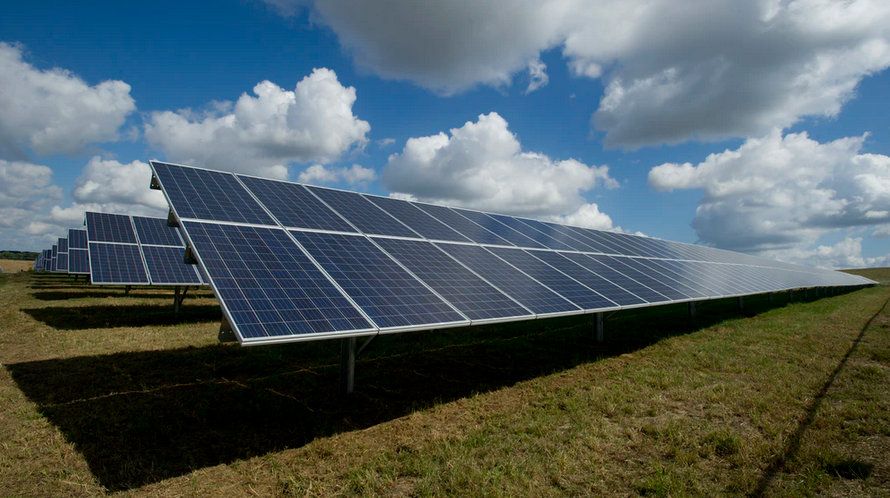
The story of solar energy is a testament to human ingenuity—a slow-burn historical narrative that culminates in a rapid, world-changing revolution. What began as a passive architectural technique evolved into a complex understanding of quantum mechanics and semiconductor physics, culminating in a technology that is now the cheapest and fastest-growing source of new electricity generation globally.
The good things about solar energy are now measurable in trillions of dollars of potential investment, cleaner air, and a more stable climate. As efficiency rises and storage solutions become cheaper, solar power is poised to move past being a supplemental energy source to becoming the dominant power source of the 21st century.
From Becquerel’s voltage spike in the lab to the vast solar arrays stretching across deserts today, the sun’s power is finally being put to work, illuminating a sustainable path forward for humanity.







My parents have solar panels on their home. It was really worth the investment.