The Ultimate Guide to Knife Sharpeners
9 min read
1761 words
Whether you’re a home‑cook perfecting a sauté or a professional chef dicing a mountain of vegetables, a dull knife is more than an inconvenience—it’s a safety hazard. A good knife sharpener restores the blade’s edge, improves precision, and reduces the effort required for every cut. In this guide we’ll explore why a sharp knife matters, the different sharpening technologies on the market, how to choose the right tool for your needs, and step‑by‑step techniques to get the best results every time.
Why a Sharp Knife Matters
- Safety First
A dull blade slips more easily, forcing you to apply extra pressure. That extra force is the most common cause of accidental cuts. A sharp edge bites cleanly into the food, staying under control and keeping your fingers safe. - Better Flavor & Texture
When you slice a tomato or a piece of fish with a keen blade, the cells are cut cleanly rather than crushed. This preserves the natural juices, leading to brighter flavors and a more pleasing mouthfeel. - Efficiency in the Kitchen
A razor‑sharp knife glides through proteins, vegetables, and herbs with minimal effort. You’ll spend less time prepping and more time enjoying the results—especially valuable during busy dinner service or a holiday feast. - Extended Blade Life
Regular maintenance reduces micro‑chipping and uneven wear. A well‑maintained blade retains its original geometry longer, meaning you won’t have to replace expensive knives as often.
Types of Knife Sharpeners
When it comes to sharpening, there isn’t a one‑size‑fits‑all solution. The market offers several distinct categories, each with its own advantages, drawbacks, and ideal user base. Below, we break down the most common types and highlight the scenarios where they truly shine.
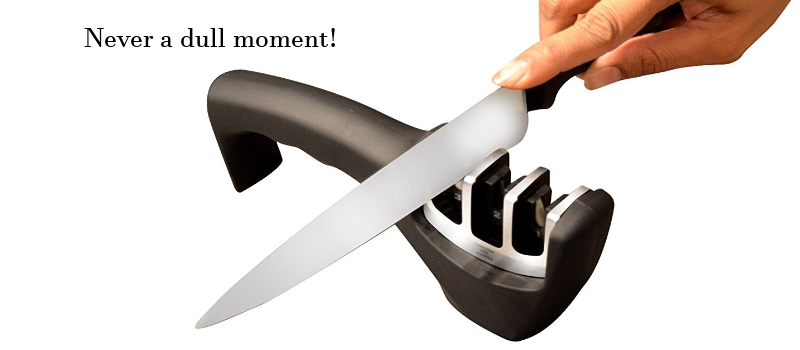
1. Manual Pull‑Through Sharpeners
How they work:
A pull‑through sharpener typically features two (or more) abrasive stations—coarse for repairing a dull edge and fine for honing. The user drags the blade through a set of V‑shaped slots at a specific angle, usually 15°–20° per side for Western knives or 12°–15° for Japanese styles.
Pros:
- Speed: Sharpening takes 10–30 seconds.
- Ease of use: No angle judgment required; the guide slots do the work.
- Compact: Fits easily in a drawer or on a kitchen countertop.
Cons:
- Limited precision: Over‑aggressive steel removal can thin the blade if used excessively.
- One‑size‑fits‑all angle: Not ideal for specialty knives with non‑standard bevels (e.g., Japanese santoku).
Best for: Home cooks who want a quick, “set‑and‑forget” solution for everyday kitchen knives.
2. Sharpening Stones (Whetstones)
How they work:
Whetstones are rectangular blocks of abrasive material (natural or synthetic) with a grit rating (e.g., 400, 1000, 3000, 8000). The user holds the knife at the correct angle and rubs the bevel across the stone in a controlled motion, alternating sides.
Pros:
- Ultimate control: You dictate the angle, pressure, and amount of material removed.
- Versatility: Same stone can sharpen a variety of blade profiles, including single‑bevel Japanese knives.
- Fine finish: High‑grit stones produce a mirror‑like edge ideal for sushi‑grade knives.
Cons:
- Learning curve: Requires practice to maintain consistent angle and pressure.
- Time‑consuming: A proper sharpening session can take 5–15 minutes per knife.
Best for: Enthusiasts, professional chefs, and anyone who wants to master the art of sharpening.
3. Ceramic Sharpeners
How they work:
These handheld devices feature a ceramic rod or block with a fixed angle (often 15°–20°). The ceramic surface is hard enough to remove metal but softer than traditional steel rods, providing a gentle honing action.
Pros:
- Gentle on the blade: Ideal for regular maintenance without aggressive material removal.
- Portable: Light weight makes it perfect for on‑the‑go touch‑ups.
Cons:
- Limited material removal: Not suitable for repairing severely dulled or nicked edges.
Best for: Quick touch‑ups between meals and maintaining a just‑honed edge.
4. Electric Sharpeners
How they work:
Electric models house motor‑driven abrasive wheels or belts. The user guides the blade through pre‑set slots; the machine automatically maintains the correct angle. Some premium units offer adjustable angle settings and multiple grit stages.
Pros:
- Consistent angle: Eliminates user error, giving a uniform edge.
- Speed: Rapid sharpening, comparable to pull‑through models but with more control over grit progression.
Cons:
- Higher cost: Quality electric sharpeners can range from $100 to $300+.
- Potential for over‑sharpening: Automated systems may remove more steel than necessary if used repeatedly.
Best for: Busy kitchens, serious home cooks, and professionals who need fast, repeatable results.
5. Honing Rods (Steel or Ceramic)
How they work:
A honing rod isn’t a true sharpener; it realigns the microscopic teeth of an already sharp edge. You draw the blade across the rod at the proper angle, typically 15°–20°, alternating sides.
Pros:
- Preserves edge: Extends the interval between actual sharpening sessions.
- Simple: No abrasive material to replace.
Cons:
- Doesn’t restore a dull edge: Won’t fix a blade that’s lost its bite.
Best for: Daily maintenance after each use, especially for high‑carbon steel knives that develop a micro‑burr over time.
How to Choose the Right Knife Sharpener for You
| Factor | What to Consider | Recommended Type |
|---|---|---|
| Skill Level | Beginner vs. experienced | Pull‑through or electric for beginners; whetstone for seasoned sharpeners |
| Knife Variety | Western vs. Japanese profiles, serrated blades | Multi‑stage electric or whetstone (with flat side) for diverse sets |
| Frequency of Use | Daily cooking vs. occasional use | Ceramic/steel rod for daily honing; pull‑through for occasional resharpening |
| Budget | Low‑cost vs. premium investment | $20–$40 pull‑through for minimal spend; $150+ electric or high‑grade stone for long‑term value |
| Space & Portability | Kitchen countertop vs. travel | Compact pull‑through or ceramic rod for tight spaces; whetstone for a dedicated sharpening station |
| Safety Concerns | Hands‑free vs. manual control | Electric models with safety guards or pull‑through devices with non‑slip bases |
Tip: If you own a mix of Western and Japanese knives, a two‑stage electric sharpener with adjustable angles or a set of whetstones (coarse + fine) offers the most flexibility.
Step‑by‑Step Sharpening with a Whetstone (The Gold Standard)
Even if you never buy a stone, understanding the technique can improve results with any abrasive system. Below is a concise, repeatable method that works for most kitchen knives.
- Prepare the Stone
- Submerge a water stone in water for 5–10 minutes (or follow the manufacturer’s instructions for oil stones).
- Ensure the surface is level; a stone mat prevents slipping.
- Set the Angle
- For a typical Western chef’s knife, aim for 15°–20° per side.
- Use a simple visual aid: hold the blade so the spine is about the width of a credit card away from the stone—this approximates a 15° angle.
- Coarse Grit (Repair)
- Place the heel of the blade on the stone, tip pointing away.
- Apply light to moderate pressure and draw the blade toward you, moving the edge across the stone in a sweeping motion from heel to tip.
- Perform 8–10 strokes on each side, maintaining the same angle.
- Check the Edge
- Run your thumb perpendicular to the edge (carefully). You should feel a slight “bite” or a faint burr on the opposite side.
- Fine Grit (Hone)
- Flip to the higher‑grit stone (e.g., 3000–8000).
- Repeat the same strokes, this time with lighter pressure.
- Aim for 10–12 strokes per side, ending with a polished, burr‑free edge.
- Strop (Optional)
- Use a leather strop loaded with a fine polishing compound.
- Drag each side of the blade backward across the strop (opposite direction of sharpening) to remove any remaining burr and refine the edge to a mirror finish.
- Test the Sharpness
- Paper Test: Slice a sheet of kitchen paper; a sharp knife will glide cleanly without tearing.
- Tomato Test: A proper edge will cut through a ripe tomato with minimal pressure.
- Clean & Store
- Rinse the stone, dry thoroughly, and store in a dry place to prevent mold.
- Wipe the knife clean and store it in a knife block or magnetic strip away from other utensils.
Maintaining Your Knife Sharpener
A sharpening tool is only as good as its upkeep. Follow these simple habits to extend its life:
- Clean after each use: Wipe pull‑through gratings or electric wheels to remove food particles and metal shavings.
- Flat the stone: Over time, a whetstone can develop uneven spots. Lapping it with a flattening stone or a coarse sandpaper (220 grit) restores an even surface.
- Replace worn components: Ceramic rods and abrasive belts wear out; most manufacturers advise replacement after ~10–20 sharpenings.
- Store dry: Moisture can cause rust on steel sharpeners and degrade ceramic surfaces.
Frequently Asked Questions (FAQ)
Q1: How often should I sharpen my knives?
A: It depends on usage, steel type, and maintenance. As a rule of thumb, hone a high‑carbon steel knife weekly, sharpen it (or run it through a coarse stage) every 2–3 months, and re‑sharpen a stainless steel set every 4–6 months.
Q2: Can I sharpen serrated knives with a regular sharpener?
A: Most pull‑through and electric sharpeners have a dedicated serrated slot. If not, a small ceramic rod or a dedicated serrated‑edge stone works best.
Q3: Is a steel honing rod a replacement for sharpening?
A: No. Honing aligns the edge but does not remove material. Use a honing rod for daily maintenance and a proper sharpener for restoring a dulled blade.
Q4: My knife feels “wobbly” after sharpening. What happened?
A: You may have removed too much steel, especially near the heel, causing the blade to become thin and flexible. Return to a coarser grit and remove a minimal amount, or consider re‑grinding the blade professionally.
Q5: Are electric sharpeners safe for Japanese knives?
A: Some electric models allow angle adjustments down to 12°, suitable for Japanese knives. Choose a unit with adjustable angles and start at the lower setting to avoid over‑grinding the thin bevel.
Final Thoughts: Sharpen Your Skills, Not Just Your Blades
A reliable knife sharpener is an investment in safety, flavor, and culinary confidence. By understanding the strengths of each sharpening system—pull‑through, whetstone, ceramic, electric, or honing rod—you can select the tool that matches your skill level, kitchen workflow, and budget.
Remember: sharpening isn’t a one‑time chore; it’s an ongoing ritual that reflects respect for your knives. Keep the edge honed, the stone flat, and the technique consistent, and you’ll experience the joy of effortless cuts for years to come.
Ready to bring new life to your kitchen arsenal? Pick the sharpening solution that feels right for you, follow the step‑by‑step methods outlined above, and let the crisp, clean slice become your everyday standard. Happy sharpening!