Contractor Deposit: What Happens If Work Isn’t Done?
5 min read
906 words
We’ve all watched those HGTV renovation shows where everything suddenly goes wrong. It may be entertaining on television, but when it happens in your own home, it can be stressful and expensive.
You paid a contractor deposit, signed the agreement and made plans around the renovation. Then the contractor doesn’t show up. Your calls and texts go unanswered, and you’re left wondering whether you’ve lost your money.
Don’t panic just yet. There are steps you can take if a contractor hasn’t done the work you paid for.
Not sure what warning signs to look for before hiring a contractor? Read our guide to contractor red flags before signing an agreement or handing over a deposit.
Step 1: Check Your Contract
Before contacting the contractor again, take a close look at your agreement. Find out what it says about:
- The deposit: How much did you pay and what was it supposed to cover?
- The schedule: Is there a start date or a payment schedule?
- Cancellation: What happens if the project is cancelled?
- Materials: Were some of the deposit funds intended to pay for materials?
- Refunds: Does the contract explain when money can be returned?
Having a written agreement can make it much easier to understand what both you and the contractor agreed to.
Step 2: Don’t Send More Money
If the contractor hasn’t completed the work you’ve already paid for, be very cautious about sending more money.
A contractor may have a legitimate reason for requesting another payment, but you should understand exactly what the money is for before paying anything else. Ask for receipts or other documentation when appropriate.
If the contractor is pressuring you to make another payment before doing the work already agreed upon, that’s a warning sign.
Step 3: Keep Your Records
Save everything related to the project. Don’t rely on your memory if the dispute continues.
Keep copies of:
- The signed contract
- Estimates and invoices
- Receipts
- E-transfer confirmations
- Credit-card statements
- Emails and text messages
- Photos of unfinished work
- Photos of materials purchased for the project
- The contractor’s business name, address and contact information
If you speak to the contractor by phone, consider following up with an email summarizing what was discussed. That gives you a written record of the conversation.
Step 4: Ask for Your Money Back
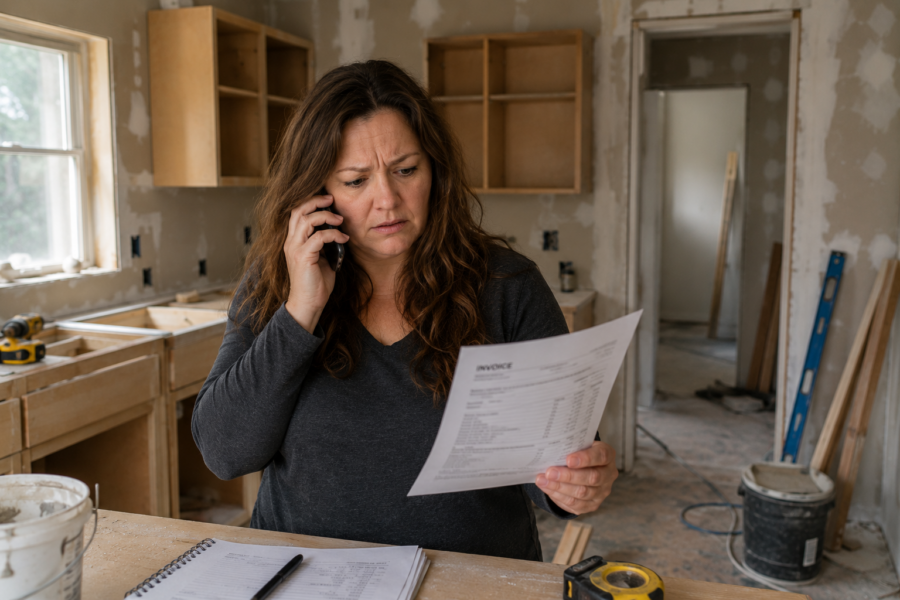
If the contractor has failed to start the work or has abandoned the project, put your concerns in writing.
Explain when you paid the deposit, what work was supposed to be completed and what has happened since then. If you’re asking for your money back, say so clearly.
Give the contractor a reasonable amount of time to respond and keep a copy of your letter or email.
Try to keep the communication calm and factual. Angry messages may feel satisfying in the moment, but they aren’t helpful if the dispute eventually has to be resolved formally.
Step 5: What If the Contractor Refuses or Disappears?
If the contractor won’t respond or refuses to resolve the problem, you may have other options.
Credit card payment: If you paid by credit card, contact your card issuer as soon as possible and ask whether you can dispute the charge because the services were not provided.
Consumer Protection Ontario: Ontario homeowners can contact Consumer Protection Ontario for information about their rights and options when dealing with a contractor.
Small Claims Court: Depending on the amount involved and the circumstances, you may be able to pursue the money through Small Claims Court.
Police: If you believe the contractor deliberately took your money without intending to do the work, or you suspect fraud, you can contact your local police service.
A simple disagreement over a contract isn’t necessarily a criminal matter, so it’s important to understand the difference between a civil dispute and suspected fraud.
Step 6: What If the Contract Says the Deposit Is Non-Refundable?
Seeing the words “non-refundable deposit” in a contract can be concerning, but that doesn’t necessarily answer the entire question.
The circumstances matter. For example, there can be a significant difference between a homeowner cancelling a project after the contractor has purchased materials and a contractor taking a deposit and never starting the work.
If you’re dealing with a significant amount of money, consider getting legal advice before assuming you have no options.
How to Avoid Problems With Your Next Contractor
A little research before hiring someone can save you a lot of trouble later.
- Get a written contract.
- Check references and reviews.
- Verify the contractor’s business information.
- Ask what the deposit covers.
- Avoid paying the entire project cost upfront.
- Use a payment method that gives you a record of the transaction.
- Get a receipt for every payment.
- Make sure the payment schedule is tied to actual progress when possible.
Be particularly cautious if a contractor insists on a large upfront payment, refuses to provide a written agreement or pressures you to pay immediately.
Final Thoughts
Finding yourself in a deposit dispute with a contractor can be frustrating, especially when you’ve been looking forward to getting the work done.
Don’t assume that the money is automatically gone. Start by reviewing your contract, gathering your records and putting your concerns in writing. If the contractor won’t resolve the problem, look into the consumer, payment and legal options available to you.
Most importantly, don’t let embarrassment keep you from taking action. You paid for a service, and you have every reason to expect the contractor to hold up their end of the agreement.