Rental Scams: How to Spot a Fake Rental Listing
12 min read
2338 words
Rental scams can turn the search for a new home into a costly and stressful experience. With more people searching for affordable housing online, scammers have plenty of opportunities to target renters through social media, Facebook Marketplace, community groups and other online platforms.
Finding a place to rent can already be stressful, especially when affordable homes are difficult to find and desirable listings seem to disappear almost as quickly as they appear. When you finally find a home that fits your budget and looks like the perfect place for your family, the temptation to act quickly can be strong.
Unfortunately, scammers know this.
Fake rental listings don’t always look like obvious scams. The property may be real. The photographs may be real. The person communicating with you may even have access to the home.
What you may not know is whether that person actually has the right to rent the property.
For renters, that distinction can mean the difference between moving into a legitimate rental and losing thousands of dollars, along with the home you thought you had secured.
Rental scams can involve stolen photographs, fake landlords, fraudulent rental agreements, copied listings and properties advertised without the owner’s permission. Some scammers go even further, arranging property viewings or using people who pretend to be tenants to make the rental appear legitimate.
That’s why knowing how rental scams work and what warning signs to look for can help you protect your money, personal information and housing security.
The warning is not just coming from consumer advocates. Waterloo Regional Police have issued a rental scam warning for post-secondary students and other residents looking for somewhere to live, highlighting the need for renters to carefully verify rental listings before sending money or personal information.
Rental fraud can happen anywhere, including communities across Ontario. Recent police investigations involving alleged rental scams demonstrate how convincing these schemes can be and how financially devastating they can become.

Rental Fraud Is More Than Losing a Deposit
Rental scams can involve much more than someone losing a small application fee.
Victims may send money for first and last month’s rent, security deposits or other payments. Some may sign what appears to be a legitimate rental agreement, arrange movers, leave their existing homes and prepare to move into the new property.
The problem may not become obvious until they arrive with their belongings and discover that the person who collected their money had no legal authority to rent the property.
A recent investigation by Peel Regional Police illustrates the potential scale of the problem.
According to police, a woman was charged in connection with a series of alleged rental fraud incidents in Brampton. Investigators identified 17 incidents involving more than $60,000 in combined financial losses.
Police allege that residences, including basement apartments, were advertised for rent on social media platforms. Victims reportedly signed rental agreements and sent deposits covering first and last month’s rent. When some arrived at the properties with their belongings, they discovered that the rental accommodations were not actually available.
This type of fraud can leave victims facing not only financial losses but also the immediate problem of finding another place to live.
Another Rental Scam Shows Why Seeing the Property Isn’t Enough
Another alleged rental fraud investigation in Mississauga demonstrates why viewing a property isn’t necessarily proof that a rental is legitimate.
According to Peel Regional Police, victims responded to rental advertisements posted on social media and visited the apartment. Police allege that individuals falsely claimed to be current tenants.
The victims reportedly signed rental agreements online and sent money by e-transfer to secure the unit. When they later arrived to take possession, they discovered that the apartment was unavailable and the landlord could no longer be contacted.
Investigators identified at least eight victims, with combined losses exceeding $30,000, according to police.
The case highlights an important warning for renters: a real property, a convincing rental agreement and an in-person viewing do not necessarily mean the person offering the rental has the authority to rent it.
That is why renters should independently verify the landlord or property manager before sending money.
Why Rental Scams Can Be So Convincing
Rental scams don’t always contain obvious warning signs.
A scammer may create a convincing social media profile, use photographs taken from a legitimate real estate listing and provide a rental agreement that looks professional.
They may communicate with potential tenants for days or weeks, answer questions and build trust before asking for a deposit.
In some cases, the property itself is completely real. The problem is that the person advertising it doesn’t have permission to rent it.
That’s why renters need to verify both the property and the person offering it for rent.
1. The Rent Seems Too Good to Be True
One of the most common warning signs is a rental price that is significantly lower than comparable properties in the same neighbourhood.
A low price doesn’t automatically mean a listing is fraudulent. There may be a legitimate reason for the lower rent. However, if a four-bedroom house is being advertised for hundreds or even thousands of dollars less than similar homes, take the time to investigate.
Scammers know that an unusually good price can encourage people to act quickly.
Compare the rental with similar properties in the area before sending money or providing personal information.
2. You’re Asked for Money Before You Can Properly Verify the Rental
Be cautious if someone asks you to send a substantial deposit before you’ve had an opportunity to verify the property, landlord and rental agreement.
You may hear statements such as:
- “Someone else is interested.”
- “Send the deposit and I’ll hold it for you.”
- “You need to pay today.”
- “I have several people coming to see it.”
Don’t let the fear of losing a rental pressure you into sending thousands of dollars before you’ve done your research.
A legitimate rental opportunity should withstand reasonable questions and verification.
3. Seeing the Property Doesn’t Prove the Person Can Rent It
This is one of the most important things renters need to understand.
You can walk through a real house or apartment and still be dealing with someone who has no authority to rent it.
In the Mississauga investigation, police allege that victims visited the apartment and met people who falsely claimed to be current tenants.
Ask who owns the property and, if you’re dealing with someone other than the owner, ask how that person is authorized to rent it.
A real address does not automatically mean the rental offer is legitimate.
4. The Photos May Have Been Copied
Scammers can take photographs from legitimate real estate or rental advertisements and use them in fraudulent listings.
Before sending money, search the address online and consider performing a reverse image search on the photographs.
You may discover that the same property appears elsewhere under a different name, rental price or set of contact information.
Also look for inconsistencies. For example, the listing may describe a three-bedroom home while the photographs appear to show something different, or the exterior may not match the advertised address.
5. Verify Who Owns the Property
Don’t rely solely on information provided by the person who posted the rental.
Where possible, independently verify the property owner or property management company. If the advertiser claims to be acting on behalf of the owner, ask for information confirming that relationship.
If something doesn’t add up, stop and investigate before sending money.
The question isn’t simply:
“Is this a real house?”
The question is:
“Does this person have the right to rent this house to me?”
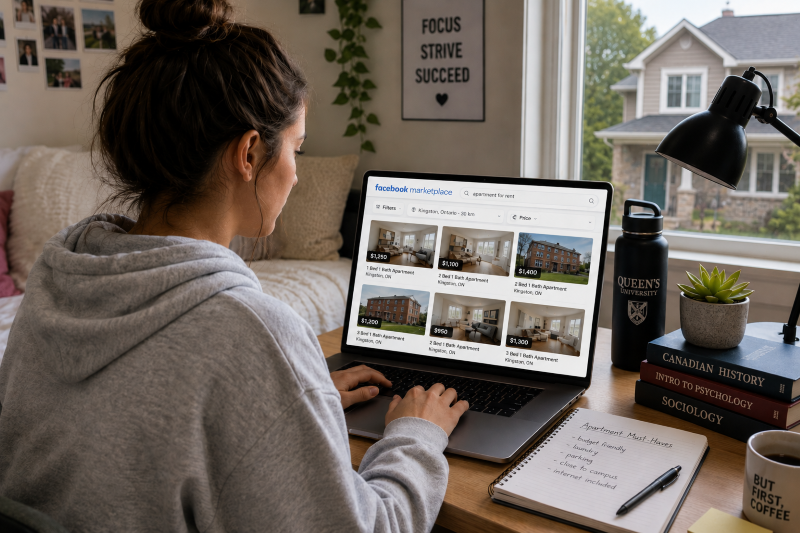
6. Be Careful With Facebook Marketplace and Community Groups
Facebook Marketplace and local community groups can be useful places to find rental opportunities, but a listing appearing in a community group doesn’t mean the advertiser has been verified.
Scammers can join local groups and post attractive rental properties just like legitimate landlords and property managers.
Don’t treat comments such as “Looks legitimate” or “I know this house” as proof that the rental is genuine.
Do your own verification.
The same caution applies to other social media platforms and online classified sites. A listing being online doesn’t make it legitimate.
7. Watch for Pressure
Scammers often create a sense of urgency.
They may claim another family is ready to pay the deposit or tell you that the property will be gone if you don’t send money immediately.
Take a step back.
If someone discourages you from asking questions, verifying ownership or reviewing the rental agreement, consider it a warning sign.
Don’t allow competition for a rental to override basic precautions.
8. Be Suspicious of Unusual Payment Requests
Think carefully before sending a rental deposit using a payment method that offers little protection or may be difficult to recover.
Be particularly cautious about requests for:
- Cryptocurrency
- Gift cards
- Wire transfers
- Cash
- Payments to unrelated individuals
- E-transfers to an account that doesn’t appear to belong to the landlord or legitimate property manager
An e-transfer can also be difficult to recover once the money has been accepted. The fact that someone provides an email address for an e-transfer does not make the transaction safe.
Keep receipts and records of every payment.
9. Protect Your Personal Information
A legitimate rental application may require personal information for credit or identity checks. However, don’t provide sensitive information simply because someone has posted a rental online.
Before sending copies of identification, banking information or other sensitive documents, independently verify the property and the person requesting the information.
Be especially cautious if someone asks for extensive personal information before you’ve viewed the property or confirmed who owns it.
10. Don’t Let a Competitive Rental Market Rush You
When affordable homes are difficult to find, it’s understandable that renters may want to act quickly when a promising property becomes available.
That’s exactly the pressure scammers can exploit.
You may worry that asking too many questions will cause you to lose the rental. But losing a rental opportunity is far better than losing thousands of dollars or discovering that you don’t actually have a legitimate place to live.
Take the extra time to investigate.
A few phone calls and online searches could save you from a very expensive mistake.
How to Check a Rental Before You Pay
Before sending a deposit, take time to investigate the rental.
Search the exact address
Search the property address online. Look for other rental listings, real estate listings or advertisements using different contact information.
Check the photographs
Perform a reverse image search to see whether the photographs have appeared in other listings.
Verify the landlord
Find out who owns or manages the property. Don’t rely exclusively on the information provided by the advertiser.
Ask who has authority to rent the property
If the person advertising the property isn’t the owner, ask how they are authorized to rent it.
Read the lease carefully
Make sure the agreement contains clear information about the property, landlord, rental terms and contact information.
Don’t rush
Be wary if you’re being pressured to send money immediately or discouraged from asking questions.
Keep records
Save screenshots of the listing, messages, emails, phone numbers, rental agreements and payment receipts. These records may be important if something goes wrong.
What If You’ve Already Been Scammed?
If you believe you’ve fallen victim to a rental scam, act quickly.
Contact your bank or financial institution immediately if you’ve sent money. Explain that you believe you’ve been the victim of fraud and ask what options may be available.
Save copies of the original listing, photographs, messages, emails, phone numbers, rental agreement and payment records. Don’t delete conversations, even if the scammer has blocked you.
Report the fraudulent listing to the platform where you found it and contact your local police.
In Canada, suspected fraud can also be reported to the Canadian Anti-Fraud Centre.
If you’re already living in the property when you discover that the rental may have been fraudulent, contact the appropriate local authorities and seek legal advice about your situation. Don’t rely solely on the person who rented the property to you for information about your rights or what you should do next.
Rental Scam Red Flags to Remember
| Red Flag | What It Could Mean |
|---|---|
| Rent is far below similar homes | The unusually low price may be intended to attract attention quickly |
| You are pressured to pay immediately | The person may be trying to prevent you from investigating |
| The person renting the home isn’t the owner | They may not have permission to rent the property |
| Photos appear on other listings | The images may have been copied |
| Unusual payment requests | The money may be difficult to recover |
| You’re asked for sensitive information immediately | Your personal information could be misused |
| The listing is only on social media | The platform does not necessarily verify the advertiser |
| The story changes when you ask questions | There may be information the advertiser doesn’t want you to investigate |
| Someone claims to be a tenant but cannot be independently verified | They may be involved in the scam |
| You’re told to sign an agreement and e-transfer money immediately | You may not have had enough time to verify the rental |
Take the Extra Time to Check
Rental scams aren’t always obvious.
The house may be real. The photographs may be real. You may even be able to walk through the property and meet someone who claims to live there.
The important question is whether the person you’re dealing with actually has the right to rent it to you.
Before handing over a deposit, verify the property, verify the landlord and carefully review the rental agreement.
Don’t let the excitement of finding a home override common sense. If someone is rushing you, avoiding basic questions or asking you to send money before you can properly verify the rental, step back until you can confirm the details.
Taking extra time before sending money could save you thousands of dollars and prevent the much larger disruption of discovering that the home you thought you rented was never legitimately available to you.
A rental listing can look legitimate. That doesn’t mean the person behind it is.