Choosing the Right Custom Coil Manufacturer
4 min read
759 words
When someone searches for a custom coil manufacturer, they are not browsing options casually. This search usually comes at a serious stage of a project. A design is defined, constraints are clear, and performance expectations are non-negotiable. At this point, the wrong manufacturing partner does not just delay progress, it creates risk.
The audience behind this search is typically made up of engineers, R&D teams, OEM buyers, and operations managers working on products where coils are central to functionality. These projects often involve medical equipment, automotive systems, renewable energy applications, industrial controls, or scientific devices. Precision matters, and assumptions are expensive.
This article exists to help those teams understand how custom coil manufacturing really works, what separates capable manufacturers from average ones, and how to choose a partner that can support both innovation and scale.
Why Standard Coils Are Not Enough
Off-the-shelf coils are built for general use. But many modern systems operate in conditions that standard components were never designed to handle.
Custom coil manufacturing becomes necessary when:
- Electrical efficiency must meet tight tolerances
- Miniaturization or complex geometries are required
- Ultra-fine wires or high winding counts are involved
- The environment demands sterile, controlled production
- Reliability must be proven across large production volumes
In these situations, the coil is not a background component. It is often the difference between a device that performs consistently and one that fails unpredictably.
How Custom Coil Manufacturing Actually Works

A serious custom coil manufacturer does not begin with production. It begins with understanding.
The process usually follows four connected stages:
- Requirement Analysis
This includes electrical parameters, physical dimensions, materials, environmental exposure, and regulatory expectations. The more complex the application, the more detailed this stage becomes.
- Design and Prototyping
Manufacturers with strong engineering teams collaborate directly with customers to design and test prototypes. This phase often involves multiple iterations, lab testing, and adjustments until performance is validated.
- Process Engineering and Tooling
For projects that require scale, manufacturers design or adapt automated machinery to ensure repeatability, efficiency, and cost control without sacrificing quality.
- Production and Quality Assurance
This includes controlled winding, inspection of wire integrity, sterile handling when required, and consistent documentation throughout the process.
Manufacturers who treat these stages as connected — not isolated — are the ones capable of supporting complex projects long term.
What the Right Audience Looks for in a Manufacturer
Experienced buyers are not impressed by claims alone. They look for signs of maturity and technical depth.
Key indicators include:
- In-house R&D and testing capabilities
- Experience with fine and ultra-fine wire handling
- Ability to produce both prototypes and mass volumes
- Clear quality assurance procedures
- Willingness to collaborate rather than dictate
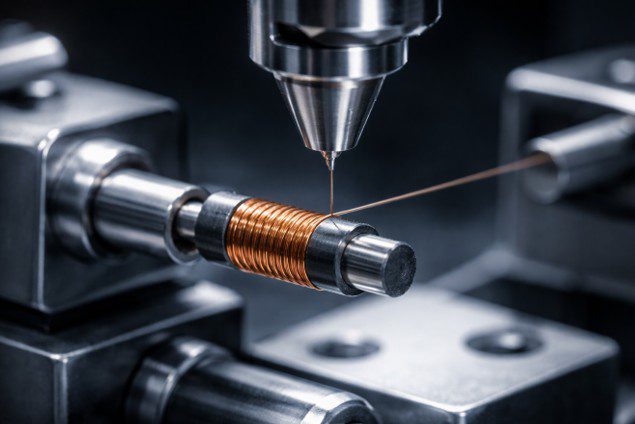
For advanced applications, capabilities such as micro soldering, high-density winding, and custom frame creation are not bonuses — they are requirements.
How to Evaluate a Custom Coil Manufacturer Properly
Choosing a manufacturer should feel like evaluating a technical partner, not selecting a catalog item.
Important questions to ask include:
- How do you validate coil performance before mass production
- What level of customization can you support in materials and geometry
- How do you ensure consistency at high volumes
- What does collaboration look like during design iterations
- How are quality checks integrated into the process
The way a manufacturer answers these questions often matters more than the answers themselves. Clear explanations, realistic timelines, and transparent limitations are signs of experience.
Why Global Manufacturing Structure Matters
Many advanced manufacturers operate across multiple regions, separating R&D, production, and sourcing. This structure allows for:
- Strong engineering oversight
- Cost-effective large-scale manufacturing
- Better control over raw materials and logistics
- Consistent quality across international supply chains
For customers shipping globally, this kind of setup reduces friction and improves long-term reliability.
Common Mistakes Buyers Make
One of the most common mistakes is choosing based on price alone. Another is assuming that any coil manufacturer can handle micro-scale or high-precision work.
Custom coil manufacturing is highly specialized. A manufacturer that excels in one category may struggle in another. Matching capability to application is critical.
FAQs
How early should a manufacturer be involved in the design process?
Earlier than most teams expect. Involving a custom coil manufacturer during the design phase often prevents costly redesigns later and improves performance outcomes.
Is it risky to rely on a single manufacturer for both design and production?
Not if the manufacturer has proven separation between engineering validation and production control. In fact, integrated teams often reduce miscommunication.
What does a good manufacturer do when requirements change?
They adapt transparently. Changes are discussed, tested, and documented — not quietly absorbed or ignored.