
First Day of Fall 2026 in Canada: Date & Time
10 min read
1893 words
Of all the seasons, I have to admit that fall holds a special place in my heart. There’s a certain magic in the air when it arrives. It’s not just one thing, but a collection of sensory moments: the first time you see your breath on a chilly morning, the satisfying crunch of amber leaves under your boots, and the way the sunlight slants low and golden through the trees. It’s the season of cozy sweaters, warm mugs of cider, and the comforting scent of pumpkin pie spice that seems to emanate from every café.
While for many of us, fall feels like it begins with back-to-school season or the moment we swap our iced coffees for hot lattes, there is an official, astronomical starting point. It’s a precise moment dictated not by our calendars or feelings, but by the Earth’s own celestial dance.
So, let’s pull on our favourite flannel, get comfortable, and explore everything you need to know about the first day of fall 2026 in Canada, from the science behind the autumnal equinox to Canadian Thanksgiving and when you’ll get that glorious extra hour of sleep.
Mark Your Calendars: The First Day of Fall 2026 in Canada
Let’s get straight to the most pressing question. The first day of fall in Canada in 2026 was Tuesday, September 22, 2026.
Astronomically, fall begins with the autumnal equinox. In Eastern Canada, the equinox occurred at approximately 8:05 p.m. Eastern Daylight Time (EDT) on September 22.
The exact time varied across the country because of Canada’s different time zones. Here is when the autumnal equinox occurred in the main Canadian time zones:
- 5:05 p.m. PDT in British Columbia
- 6:05 p.m. MDT in Alberta
- 7:05 p.m. CDT in Manitoba
- 8:05 p.m. EDT in Ontario and Quebec
- 9:05 p.m. ADT in Atlantic Canada
- 9:35 p.m. NDT in Newfoundland
These times apply to regions observing the listed daylight time zones. Some communities follow different time arrangements.
So, while some Canadians were preparing dinner and others were enjoying an evening walk, the Northern Hemisphere was reaching an important milestone in its journey around the Sun.
If you’re wondering why the date sometimes falls on September 22 and other years on September 23, the answer lies in the way our planet moves through space and the calendar we use to measure a year.
Who Decides? The Celestial Clockwork of the Autumnal Equinox
You might be wondering who actually gets to decide when fall begins. Is it a secret council of meteorologists or the government? The truth is far more cosmic. The astronomical seasons are determined by the Earth’s axial tilt and its journey around the Sun.
Imagine our planet as a spinning top tilted by approximately 23.5 degrees. As Earth travels around the Sun, this tilt changes how directly sunlight reaches different parts of the planet. During the Northern Hemisphere’s summer, our part of the world is tilted more toward the Sun. As the seasons progress, that relationship changes, bringing cooler weather and shorter days.
The equinoxes are the two moments each year when the Sun crosses the celestial equator. The September equinox marks the beginning of astronomical fall in the Northern Hemisphere, while the March equinox marks the beginning of spring.
The word equinox comes from Latin roots meaning equal and night. Although day and night are nearly equal in length around the equinox, they are not necessarily exactly 12 hours each everywhere.
It’s not a person or committee that decides the first day of fall. Instead, it’s the predictable physics of our solar system. The autumnal equinox marks a transition toward shorter days and longer nights as Canada moves closer to winter.
For the official dates and times of the astronomical seasons, you can consult the National Research Council of Canada.
How Long Does Fall Last in Canada?
The First Day of Fall 2026 in Canada
Once fall arrives, how long do we get to enjoy this beautiful season?
Astronomical fall lasts from the September equinox until the December winter solstice. In 2026, the autumnal equinox occurred on September 22, and winter officially begins on Monday, December 21, 2026.
That gives us approximately 89 days of astronomical fall, filled with colourful foliage, pumpkin patches, Thanksgiving celebrations and opportunities to enjoy the crisp autumn air before winter arrives.
Of course, the weather doesn’t always follow the astronomical calendar. Some parts of Canada experience frost and snow well before the winter solstice, while other regions can enjoy mild temperatures well into December.
There is also a difference between astronomical fall and meteorological fall. Meteorologists use September 1 as the beginning of fall because dividing the year into three-month seasons makes it easier to compare weather and climate data.
So, if you’ve ever wondered why some people say fall begins on September 1 while others point to the equinox, both dates have a purpose. They simply refer to two different ways of defining the season.
When Do Fall Colours Peak in Canada?
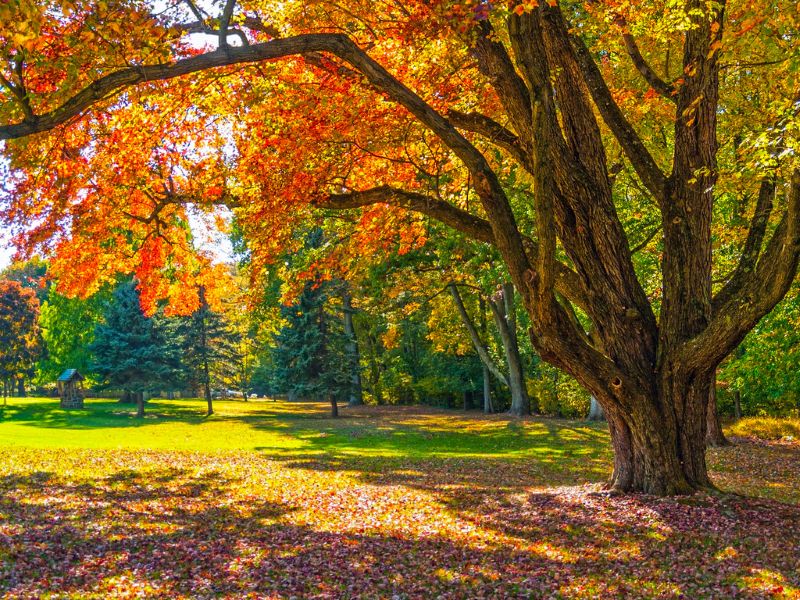
One of the best things about fall in Canada is watching the landscape transform into a beautiful mix of red, orange, yellow and gold.
However, there isn’t one date when fall colours peak across the country. The timing depends on where you live, the local weather, tree species, elevation and other environmental conditions.
In many parts of Ontario and Quebec, colourful leaves often appear from late September into October. Northern regions can see fall colours earlier, while some southern areas experience their most vibrant displays in October or even later.
If you’re planning a scenic drive, a visit to a provincial park or a weekend getaway to admire the foliage, it’s worth checking a regional fall-colour report before leaving home. Weather conditions can change how quickly the leaves turn and how long the colours last.
Fall is also a wonderful time to visit local farms, pick pumpkins, browse farmers’ markets and enjoy a warm drink while taking in the changing scenery.
A Rose by Any Other Name: Is It Fall or Autumn?
Have you ever paused and wondered whether you should say “fall” or “autumn”? It’s a common question, and the simple answer is that both words are correct. They refer to the same season.
Their difference is largely a matter of history and geography.
Autumn is the older of the two words in English. It came into use centuries ago and remains common in British English and other varieties of English around the world.
Fall became popular later, developing from the expression “fall of the leaf.” Its straightforward description of what happens to deciduous trees made it particularly popular in North America.
In Canada, you’ll hear both words used regularly. Some people prefer the familiar expression “first day of fall,” while others favour the more traditional “first day of autumn.”
I tend to use them interchangeably, depending on whether I’m feeling more poetic or more casual. Either way, both words capture that wonderful seasonal change from summer warmth to the cooler days ahead.
Don’t Forget to Fall Back: When Does Daylight Saving Time End in 2026?
One of the familiar events of fall, besides the changing leaves, is the end of Daylight Saving Time. This is when many Canadians turn their clocks back one hour and enjoy an extra hour on the clock.
In 2026, Daylight Saving Time ends on Sunday, November 1 in most Canadian regions that observe it.
The clock change generally takes place at 2:00 a.m. local daylight time, when clocks are turned back to 1:00 a.m. If you have manual clocks in your home, car or other devices, you can set them back before going to bed on Saturday, October 31. Most smartphones and internet-connected devices update automatically.
However, not all of Canada observes Daylight Saving Time. Most of Saskatchewan stays on Central Standard Time year-round, while other communities and regions have their own time arrangements. Yukon also follows Mountain Standard Time year-round.
Because time practices can vary by province, territory and municipality, check your local rules if you’re unsure whether your clocks need to change.
For many of us, the November clock change is a reminder that winter is approaching. The evenings grow darker earlier, temperatures drop and thoughts turn toward warm blankets, comforting meals and the holiday season.
Sweaters, Stuffing and Gratitude: Canadian Thanksgiving 2026
The First Day of Fall 2026 in Canada
No discussion of fall in Canada would be complete without mentioning Thanksgiving. It’s a time to gather with family and friends, enjoy seasonal foods and reflect on the things we’re grateful for.
Unlike Thanksgiving in the United States, Canadian Thanksgiving is celebrated on the second Monday of October.
In 2026, Canadian Thanksgiving falls on Monday, October 12.
For many families, the long weekend is an opportunity to enjoy a traditional turkey dinner with stuffing, potatoes, vegetables and pumpkin pie. Others celebrate with a smaller meal, a visit with friends or a quiet day appreciating the beauty of the season.
Thanksgiving also arrives during one of the most beautiful times of year in many parts of Canada. Depending on where you live, the long weekend can be a perfect opportunity to take a scenic drive, visit a local farm or enjoy a walk among the colourful trees.
Of course, fall weather can be unpredictable, so it’s always wise to bring an extra sweater and have a backup plan in case the rain arrives.
Frequently Asked Questions About the First Day of Fall in Canada
What was the first day of fall in Canada in 2026?
The first day of astronomical fall in Canada was Tuesday, September 22, 2026. The autumnal equinox occurred at approximately 8:05 p.m. Eastern Daylight Time.
Does fall always begin on September 22?
No. The autumnal equinox can fall on September 22 or September 23 in Canada, depending on the year and time zone. The exact moment changes because the calendar year doesn’t align perfectly with the time Earth takes to orbit the Sun.
What is the difference between astronomical fall and meteorological fall?
Astronomical fall begins at the September equinox and ends at the December solstice. Meteorological fall always runs from September 1 through November 30, making it easier to organize seasonal weather records.
When does winter begin in Canada in 2026?
Astronomical winter begins on Monday, December 21, 2026. The winter solstice marks the shortest day and longest night of the year in the Northern Hemisphere.
When does Daylight Saving Time end in Canada in 2026?
In most Canadian regions that observe Daylight Saving Time, clocks turn back one hour on Sunday, November 1, 2026. Some areas do not change their clocks, so check your local time rules.
Embracing the Beauty of Fall in Canada
From the precise moment of the autumnal equinox to Thanksgiving gatherings and the annual clock change, fall is a season rich in science, tradition and simple pleasures.
Whether you’re looking forward to the changing leaves, planning a visit to a pumpkin patch or simply enjoying your favourite warm drink on a chilly morning, there are so many reasons to appreciate this time of year.
Although the first day of fall in 2026 has already passed, the season continues until the winter solstice on December 21. There’s still time to enjoy the crisp air, colourful landscapes and cozy comforts that make autumn such a special part of the Canadian year.
So grab your favourite sweater, pour yourself a warm mug of cider and take a moment to enjoy the season. Sometimes, the smallest things are what make fall feel magical.
Originally published in 2025. Updated October 23, 2026, with current seasonal dates and information for fall in Canada.