Things to Do in Montreal: The Perfect Trip Itinerary
14 min read
2771 words
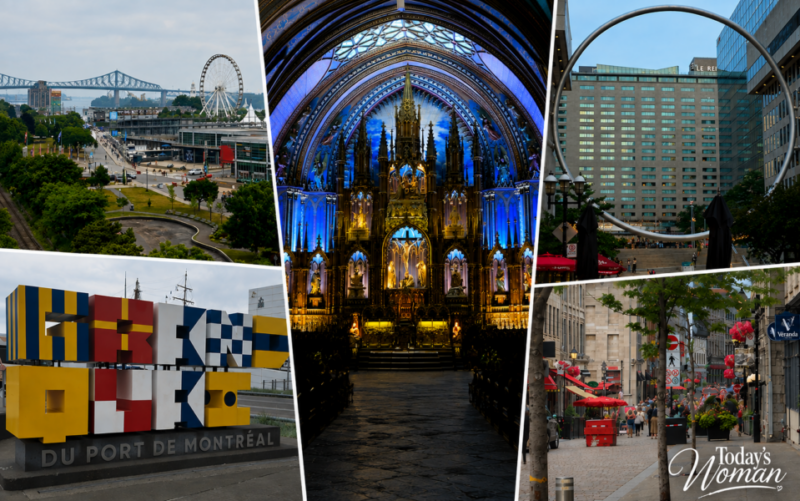
Looking for the best things to do in Montreal? Our first mother daughter trip to Montréal, Québec, showed us just how much this beautiful city has to offer. From historic landmarks and charming Old Montréal streets to incredible food, gardens and unique attractions, Montréal is a destination filled with unforgettable experiences.
Travelling with your children changes as they grow. Family vacations eventually become mother daughter getaways, and those shared experiences take on a whole new meaning.
My daughter makes it a point to take a Summer trip every year. Because she lives with a traumatic brain injury and isn’t able to travel on her own, she invites me to come along. What began as a practical necessity has become one of our favourite traditions, a chance to explore somewhere new while creating memories together.
This year, she chose Montréal for her getaway. She wanted a destination that felt different from home without requiring a long train ride, and Montréal was exactly that. With its European charm, incredible food, historic streets and beautiful green spaces, it quickly won us over.
If you are planning a visit and searching for Montreal attractions, this city offers the perfect mix of history, culture, shopping, food and family-friendly experiences. From exploring Old Montreal to visiting world-class destinations like Notre-Dame Basilica Montreal, the Montreal Botanical Garden and the Montreal Biodome, there is something for every type of traveller.
Despite travelling with a knee injury that meant relying on a cane and taking plenty of breaks, we packed a lot into our visit. This Montreal travel guide shares the places we personally visited during our first trip to this beautiful Québec city.
Day One: Dinner and The Ring
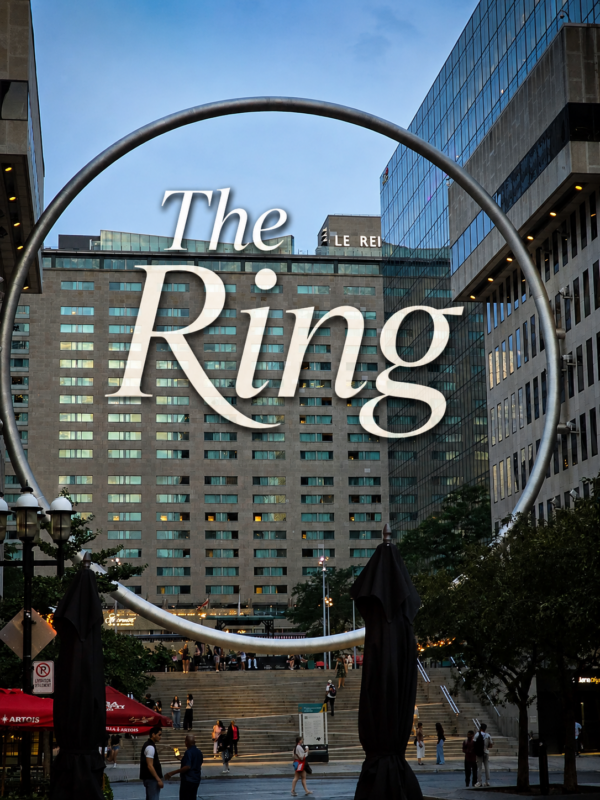
After checking into Tru by Hilton Montreal Centre-Ville, we headed out for dinner before making our way to Place Ville Marie to see The Ring, one of Montréal’s best-known public art installations. Created with a timeless character, The Ring symbolizes the strong connection between Montréal, Place Ville Marie, Montrealers, and visitors from around the world. The massive illuminated sculpture has quickly become an icon of modern Montréal and creates a stunning photo opportunity, especially after dark when it glows against the city skyline. It was the perfect way to begin our vacation and get our first glimpse of the city’s vibrant energy.
Day Two: Old Montreal Things to Do
One of the biggest highlights of our trip was exploring Old Montreal. If you are searching for Old Montreal things to do, this historic district should be at the top of your list. With its beautiful architecture, historic landmarks, charming shops and restaurants, it feels like stepping into another era.
Notre-Dame Basilica Montreal
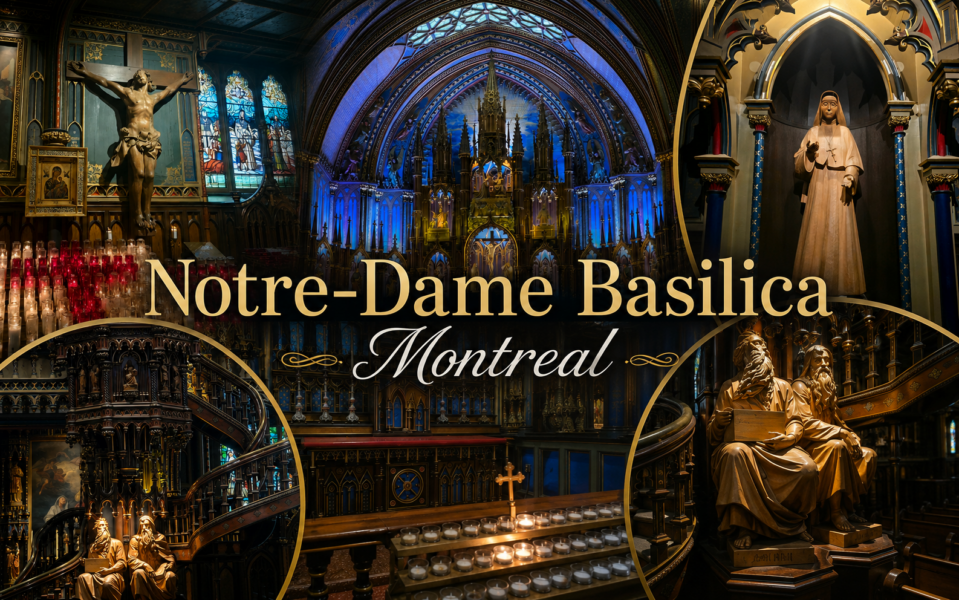
We started our first full day in Montréal at Notre-Dame Basilica Montreal, and it immediately became one of my favourite places in the city.
Located in the heart of Old Montréal, this stunning Gothic Revival church is one of the city’s most recognizable landmarks and welcomes visitors from around the world.
Construction of the basilica began in 1824, when Montréal’s growing Catholic community needed a larger place of worship. Designed by Irish-American architect James O’Donnell, the church took several years to complete and was officially opened in 1829.
Interestingly, O’Donnell was so moved by the beauty of his own creation that he converted to Catholicism on his deathbed and was buried in the crypt beneath the basilica.
The exterior is impressive, with its twin towers standing proudly over Place d’Armes, but nothing prepares you for stepping inside. The moment you walk through the doors, you are surrounded by deep blues, rich gold accents, intricate wood carvings and a ceiling filled with detailed artwork.
The famous blue vaulted ceiling, colourful stained glass windows and beautifully carved altar make it unlike any church I have visited before.
Even if you are not particularly interested in churches or religious history, Notre-Dame Basilica is one of the top Montreal attractions you shouldn’t miss. It is a place where history, architecture and art come together, and it was easily one of the highlights of our Montréal visit.
Exploring Old Montreal Shops
After leaving the basilica, we spent some time browsing the souvenir shops that line the charming streets of Old Montréal before stopping at McDonald’s for a coffee break. One of my favourite parts of travelling is discovering the little moments between attractions. Walking along the cobblestone streets, looking through small shops and taking in the historic buildings is what makes Old Montréal so special.
Château Ramezay and the Governor’s Garden
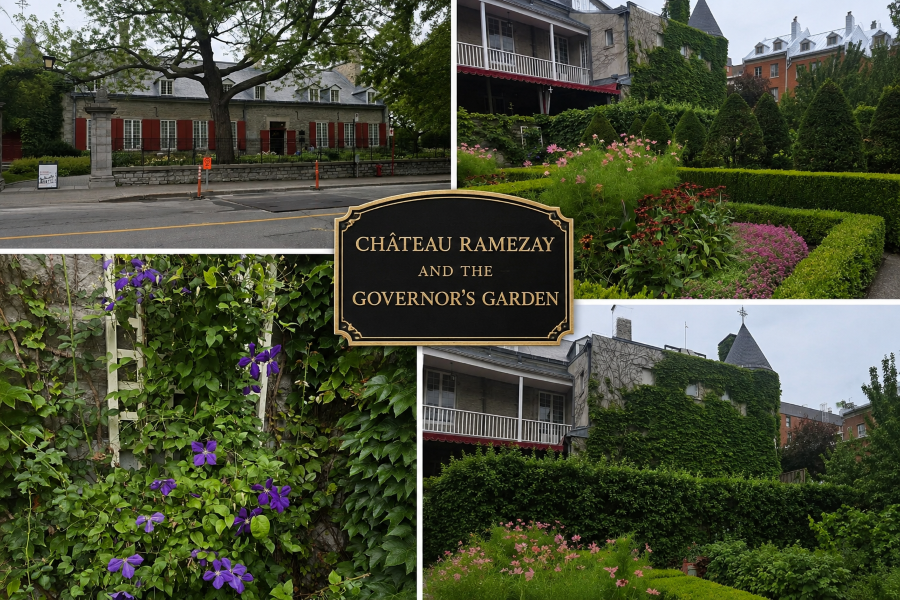
From there, we headed to Château Ramezay, one of the oldest historic buildings in Montréal.
Built in 1705, the château was originally the private residence of Claude de Ramezay, who served as governor of Montréal under New France. Over the centuries, the building has played many roles, including serving as a military headquarters, government office and gathering place for important figures in Canadian history.
Today, Château Ramezay operates as a museum dedicated to bringing Montréal’s early history to life. Visitors can learn about life during the French and British colonial periods through historic rooms, artifacts and exhibits.
We explored the beautiful Governor’s Garden behind the museum, which was one of the peaceful surprises of our day. The garden is free to visit and offers a quiet escape from the busy streets of Old Montréal.
If you are interested in touring the historic house itself, it is worth calling ahead to confirm guided tour times. A guided experience can help bring the stories of Montréal’s past to life.
Bonsecours Market
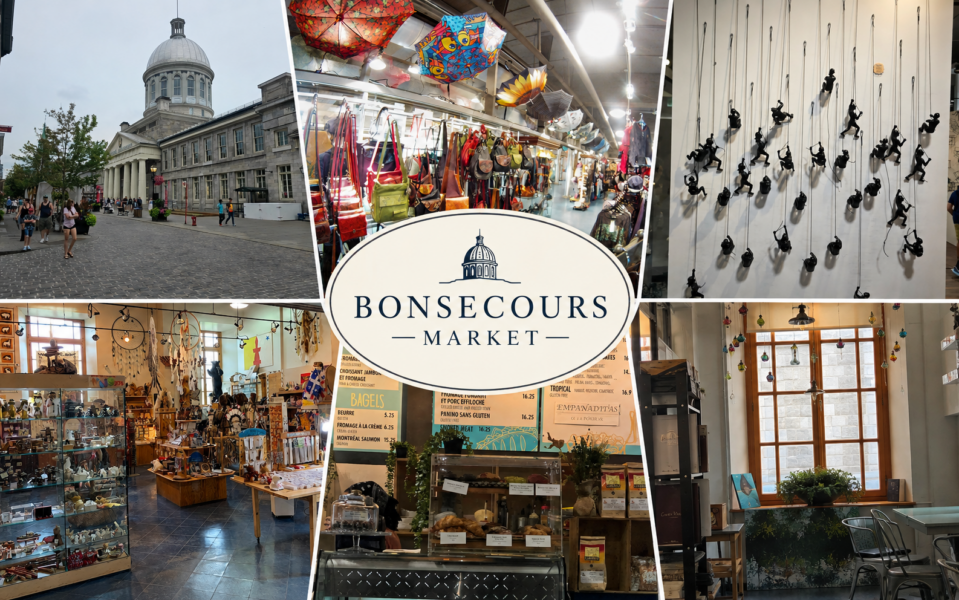
Our next stop was Bonsecours Market, another historic treasure and one of the most popular Old Montreal attractions.
Built between 1844 and 1847, the beautiful domed building was once the main public market in Montréal and even served as the city’s City Hall for a short time. For more than a century, it was a gathering place where farmers, merchants and residents came together.
Today, the historic building has been transformed into a collection of boutiques featuring Québec-made products, artwork, jewellery, home décor and unique gifts.
While you won’t find a traditional farmers’ market here anymore, it remains a wonderful place to browse and discover local artisans. It is a great stop if you are looking for a meaningful souvenir rather than something mass produced.
Lunch at Comptoir 400
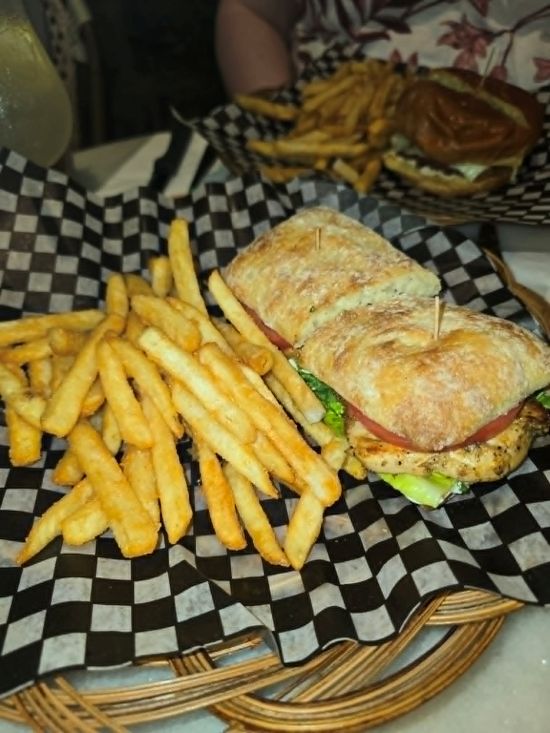
By lunchtime, we were ready for a break and enjoyed a delicious meal at Comptoir 400, which became one of our favourite restaurant discoveries of the trip. The atmosphere was welcoming, the service was exceptional, and it was the perfect place to relax before continuing our afternoon of exploring. If you’re looking for more dining recommendations, be sure to check out my Where to Eat in Montreal: Restaurant Guide, where I’ve shared more of the great restaurants we enjoyed during our visit.
Pointe-à-Callière Museum
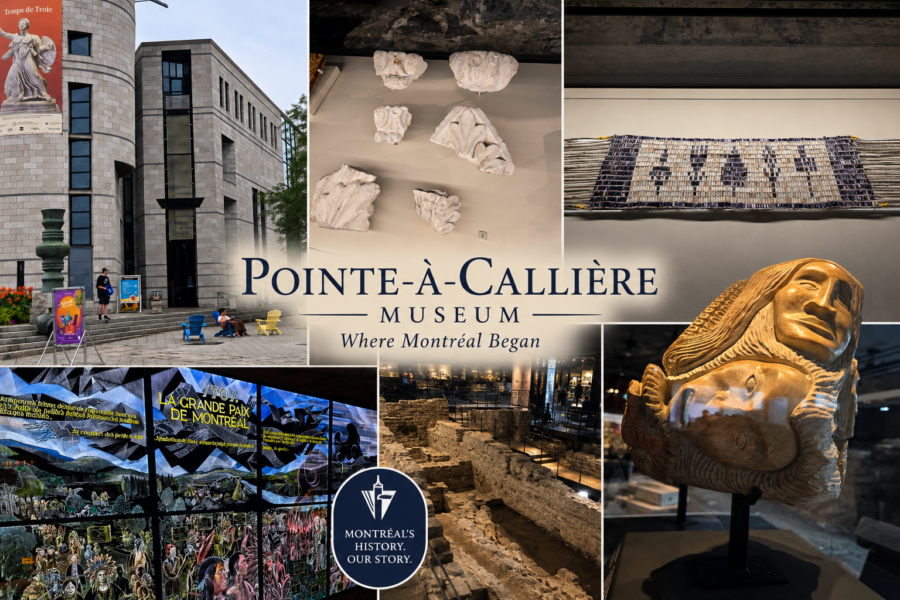
After lunch, we headed to Pointe-à-Callière, Montréal’s archaeology and history museum, built on the very site where the city was founded.
One of the most unique aspects of the museum is that it’s constructed over authentic archaeological remains. As you make your way through the exhibits, you can walk above underground ruins and see the foundations of some of Montréal’s earliest buildings, giving you a fascinating glimpse into the city’s past.
Opened in 1992 as part of Montréal’s 350th anniversary celebrations, the museum traces Montréal’s story from the time Indigenous Peoples first inhabited the island, through the arrival of French settlers, and into the city’s growth as one of Canada’s most vibrant urban centres.
Here are a few of the highlights from our visit:
- Museum Entrance – The striking modern building at Place Royale blends beautifully into the historic surroundings of Old Montréal.
- Archaeological Artifacts – Decorative stone fragments uncovered during excavations reveal the craftsmanship and architectural details of some of Montréal’s earliest buildings.
- Indigenous Wampum Belt – Crafted from shell beads, wampum belts were used to record treaties, alliances, and important agreements between Indigenous Nations.
- The Great Peace of Montréal (1701) – One of the museum’s most memorable exhibits tells the story of the historic peace treaty between the French and dozens of Indigenous Nations, bringing decades of conflict to an end.
- Indigenous Sculpture – This beautifully carved figure highlights the museum’s commitment to sharing the rich history and cultures of the Indigenous Peoples who lived here long before European settlement.
I always enjoy learning about the history of the places I visit, and Pointe-à-Callière certainly offers plenty to discover. While it wasn’t my favourite attraction in Montréal, I’m still glad we visited because it provided a deeper appreciation of the city’s roots. If you’re someone who loves history, archaeology, or museums, you’ll likely find this to be a worthwhile stop. If your time in Montréal is limited and history isn’t a major interest, there are other attractions that may appeal to you more.
Gelato in Old Montreal
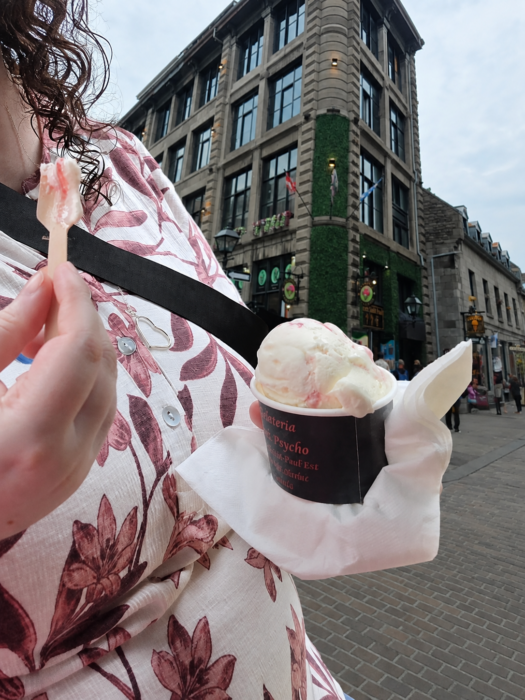
To end the afternoon, my daughter treated me to gelato as we wandered the cobblestone streets of Old Montréal.
With its historic buildings, charming shops and European atmosphere, this part of the city truly feels like stepping back in time.
Sometimes the simplest moments become the most memorable. Enjoying a cold treat while strolling through one of Canada’s most beautiful historic neighbourhoods was the perfect way to end our first full day exploring Montréal.
Day Three: Wildlife, Landmarks and Waterfront Views
Montreal Biodome
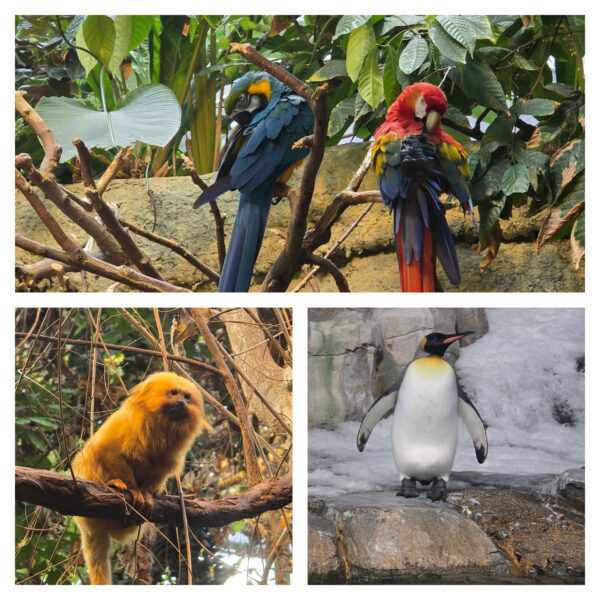
Our next stop was the Montreal Biodome, one of the city’s most popular Montreal attractions for families and nature lovers. Located in the former velodrome built for the 1976 Summer Olympics, the Biodome is unlike a traditional zoo. Instead of viewing animals in separate exhibits, visitors walk through five recreated ecosystems found throughout the Americas. As you move from one habitat to another, the temperature, humidity and landscape change to match each environment.
The Biodome allows visitors to experience everything from a tropical rainforest to a sub-Antarctic environment, all under one roof. It is an impressive example of how science, conservation and education can come together.
We especially enjoyed watching the capybaras lounging in the Tropical Rainforest, while the playful penguins in the Sub-Antarctic Islands exhibit kept visitors gathered around the viewing windows. Colourful birds, unique animals and immersive habitats make this a fun experience for visitors of all ages.
This is definitely one of the best things to do in Montreal with kids, although it was quite busy during our visit. If you are travelling with children, plan to spend a few hours here because there is plenty to see.
Saint Joseph’s Oratory
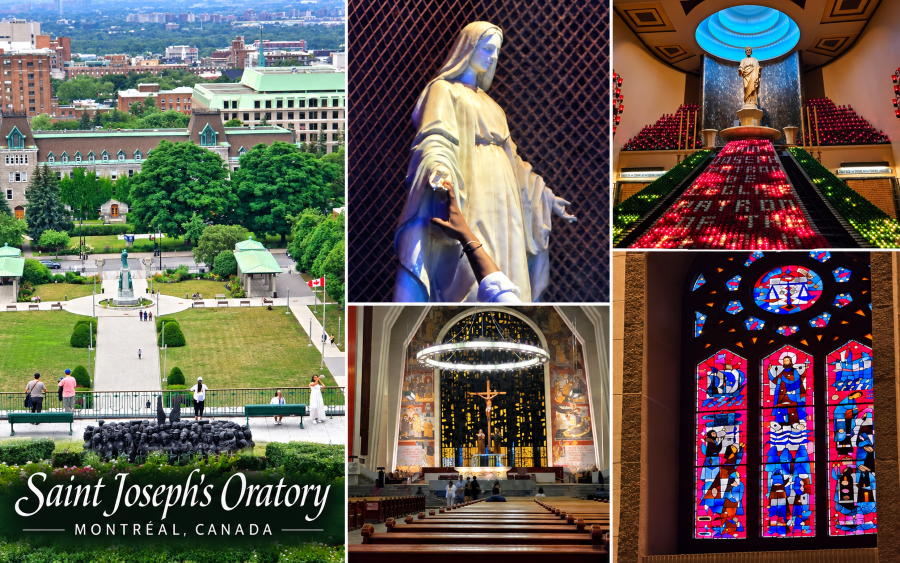
Later, we made our way to Saint Joseph’s Oratory of Mount Royal, one of Canada’s most important pilgrimage sites and one of the most recognizable landmarks in Montréal.
Founded by Saint Brother André in 1904, the oratory began as a small chapel before growing into the magnificent basilica visitors see today. Construction continued throughout the 20th century, with the massive copper dome becoming one of the defining features of Montréal’s skyline.
The dome is one of the largest church domes in the world and can be seen from many areas of the city.
Inside, the basilica is peaceful and awe inspiring. Whether you visit for religious reasons or simply to admire the architecture, it is easy to appreciate the craftsmanship, history and quiet beauty found throughout the building.
Outside, beautifully landscaped gardens and walking paths provide a peaceful escape from the busy city. The terraces also offer spectacular panoramic views of Montréal, making it well worth the visit.
Grand Quay of the Port of Montreal
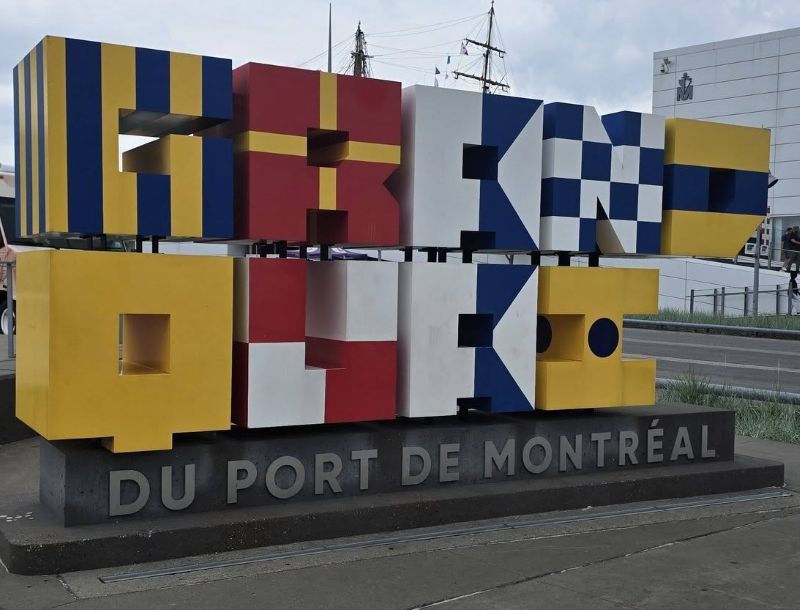
After dinner, we headed to the Grand Quay of the Port of Montreal, a beautifully redeveloped waterfront destination overlooking the St. Lawrence River.
The Old Port has played an important role in Montréal’s history for centuries. Once a busy commercial port where ships transported goods and connected the city to the world, the area has transformed into a popular gathering place for locals and visitors.
Today, the Grand Quay features walking paths, green spaces, river views and one of the city’s most recognizable photo opportunities, the colourful Montréal sign.
Of course, we had to stop for a picture. It is one of those classic vacation photos that captures your visit perfectly.
We enjoyed taking in the views of the St. Lawrence River, watching boats pass by and simply enjoying the atmosphere of the waterfront.
Watching Montreal Bungee Jumpers
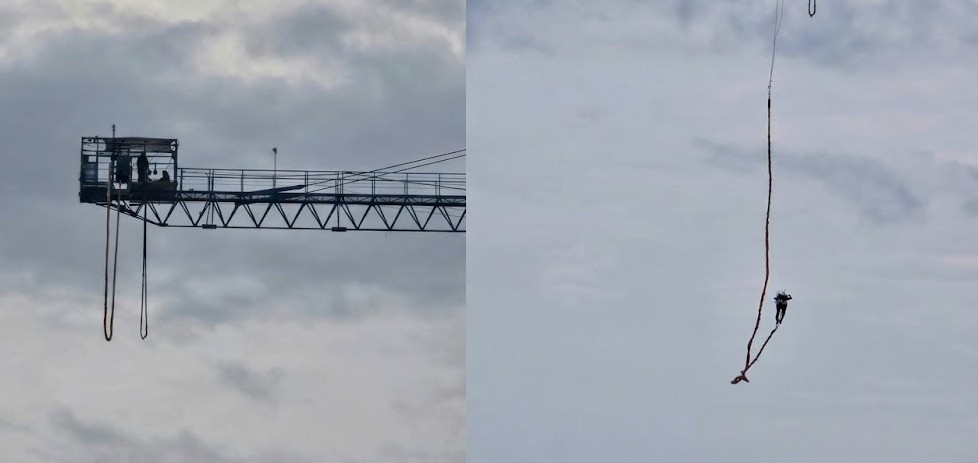
While exploring the Old Port, we stopped to watch the excitement at Montréal Bungee, Canada’s highest urban bungee jump.
Suspended high above the Old Port, brave participants leap from a platform overlooking the harbour before bouncing dramatically toward the water below.
Neither my daughter nor I had any interest in taking the plunge ourselves, but it was surprisingly entertaining to watch. We found ourselves cheering for complete strangers as they worked up the courage to jump.
It was one of those unexpected travel moments that wasn’t originally on our itinerary but became a fun memory from our trip.
Day Four: Montreal Botanical Garden
A Garden Lover’s Paradise
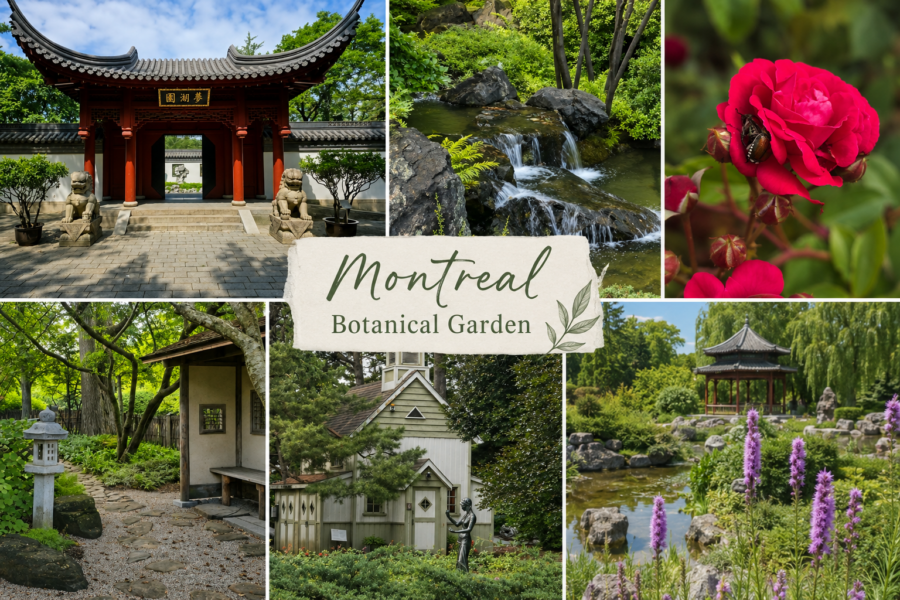
We saved the Montreal Botanical Garden for our final day, and I am so glad we did because it quickly became one of my favourite attractions of the entire trip.
The Jardin botanique de Montréal is recognized as one of the world’s great botanical gardens. It first opened in 1931 during the Great Depression and was the vision of botanist Brother Marie-Victorin, who wanted to create a place that would inspire people to appreciate nature while advancing botanical research and conservation.
Today, the garden spans more than 185 acres and is home to over 20 themed gardens, 10 exhibition greenhouses and tens of thousands of plant species from around the world.
The gardens are enormous, so plan to spend several hours exploring. Every path seemed to lead to another beautiful display, from colourful flower beds and peaceful ponds to shaded walking trails and carefully landscaped collections.
My favourite areas were the Chinese Garden and the Japanese Garden.
The Chinese Garden is one of the largest authentic Chinese gardens outside of China. It features traditional pavilions, graceful bridges, ornamental rock gardens and a peaceful pond that invites visitors to slow down and enjoy the surroundings.
Just a short walk away, the Japanese Garden offers a completely different atmosphere. With carefully designed landscapes, peaceful water features and minimalist landscaping, it creates a feeling of calm and relaxation.
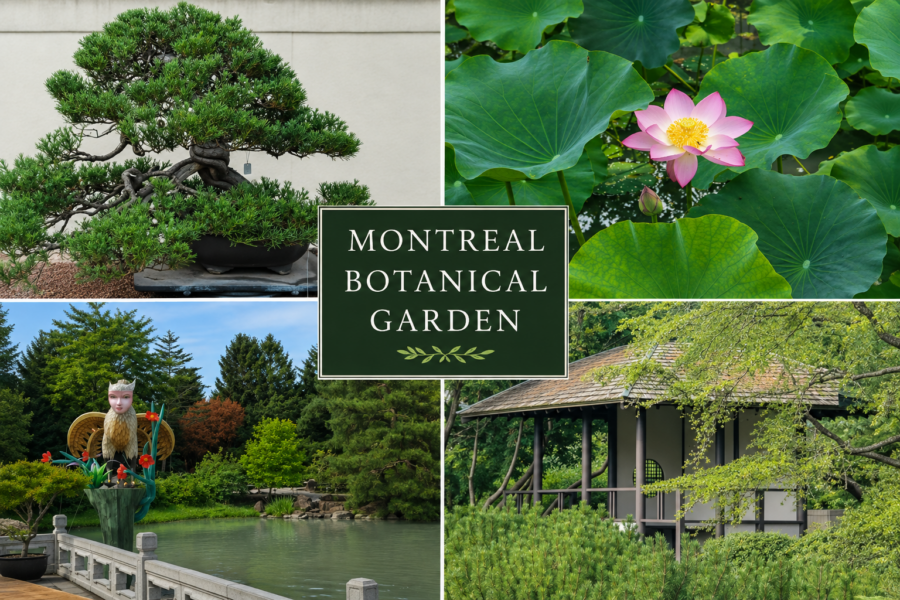
Both gardens felt like stepping into another world and were among the most memorable places we visited in Montréal.
There is also a restaurant on site, making it easy to stop for lunch or simply enjoy a refreshing drink before continuing your visit.
One tip I wish we had known earlier is that the gardens offer a free hop-on, hop-off train that travels throughout the property. We didn’t discover it until after we had already walked most of the grounds.
If you are visiting with young children, travelling with someone who has mobility challenges, or simply want to save your feet, look for the train when you arrive. It is a wonderful way to see more of the gardens while conserving your energy.
One Experience for Next Time
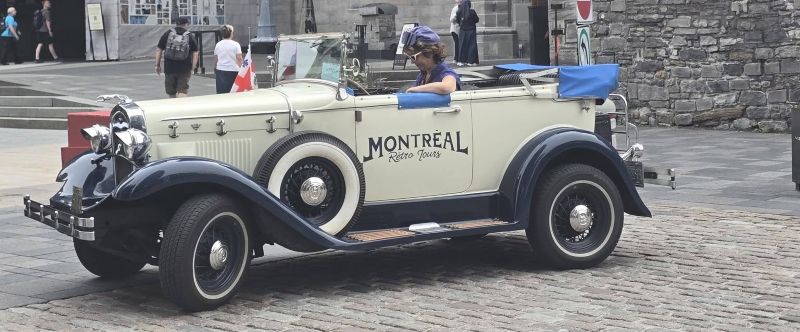
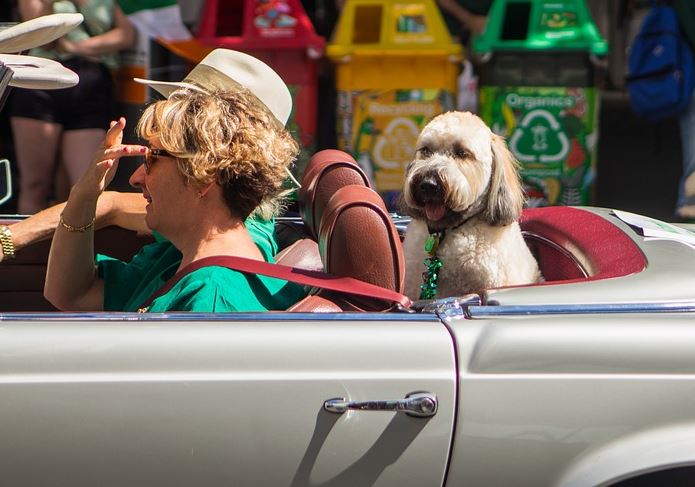
One activity we didn’t do was a guided tour through Old Montréal in a vintage 1930s convertible. We saw these beautifully restored cars cruising through the historic streets and thought it looked like such a unique way to experience the city. The tour costs approximately $190 CAD for two people, making it a bit of a splurge, but it is definitely something we would consider for a future visit.
Final Thoughts: Our Montreal Travel Guide
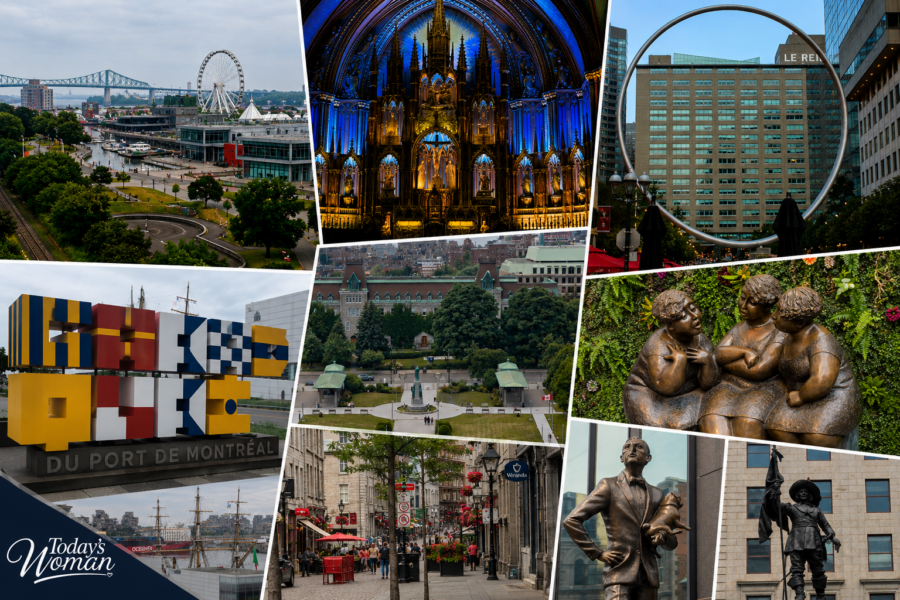
Montréal surprised me in the best possible way. It offers an incredible mix of history, culture, beautiful green spaces, shopping and outstanding food, all within a city that is filled with unforgettable experiences.
When planning things to do in Montreal, there are so many choices that it can feel overwhelming. Our trip showed us that the best way to experience the city is to mix famous Montreal attractions with time spent simply wandering, exploring and enjoying the atmosphere.
Looking back, my favourite experiences were visiting Notre-Dame Basilica Montreal, spending time at the Montreal Botanical Garden, enjoying meals at Montréal’s famous deli, and browsing the many unique shops throughout Old Montréal and the Old Port.
Those are the moments that made the trip feel truly special.
This may have been our first trip to Montréal, but after everything we experienced, I have a feeling it won’t be our last.