The Complete Guide to Packing a Suitcase Efficiently
17 min read
3317 words
Packing for a trip doesn’t have to be stressful. Whether you’re heading away for a weekend, taking a family vacation, boarding a train, or catching an international flight, packing a suitcase efficiently can save space, reduce wrinkles, and make traveling much easier.
The secret isn’t bringing less. It’s bringing the right things and organizing them well. A thoughtfully packed suitcase is easier to carry, helps you avoid overweight baggage fees, and makes it simple to find what you need once you arrive.
In this guide, you’ll learn practical packing strategies that work for almost every type of trip. You’ll discover how to choose the right suitcase, maximize luggage space, organize clothing, pack toiletries without leaks, and avoid common packing mistakes. If you’re travelling by rail, pair these tips with the right Carry-On Bag for Traveling via Rail to make navigating stations and overhead storage even easier.
Quick Packing Tips
- Create a packing checklist before you begin.
- Plan outfits instead of packing individual clothing items.
- Roll casual clothing and fold dress clothes.
- Use packing cubes to stay organized.
- Pack heavy items near the wheels.
- Wear your bulkiest shoes and jacket while travelling.
- Leave a little extra room for souvenirs.
Choose the Right Suitcase
Efficient packing starts with choosing the right suitcase. The size, style, and features of your luggage can make a big difference in how much you can pack and how easy your trip will be. Selecting luggage that matches the length of your trip helps you avoid overpacking while keeping everything organized.
Carry-On vs. Checked Luggage
Carry-on luggage is ideal for weekend getaways and shorter trips. It saves time at the airport, eliminates baggage claim, and reduces the risk of lost luggage. The downside is limited space and airline size restrictions.
Checked luggage is a better choice for longer vacations, family travel, or trips that require bulkier clothing or equipment. While it offers more room, you’ll need to consider baggage fees and airline weight limits.
Many travelers find the best combination is a carry-on suitcase paired with a personal item such as a backpack or tote bag.
Hard-Shell or Soft-Sided?
Both styles have advantages.
- Hard-shell suitcases provide better protection for fragile items and resist rain and rough baggage handling.
- Soft-sided luggage is more flexible, often weighs less, and usually includes exterior pockets for quick access to travel documents or electronics.
If you frequently fly, a durable hard-shell suitcase is often the better investment. If you mainly travel by car or train, a soft-sided suitcase offers greater flexibility.
Features Worth Paying For
Not every suitcase needs every feature, but a few upgrades can make traveling much easier.
- Spinner wheels glide smoothly through airports and train stations.
- Expandable compartments provide extra room for souvenirs or shopping.
- Compression straps keep clothing from shifting during travel.
- TSA-approved locks add security for checked luggage.
- A sturdy telescoping handle makes maneuvering your suitcase much more comfortable.
Create a Packing Checklist
One of the easiest ways to reduce travel stress is to create a packing checklist before you open your suitcase. Even experienced travelers forget things from time to time, and a checklist helps ensure nothing important gets left behind while preventing unnecessary items from making their way into your luggage.
Your checklist doesn’t need to be complicated. Instead of writing every single item from scratch before each trip, create a master list that you can customize depending on your destination, the weather, and the length of your vacation.
What to Include
A good packing checklist should cover five basic categories:
- Clothing: Everyday outfits, sleepwear, underwear, socks, outerwear, and comfortable shoes.
- Toiletries: Toothbrush, toothpaste, shampoo, deodorant, skincare products, sunscreen, and any personal care items.
- Electronics: Phone, chargers, headphones, camera, power bank, laptop, or tablet if needed.
- Travel Documents: Passport, driver’s licence, boarding passes, hotel reservations, travel insurance, and credit cards.
- Medications: Prescription medications, pain relievers, allergy medication, and a small first-aid kit.
Customize Your List
Every trip is different. A weekend getaway requires fewer clothes than a two-week vacation, while a business trip may require dress clothes and a laptop. Adjust your checklist based on your destination, planned activities, and expected weather instead of packing the same way every time.
Start Packing Early
Begin your checklist about a week before you leave. As you think of additional items, simply add them to the list. Packing over several days helps you avoid rushing at the last minute and gives you time to pick up anything you’ve forgotten.
Plan Your Outfits Before You Pack
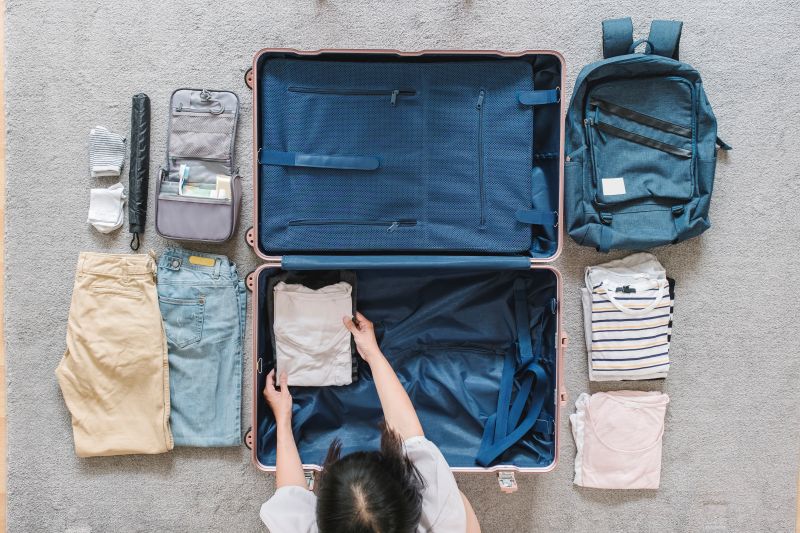
One of the biggest reasons suitcases become overstuffed is packing too many clothing options. Instead of throwing extra shirts and pants into your bag “just in case,” plan your outfits before you start packing. You’ll bring fewer clothes while still having plenty of combinations to wear.
Planning outfits also makes it easier to stay within airline baggage limits and leaves room for souvenirs on the trip home.
Check the Weather Forecast
Before choosing your clothing, check the forecast for your destination. Consider daytime and nighttime temperatures, the chance of rain, and any special activities you’ve planned.
If the weather is unpredictable, pack lightweight layers instead of bulky clothing. Layers take up less space and give you more flexibility throughout the day.
Choose a Colour Palette
Select two or three coordinating colours so every top works with every pair of pants or shorts. Neutral colours such as black, navy, grey, white, and denim make it easy to mix and match outfits without packing extra clothing.
Pack Versatile Clothing
Choose pieces that can be worn more than once or dressed up and down. A lightweight cardigan works for cool evenings, restaurants, and sightseeing. Comfortable walking shoes should match most of your outfits, eliminating the need for multiple pairs.
Limit Your Shoes
Shoes are one of the heaviest items you’ll pack. For most vacations, three pairs are enough:
- Comfortable walking shoes (wear these while travelling).
- Casual shoes or sandals.
- Dress shoes if your itinerary requires them.
Example: A Five-Day Trip to Niagara Falls
For a five-day summer trip to Niagara Falls, you don’t need five completely different outfits. Instead, pack three tops, two pairs of bottoms, and a lightweight cardigan or rain jacket for cooler evenings and attractions like Journey Behind the Falls. Mixing these pieces creates six different outfit combinations while leaving room for comfortable walking shoes, a swimsuit for your hotel pool, and any souvenirs you bring home.
Roll or Fold? The Best Way to Pack Clothes
One of the most common packing questions is whether it’s better to roll or fold your clothes. The truth is, both methods work well. The best choice depends on the type of clothing you’re packing.
Many experienced travelers use a combination of both techniques to maximize suitcase space while keeping clothing looking its best.
When to Roll Clothes
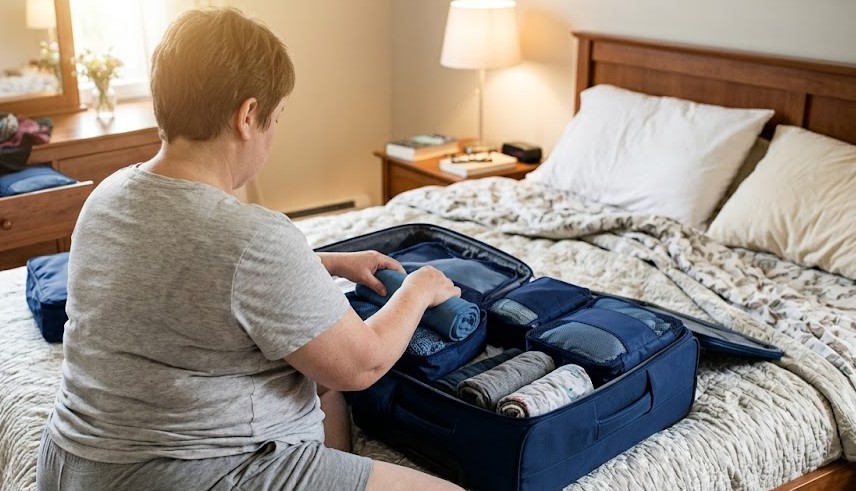
Rolling is ideal for casual clothing because it saves space and helps prevent deep creases.
Roll items such as:
- T-shirts
- Jeans
- Leggings
- Shorts
- Workout clothing
- Pajamas
- Underwear and socks
Rolled clothing fits neatly inside packing cubes and makes it easy to see everything at a glance without disturbing the rest of your suitcase.
When to Fold Clothes
Some garments maintain their shape better when folded.
Fold items such as:
- Dress shirts
- Blazers
- Dress pants
- Skirts
- Sweaters
- Delicate fabrics
Folding these items carefully helps reduce wrinkles and keeps structured clothing looking presentable when you arrive.
Use Both Methods Together
There’s no rule that says you must choose one method. In fact, combining rolling and folding is often the most efficient approach. Roll casual clothing to save space, then place folded dress clothes on top to keep them from being crushed.
If you’re using packing cubes, keep rolled items together in one cube and folded garments in another. This keeps your suitcase organized and makes unpacking much easier.
Maximize Every Inch of Suitcase Space
One of the biggest challenges travelers face is fitting everything into their suitcase without overpacking. Fortunately, a few simple packing techniques can help you make the most of every inch of available space while keeping your luggage organized.
The goal isn’t to squeeze in more items. It’s to use the space you have more efficiently.
Fill Empty Spaces
Once you’ve packed your clothing, look for small gaps throughout your suitcase. These spaces are perfect for storing smaller items that would otherwise take up valuable room.
Fill empty spaces with:
- Socks
- Underwear
- Charging cables
- Belts
- Scarves
- Swimwear
Filling these gaps also helps prevent your belongings from shifting during travel.
Use the Inside of Your Shoes
Shoes take up plenty of room, so make use of the empty space inside them. Roll up socks, tuck in underwear, or store charging cables and sunglasses cases inside. This simple trick saves space while helping your shoes keep their shape.
Wear Your Bulkiest Clothing
Instead of packing your heaviest jacket, boots, or sweater, wear them while traveling. This creates extra room in your suitcase and may even help you stay within airline baggage weight limits.
Pack Smarter with Packing Cubes
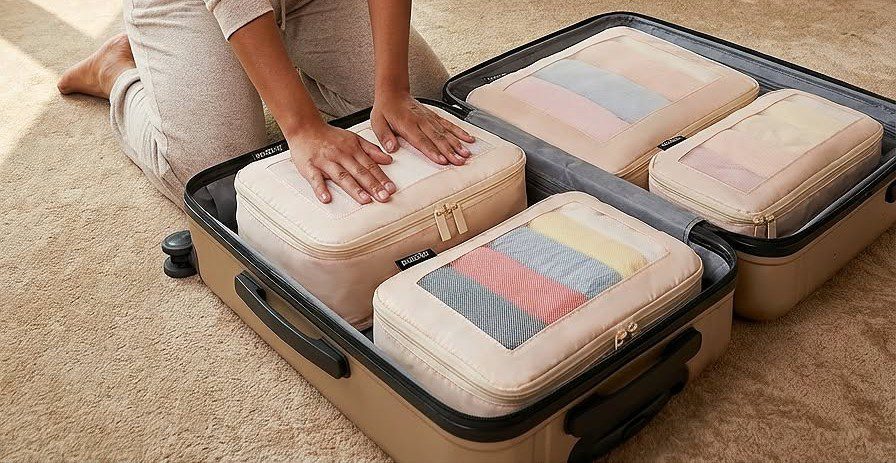
Packing cubes make it easier to organize your suitcase by keeping similar items together. They also prevent clothing from shifting around while you travel and make unpacking much faster once you arrive.
If you’re traveling with only a carry-on, compression packing cubes can help reduce bulk and create even more space.
Not sure which ones to buy? Read our guide to Best Packing Cubes for Travel to compare the top options.
Don’t Pack Air
Before closing your suitcase, take one final look for unused space around packing cubes, shoes, and the corners of your luggage. Filling these small gaps with soft items helps stabilize everything inside and ensures you’re making the most of every inch.
Pack Smart: Shoes, Toiletries, and Fragile Items
How you pack individual items is just as important as what you pack. Shoes, toiletries, and fragile belongings require a little extra planning to keep your suitcase organized and your belongings protected throughout your trip.
Pack Heavy Items Near the Wheels
Always place heavier items, such as shoes, toiletry bags, and books, at the bottom of your suitcase near the wheels. This creates a lower centre of gravity, making your luggage easier to roll and less likely to tip over.
Distribute the weight evenly across the bottom of your suitcase instead of placing everything on one side. Balanced luggage is much easier to maneuver through airports, train stations, and hotels.
Want more tips? Read our guide on How to Prevent a Suitcase from Tipping Over.
Pack Shoes Efficiently
Limit yourself to two or three pairs of shoes whenever possible. Wear your bulkiest pair while traveling and pack the remaining pairs in shoe bags to keep dirt away from your clothing.
Save space by stuffing shoes with:
- Socks
- Underwear
- Charging cables
- Small travel accessories
Prevent Toiletry Leaks
A leaking bottle of shampoo can quickly ruin an entire suitcase of clean clothes. Use leak-proof travel bottles and place all liquids inside a resealable plastic bag for extra protection.
If you’re flying with only a carry-on in Canada, remember CATSA’s liquid restrictions. Liquids, gels, creams, aerosols, and pastes must be in containers of 100 mL (3.4 oz) or less. All containers must fit inside one clear, resealable one-litre plastic bag, with one bag permitted per passenger.
Solid shampoo, conditioner bars, and stick deodorant are excellent alternatives because they won’t leak and don’t count toward your liquid allowance.
Protect Fragile Items
Wrap delicate items in soft clothing and pack them in the centre of your suitcase, surrounded by layers of clothing for cushioning. Glasses should always travel in a hard-shell case, while electronics are safest in your personal item whenever possible.
Never pack passports, medications, expensive electronics, jewellery, or other valuables in checked luggage. Keep them with you in your carry-on or personal item throughout your journey.
Packing for Different Types of Trips
No two trips are exactly alike, so your packing strategy shouldn’t be either. A weekend getaway requires fewer items than a family vacation, while business travel has different priorities than a train journey. Tailoring your packing list to your destination helps you avoid overpacking while ensuring you have everything you need.
Weekend Getaway
For a two- or three-day trip, a carry-on suitcase is usually all you need.
Pack:
- Two or three tops
- One or two pairs of bottoms
- Sleepwear
- Travel-size toiletries
- One light jacket or cardigan
- Comfortable walking shoes
Packing tip: Plan one outfit for each day and wear your bulkiest shoes while travelling.
Business Travel
Business trips call for organization and wrinkle-free clothing.
Pack:
- Business attire
- Dress shoes
- Laptop and charger
- Business documents
- One casual outfit for evenings
Packing tip: Fold dress clothes carefully and keep your laptop in an easily accessible compartment for airport security.
Family Vacation
Travelling with children means planning for a few unexpected situations.
Pack:
- Mix-and-match outfits
- Extra clothing for young children
- Snacks
- First-aid kit
- Sunscreen and insect repellent
- Books, colouring supplies, or tablets for entertainment
Packing tip: Assign each family member their own packing cube to keep clothing organized throughout the trip.
Train Travel
When travelling by train, you’ll likely carry your luggage yourself, so packing light makes boarding and moving through stations much easier.
Pack:
- Comfortable clothing
- A light sweater or hoodie
- Reusable water bottle
- Snacks
- Headphones, books, or a tablet
- A travel pillow for longer journeys
Keep anything you’ll need during the trip in your personal item so you won’t have to open your suitcase while onboard. A comfortable travel backpack also makes boarding and sightseeing much easier. Before your next trip, read our Best Travel Backpack: Reviews and Buying Guide to find the right option.
Common Packing Mistakes to Avoid
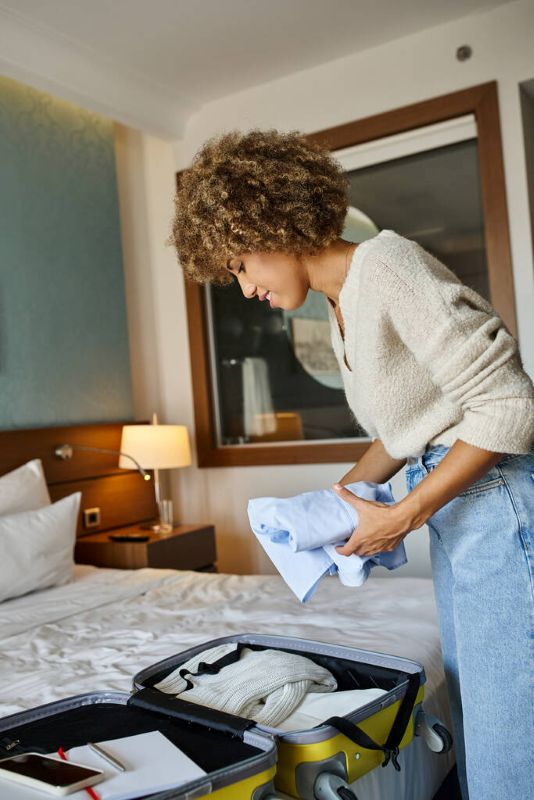
Even experienced travelers make packing mistakes from time to time. Fortunately, most are easy to avoid with a little planning. Steering clear of these common errors will help you save space, stay organized, and enjoy a smoother trip from start to finish.
Overpacking
The biggest packing mistake is bringing too much. It’s tempting to pack for every possible situation, but those “just in case” items usually stay in your suitcase the entire trip.
Avoid it: Plan your outfits in advance, stick to your packing checklist, and choose clothing that can be mixed and matched. If you haven’t worn an item on your last few trips, you probably don’t need it this time either.
Forgetting Chargers and Electronics
Arriving at your destination with a dead phone, camera, or tablet and no charger can quickly become frustrating.
Avoid it: Store all charging cables, adapters, and your power bank together in a small electronics pouch. Check it before leaving home to make sure nothing is missing.
Packing Valuables in Checked Luggage
Checked baggage can be delayed, damaged, or lost. Valuable items should always stay with you.
Avoid it: Keep your passport, wallet, medications, electronics, jewelry, and important travel documents in your personal item or carry-on bag where they’re easily accessible and under your control.
Ignoring Airline Baggage Limits
Every airline has its own size and weight restrictions for carry-on and checked luggage. Exceeding those limits can lead to unexpected fees or the inconvenience of repacking at the airport.
Avoid it: Check your airline’s baggage policy before you travel and weigh your suitcase at home if you’re close to the limit.
Waiting Until the Last Minute
Rushing to pack almost always leads to forgotten essentials and unnecessary stress.
Avoid it: Start your packing checklist several days before your trip. Lay out your clothing, confirm your travel documents, and pack a little at a time. You’ll have more time to make thoughtful decisions and won’t feel rushed the night before you leave.
Frequently Asked Questions
What is the most efficient way to pack a suitcase?
The most efficient way to pack a suitcase is to plan your outfits in advance, roll casual clothing, fold dress clothes, use packing cubes to stay organized, and pack heavy items near the wheels. Following a packing checklist also helps you avoid overpacking and forgetting important items.
Is it better to roll or fold clothes?
Both methods have their place. Rolling works best for T-shirts, jeans, shorts, workout clothes, and other casual items because it saves space and reduces wrinkles. Folding is better for dress shirts, blazers, sweaters, and delicate fabrics that need to keep their shape.
How many pairs of shoes should I pack?
For most trips, three pairs of shoes are enough: comfortable walking shoes, a casual pair of shoes or sandals, and one dressier pair if needed. Wearing your bulkiest shoes while traveling also frees up valuable suitcase space.
Are packing cubes worth buying?
Yes. Packing cubes keep your suitcase organized, make unpacking easier, and help prevent clothing from shifting during travel. Compression packing cubes are especially useful if you’re traveling with only a carry-on.
What should never go in checked luggage?
Always keep your passport, wallet, prescription medications, electronics, jewelry, chargers, and important travel documents in your carry-on or personal item. These items are too valuable or essential to risk losing in checked baggage.
How can I avoid overweight baggage fees?
Plan your outfits, pack only what you’ll actually use, wear your heaviest clothing while traveling, and weigh your suitcase before leaving home. Leaving a little extra space also gives you room for souvenirs without exceeding airline weight limits.
Conclusion
Packing a suitcase efficiently isn’t about squeezing as much as possible into your luggage. It’s about packing smarter. By choosing the right suitcase, planning versatile outfits, organizing your belongings with packing cubes, and placing heavier items correctly, you’ll save space, stay organized, and travel with greater confidence.
Remember that every trip is different. A weekend getaway, family vacation, business trip, or train journey all require slightly different packing strategies. Creating a packing checklist and packing with your destination in mind will help you bring exactly what you need without overloading your suitcase.
Before you zip your bag, take one final look to make sure you have your travel documents, medications, chargers, and other essentials. A few extra minutes of preparation can prevent unnecessary stress and help your trip get off to a smooth start.
Whether you’re exploring Niagara Falls, boarding a train to Montreal, or flying overseas, these packing tips will help you travel lighter, stay organized, and spend less time worrying about your luggage. The more you practice these techniques, the easier packing becomes—and the more you can focus on enjoying the journey.