

Electrical Safety for Toddlers: Hidden Hazards
6 min read
1161 words
When you have a toddler in the house, even ordinary household items can become potential safety hazards. A phone charger dangling from a bedside table, an extension cord running along the floor or a power bar tucked behind the television might not attract much attention from adults, but curious little hands are another story. As children become more mobile, they naturally want to investigate everything within reach. Unfortunately, electricity is one household danger that young children cannot see, understand or recognize.
Electrical outlet covers are an important starting point when baby-proofing, but parents should remember that protecting children from electrical injuries involves more than covering unused sockets. Cords, chargers, power bars, kitchen appliances and damaged electrical equipment can all present risks. Taking a few minutes to examine your home from a toddler’s perspective can help identify hazards you might otherwise overlook.
If you haven’t already read my earlier article, Childproofing Electrical Outlets, I discuss different ways parents can protect curious little fingers from electrical outlets. This follow-up looks at some of the other electrical hazards worth considering when making your home safer for young children.
Keep Electrical Cords Away From Curious Little Hands
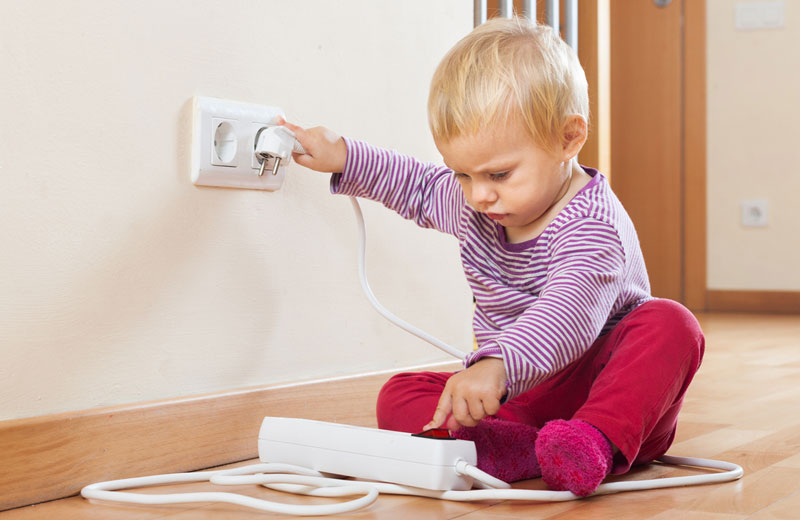
Electrical cords can look like interesting toys to a toddler. They are easy to grab, pull, chew and sometimes wrap around little fingers. A dangling cord attached to a lamp, television or household appliance can also create a tipping hazard. If a child pulls hard enough, the appliance could fall from a table or countertop, potentially causing serious injuries.
Whenever possible, keep electrical cords behind furniture or secured using appropriate cord management products. Avoid leaving extra lengths of cord hanging down where children can reach them. Regularly inspect cords for cracks, fraying, exposed wires or damaged plugs. If you discover damage, stop using the cord and replace it rather than attempting to repair it with electrical tape.
Power Bars and Extension Cords Need Attention
Power bars are common in family homes, particularly around entertainment centres, computer desks and bedside tables. Unfortunately, they can be very tempting to toddlers because they contain several plugs and sometimes have small switches or indicator lights. Keep power bars out of children’s reach whenever possible, and avoid placing them where little ones can pull on connected cords.
Extension cords should only be used temporarily and should never become a permanent substitute for additional electrical outlets. Do not run them underneath carpets, rugs or furniture, where they can become damaged or overheat. Never connect multiple power bars or extension cords together. If you regularly find yourself needing additional outlets, speak with a licensed electrical contractor about having additional receptacles installed.
Don’t Leave Phone Chargers Plugged In
With smartphones, tablets and other electronic devices becoming part of everyday family life, charging cables are easy to overlook. Parents may leave chargers plugged into bedside outlets, kitchen counters or living room receptacles without considering how accessible they might be to a crawling baby.
Keep charging cables unplugged and stored away when they are not being used. A child who puts a damaged cable or charger in their mouth could suffer an electrical injury or burn. Only use chargers and electrical accessories that are compatible with the device and carry a recognized Canadian certification mark. Never allow children to play with charging equipment, even when it appears harmless.
Be Careful With Kitchen Appliances
The kitchen is another area where electrical safety deserves attention. Toasters, kettles, coffee makers, slow cookers and other small appliances often have cords that can hang over the edge of a counter. A toddler who grabs one could pull the appliance down onto themselves.
Position appliances toward the back of countertops, keeping cords away from the edge. Unplug appliances when they are not in use, provided the manufacturer’s instructions allow it, and store smaller items safely. Never leave a hot appliance or its cord within a child’s reach. Particular care should be taken with kettles and other appliances containing hot liquids because a spill can cause serious burns.
Keep Electricity Away From Water
Bathrooms, kitchens and laundry rooms deserve extra attention because water and electricity are a dangerous combination. Hair dryers, curling irons, electric toothbrush chargers and other electrical products should never be left where a young child can reach them near sinks, bathtubs or other water sources.
Unplug electrical grooming appliances after use and store them somewhere children cannot access. Parents should also ensure that appropriate ground fault circuit interrupter protection is installed where required near water sources. These protective devices can interrupt electrical power when they detect a ground fault. If you are unsure whether your home’s electrical protection is adequate, ask a licensed electrician to inspect it.
Check Electrical Products Before Bringing Them Home
When purchasing electrical products for your household, safety should be part of the decision. This includes nightlights, baby monitors, chargers, lamps and other devices that may be used in children’s bedrooms or play areas.
In Canada, look for recognized certification marks such as CSA, cUL or cETL on electrical products. These marks indicate that the product has been certified to applicable Canadian safety standards. Be cautious about inexpensive electrical accessories from unfamiliar sellers, particularly products that lack proper certification information.
Also pay attention to baby monitor cords. Keep them well away from cribs, bassinets and playpens so that babies cannot reach, pull or become entangled in them.
Teach Children About Electrical Safety
As children grow, it is important to introduce basic electrical safety rules in language they can understand. Explain that outlets, plugs and electrical cords are not toys. Teach older toddlers not to touch electrical equipment with wet hands, pull on cords or put objects into electrical outlets.
Of course, young children cannot be expected to remember every safety instruction. Supervision and physical safety measures remain essential. Repeating simple reminders as children grow helps establish good habits that they can carry into their school years.
Take a Fresh Look Around Your Home
One of the easiest ways to identify potential hazards is to get down to your child’s level. Look around the living room, bedrooms, kitchen and play areas to see what might attract a curious toddler. You may notice a phone charger hanging over a table, an accessible power bar behind the television or an appliance cord that you have never given much thought to before.
Make electrical safety part of your regular home safety checks. Inspect cords, replace damaged electrical products, keep outlets protected and make sure appliances are positioned safely. Remember that childproofing is not something you do once and forget about. As children become taller, stronger and more adventurous, your home safety measures may need to change too.
Electricity makes everyday life more convenient, but it also deserves respect. Parents cannot eliminate every household risk, but taking sensible precautions can help prevent accidents and make the home a safer place for growing children.
For more information about protecting little fingers from electrical outlets, be sure to read my earlier article, Childproofing Electrical Outlets.