Collagen Supplements VS Collagen-Rich Foods
7 min read
1246 words
As we get older, many of us begin to notice changes that seem to appear gradually and then suddenly become more noticeable. Skin may not feel as firm as it once did, joints may feel a little stiffer in the morning, and recovering after exercise or a busy day may take longer than it used to. Collagen is often mentioned as an important part of healthy aging, especially when it comes to skin, joints, and mobility. But with so many collagen powders, capsules, and beauty products available, many women wonder: Is it better to get collagen from food, take collagen supplements, or do both?
The answer is not always one or the other. Understanding how collagen works and where it comes from can help you decide what approach fits your lifestyle.
What Is Collagen and Why Does It Matter?
Collagen is the most abundant protein in the human body. Think of it as a support structure that helps hold many parts of the body together. It provides strength and structure to the skin, bones, muscles, tendons, ligaments, and other connective tissues.
As we age, the body naturally produces less collagen. This decline is one reason many people notice changes in their skin, flexibility, and joint comfort over time.
Collagen plays several important roles:
Skin Health
Collagen helps support the structure and elasticity of the skin. Lower collagen production over time may contribute to changes such as dryness, reduced firmness, and the appearance of fine lines.
Joint and Bone Support
Collagen is found in cartilage and connective tissues that help cushion and support our joints. Maintaining healthy collagen levels is one part of supporting overall joint health and movement.
Muscle and Mobility
Tendons and ligaments rely on collagen for strength and flexibility. Strong connective tissues help support everyday movements, exercise, balance, and mobility as we age.
The body creates collagen using amino acids from protein-rich foods. Nutrients such as vitamin C, zinc, and copper also play a role in the process.
What Are Collagen-Rich Foods?
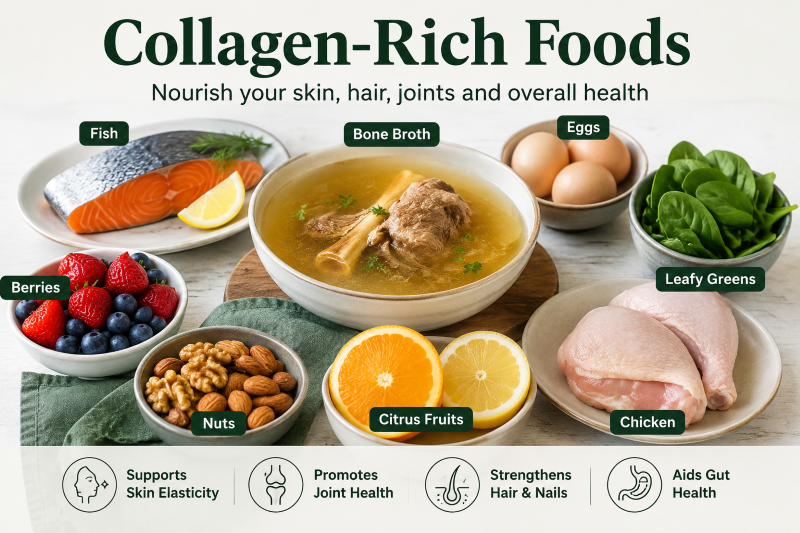
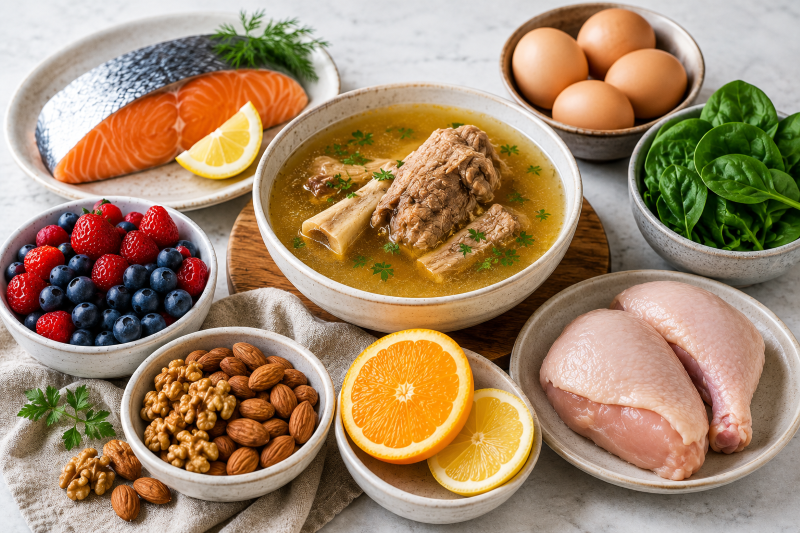
Some foods naturally contain collagen because they include connective tissues, skin, cartilage, or bones. Traditionally, many cultures have included these foods in their diets through slow cooking methods that help release collagen.
Bone Broth
Bone broth is made by simmering bones and connective tissues for an extended period of time.
It may contain:
- Collagen-derived proteins
- Gelatin
- Amino acids
The nutritional content can vary depending on how it is prepared and the ingredients used.
Fish With Skin
Fish skin contains collagen, which is why some traditional diets include the skin when preparing fish.
Examples include:
- Salmon with the skin
- Sardines
- Other fish with edible skin
Chicken Skin and Connective Tissue
Chicken skin and connective tissues contain collagen. While these parts are often removed, they are natural sources of collagen protein.
Slow-Cooked Meats
Cuts of meat that contain more connective tissue can become tender when cooked slowly.
Examples include:
- Beef brisket
- Stews made with collagen-rich cuts
- Slow-cooked dishes containing cartilage or connective tissue
Long cooking times help break collagen down into gelatin, creating the tender texture found in many traditional meals.
Foods That Help Your Body Make Collagen
Not every food that supports collagen contains collagen itself. Many foods provide the nutrients your body needs to produce collagen naturally.
Vitamin C-Rich Foods
Vitamin C is essential for collagen formation.
Good sources include:
- Oranges
- Strawberries
- Kiwi
- Bell peppers
- Broccoli
Protein-Rich Foods
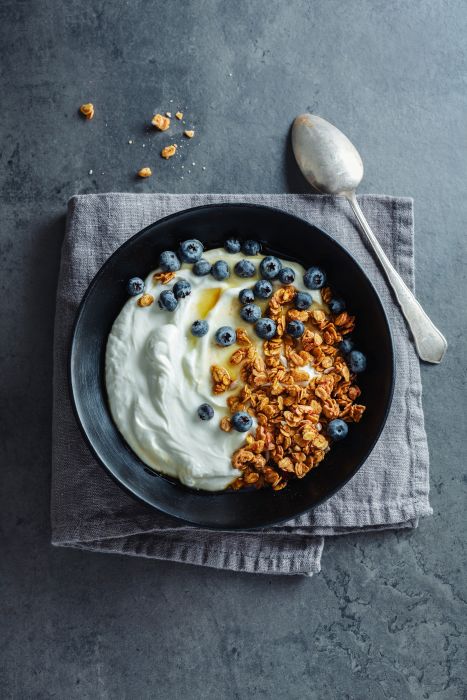
Since collagen is a protein, eating enough protein is important for providing amino acids your body uses to build and repair tissues.
Examples include:
- Eggs
- Fish
- Chicken
- Greek yogurt
- Beans and lentils
Foods Containing Zinc and Copper
These minerals also support normal collagen production.
Sources include:
- Nuts and seeds
- Seafood
- Whole grains
- Legumes
What Are Collagen Supplements?
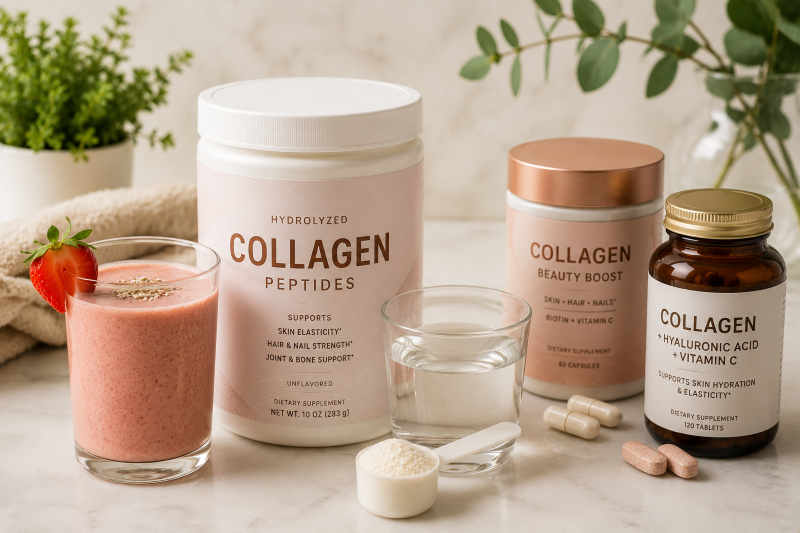
Collagen supplements usually contain hydrolyzed collagen peptides. This means the collagen has been broken down into smaller pieces called peptides, making it easier for the body to digest.
Collagen supplements are available in several forms:
- Powders that can be mixed into drinks, smoothies, or foods
- Capsules
- Liquid supplements
Common sources include:
- Bovine collagen (from cows)
- Marine collagen (from fish)
- Chicken collagen
Do Collagen Supplements Work?
Research suggests collagen peptides may help support areas such as skin hydration, elasticity, and joint comfort for some people. However, results can vary, and collagen supplements are not a replacement for a balanced diet or healthy lifestyle.
Collagen supplements tend to work best as part of a bigger picture that includes:
- Eating enough protein
- Staying physically active
- Strength training to maintain muscle
- Getting quality sleep
- Eating a variety of nutrient-rich foods
A supplement can be convenient, but it works alongside healthy habits rather than replacing them.
Collagen-Rich Foods vs Collagen Supplements
| Category | Collagen-Rich Foods | Collagen Supplements |
|---|---|---|
| Nutrition | Provides collagen along with other nutrients | Mainly provides collagen peptides |
| Whole-food benefits | Yes | Limited |
| Convenience | Requires preparation and cooking | Easy to add to daily routines |
| Cost | Varies depending on food choices | Ongoing supplement expense |
| Protein source | Usually included as part of a meal | Added separately |
| Dietary flexibility | Depends on food preferences | Available in different forms |
Which Is Better After 50?
There is no single answer that works for everyone.
Collagen-rich foods may be a better choice if you:
- Prefer getting nutrients from whole foods
- Enjoy cooking meals from scratch
- Want additional vitamins and minerals from your diet
- Already eat enough protein each day
Collagen supplements may be helpful if you:
- Have a busy schedule
- Do not regularly eat collagen-containing foods
- Want a simple way to add collagen peptides to your routine
- Prefer the convenience of a powder or capsule
For many women, a combination of both can be a practical approach.
Can You Use Both?
Absolutely. Food and supplements do not have to compete with each other.
A balanced approach may include:
- Protein with each meal
- Plenty of colourful fruits and vegetables
- Collagen-rich foods when possible
- Regular movement and strength training
- Adequate sleep
- A collagen supplement if it fits your personal goals
What to Look For in a Collagen Supplement
If you decide to try collagen, look for products with:
✔ Clear ingredient labels
✔ A reputable manufacturer
✔ Minimal unnecessary additives
✔ Third-party testing when available
Be cautious of products making unrealistic promises such as:
- “Instantly reverses aging”
- “Erases wrinkles”
- “Repairs every joint problem”
Healthy aging is about consistent habits, not a single product.
Who Should Talk to Their Doctor Before Taking Collagen?
Most people tolerate collagen supplements well, but it is always wise to check with a healthcare professional if you:
- Have food allergies, especially fish or shellfish allergies
- Follow a medically restricted diet
- Have questions about whether supplements fit your health needs
Final Thoughts: Food First, Supplements as an Option
Collagen-rich foods and collagen supplements are not really competitors. They simply provide collagen in different ways.
Whole foods offer a wide range of nutrients that support overall health, while supplements provide a convenient source of collagen peptides.
For women over 50, the strongest foundation for healthy aging remains a balanced diet, regular movement, strength training, and taking care of your overall well-being. A collagen supplement can be an optional addition, but it is not a replacement for healthy lifestyle habits.
Health Disclaimer: The information in this article is for educational purposes only and is not intended to replace professional medical advice, diagnosis, or treatment. Everyone’s health needs are different, and results from foods or supplements may vary from person to person. Before starting any new supplement, speak with your healthcare provider, especially if you have existing health conditions, take medications, have allergies, or have specific dietary concerns.