Fly Fishing for Beginners: Learn the Basics
5 min read
838 words
Whether you’ve watched someone casting a fly rod on a quiet river or seen fly fishing featured in a movie, it’s easy to understand why the sport captures people’s attention. There is something relaxing about spending time on the water while learning a skill that requires patience and practice. Unlike traditional fishing, where the weight of the lure helps cast the line, fly fishing uses the weight of a specialized fly line to carry a lightweight artificial fly to the water. Although it can look challenging at first, most beginners are surprised at how quickly they improve with a little practice and the right equipment.
What Is Fly Fishing?
Fly fishing is a style of fishing that uses lightweight artificial flies designed to imitate insects, small baitfish, or other natural food that fish eat. Instead of relying on the lure’s weight, anglers cast a heavier fly line that carries the fly to the desired location.
The goal is to present the fly as naturally as possible so it drifts through the water the way real insects would. This realistic presentation is one of the reasons fly fishing is both rewarding and enjoyable.
Basic Fly Fishing Equipment
Having the right equipment makes learning much easier.
Fly Rod
For most beginners, a 9-foot, 5-weight fly rod is an excellent all-around choice. It is versatile enough for trout, panfish, and even small bass.
Fly Reel
The fly reel stores the fly line and provides drag when fighting larger fish. While the rod and line do most of the work during casting, a quality reel helps control fish once one is hooked.
Fly Line
A weight-forward floating line is recommended for beginners because it makes casting easier and works well in many freshwater situations.
Leader and Tippet
The leader is a clear, tapered section that connects the fly line to the fly. The tippet is the thinner end of the leader that attaches directly to the fly, making it less visible to fish.
Artificial Flies
There are hundreds of fly patterns available, but beginners only need a few basic types:
- Dry flies that float on the water’s surface.
- Nymphs that imitate underwater insects.
- Streamers that resemble small fish or baitfish.
Essential Fly Fishing Gear
Besides your rod and reel, a few accessories can make your time on the water more enjoyable.
Helpful gear includes:
- Polarized sunglasses to reduce glare.
- Waders and wading boots for streams and rivers.
- A landing net.
- Line clippers.
- Forceps or hemostats for removing hooks.
- A fly box to organize flies.
Basic Fly Casting Techniques
Casting is what makes fly fishing different from other forms of fishing.
Overhead Cast
This is the basic cast every beginner learns. It uses a smooth back-and-forth motion to load the rod before delivering the fly.
Roll Cast
The roll cast is useful when trees or bushes prevent you from casting behind you.
False Cast
A false cast keeps the line in the air without placing the fly on the water. It helps extend distance, improve accuracy, and dry floating flies.
The biggest mistake beginners make is trying to use too much force. Smooth timing usually produces better casts than power.
Finding Fish
Learning where fish spend their time is just as important as learning how to cast.
Look for:
- Areas where fast and slow water meet.
- Deep pools.
- Rocks and fallen logs.
- Undercut banks.
- Shaded areas during warm weather.
Many fly anglers also try to “match the hatch” by choosing flies that resemble the insects fish are actively feeding on.
Fly Fishing Etiquette
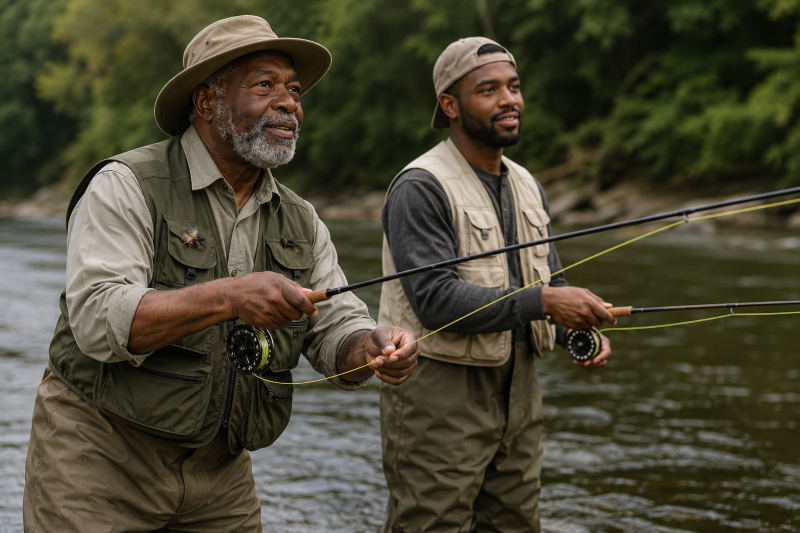
Respect for other anglers and the environment is an important part of fly fishing.
Remember to:
- Give other anglers plenty of space.
- Respect private property.
- Pack out all garbage.
- Handle fish carefully if practicing catch and release.
- Follow local fishing regulations and seasons.
Common Beginner Mistakes
Everyone makes mistakes when learning.
Common ones include:
- Casting too hard.
- Standing too close to the water.
- Choosing the wrong fly.
- Ignoring weather and water conditions.
- Skipping practice before heading to the river.
Frequently Asked Questions
Is fly fishing difficult to learn?
Most beginners can learn the basics within a few outings. Like any new hobby, confidence grows with practice.
Can you fly fish on a lake?
Yes. Lakes are excellent places to learn because the water is calmer and provides plenty of room to practice casting.
Is fly fishing expensive?
It doesn’t have to be. Many manufacturers sell complete beginner outfits that include a rod, reel, and fly line at an affordable price.
Conclusion
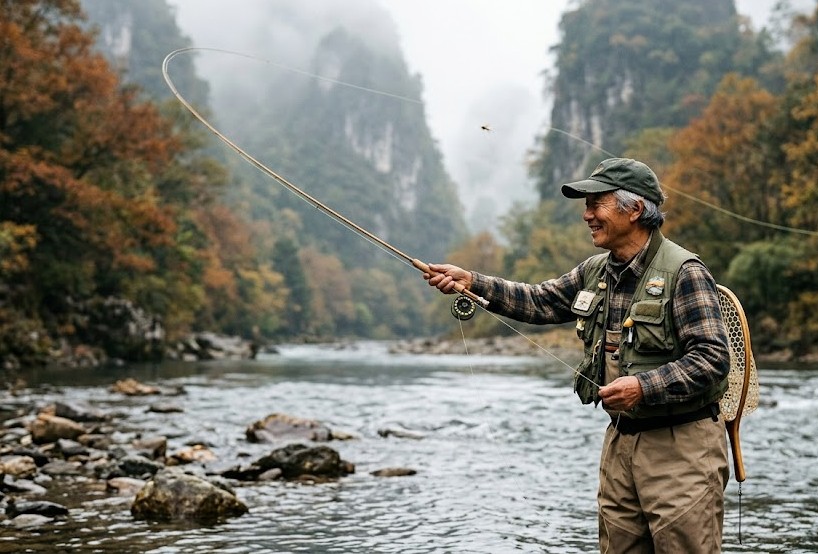
Fly fishing offers much more than the chance to catch fish. It encourages you to slow down, spend time outdoors, and enjoy the challenge of learning a new skill. While it takes practice to develop good casting technique, the reward is a relaxing hobby that many people enjoy for a lifetime.
With the right equipment, realistic expectations, and patience, you’ll be ready to enjoy your first day on the water. Whether you’re fishing a quiet lake or a flowing river, every cast is an opportunity to learn something new.