Why Does My Car Battery Die in Cold Weather?
8 min read
1407 words
I’ve spent a lot of time driving over the years, and one thing I don’t like is wondering whether my car is going to start on a cold morning. A vehicle can start perfectly every day when the weather is mild and then suddenly struggle when the temperature drops. If you’ve ever turned the key or pressed the start button and heard that slow cranking or dreaded clicking sound, you know how frustrating it can be.
So why does this happen? Does cold weather actually kill a car battery?
Not exactly. Cold weather can make a weak battery show its age, but there is usually more going on than simply the temperature outside.
Cold weather puts extra stress on your battery
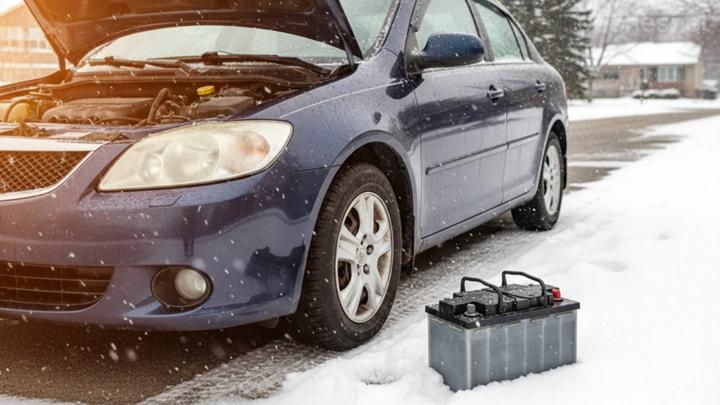
A car battery produces electricity through a chemical reaction, and cold temperatures slow that reaction down. This means the battery has less power available when you need it.
At the same time, your engine can be harder to start in cold weather. Engine oil becomes thicker as temperatures fall, so the starter has to work harder to turn the engine over. Your battery is essentially being asked to do more work while having less power available to do it.
A healthy battery will usually cope with this. An older battery that is already losing its ability to hold a charge may not.
This is why I wouldn’t automatically blame the cold if my car suddenly won’t start. Sometimes the cold weather is simply the thing that reveals a battery that was already on its way out.
Your battery may have been weakening for months
It’s easy to think that a battery was fine one day and then the cold weather suddenly destroyed it. In reality, batteries gradually wear out.
Heat can be particularly hard on a car battery, so by the time winter arrives, a battery that has gone through several hot summers may already have lost some of its capacity. It may continue starting the vehicle without any obvious problems until one particularly cold morning pushes it beyond what it can handle.
I’ve learned to pay attention to how my vehicle starts. If the engine seems to crank a little slower than it normally does, I don’t just assume it’s nothing. A change in how your vehicle starts can be an early warning that something needs to be checked.
Short trips can also cause problems
Our driving habits can make a difference too.
Every time you start your vehicle, the battery uses some of its stored energy. The alternator replaces that energy while you’re driving, but a very short trip may not give it enough time to fully recharge the battery.
This can be especially noticeable during winter when you’re also using the heater, headlights, windshield wipers, rear defroster and other electrical features.
Think about how easy it is to start your car, drive five or ten minutes to a store, turn it off and then do the same thing again later. If that’s your routine every day, the battery may gradually become undercharged.
That doesn’t mean you shouldn’t take short trips. Sometimes they’re unavoidable. It’s just another reason to pay attention if your battery has already been showing signs of weakness.
What are the signs of a weak battery?
Your battery doesn’t necessarily go from working perfectly to completely dead without giving you any warning. Sometimes there are small changes that are easy to dismiss.
Maybe the engine takes a little longer to turn over in the morning. Maybe you hear a clicking sound when you try to start the car. Your headlights or interior lights might seem dimmer than usual, or you may find yourself needing a boost when you didn’t have a problem before.
I’ve found that it’s worth noticing these little changes rather than waiting for a complete failure.
If your vehicle normally starts immediately and suddenly sounds sluggish, something has changed. It may be the battery, but it could also be another part of the starting or charging system.
It isn’t always the battery
This is an important point because a vehicle that won’t start doesn’t automatically have a bad battery.
The alternator could be the problem. Its job is to charge the battery while the engine is running, so if it isn’t working properly, the battery can eventually become discharged.
There could also be a loose or corroded battery connection, a problem with the starter or an electrical component that is drawing power after the vehicle has been turned off. In those situations, replacing the battery may not solve the underlying problem.
If a battery keeps going dead, I would want to know why before simply buying another one.
Should you have your battery tested?
If you’ve noticed that your car is starting more slowly, you’ve needed a boost recently, or you don’t know how old your battery is, having it tested before the coldest weather arrives is a sensible idea.
A battery test can give you a better idea of its condition. If there has been a problem with the battery going dead, it also makes sense to have the charging system checked.
I wouldn’t replace a battery simply because winter is coming. A battery that is healthy doesn’t necessarily need to be replaced just because the temperature is going to drop.
But if you’ve already noticed warning signs, I wouldn’t ignore them either.
What can you do to avoid a dead battery?
There isn’t a magic trick that guarantees your battery will never fail. Regular maintenance and paying attention to warning signs are probably your best defence.
If your battery connections are dirty or badly corroded, they should be inspected and cleaned appropriately. If you’re not comfortable working around a car battery, this is something I’d leave to a qualified automotive technician.
It’s also worth thinking about how you use your vehicle. If you regularly make very short trips, combining errands when practical can reduce the number of times you’re starting the engine without giving the charging system much time to replenish the battery.
And if you know your battery is getting older and your car has started slowly a few times, I’d rather have it checked when it’s convenient than wait until I’m standing in a parking lot in freezing weather.
Keep a winter emergency kit in your car
Even if you take good care of your vehicle, things can still go wrong. Because I do a lot of driving, I prefer to be prepared rather than assume I’ll never have a problem.
What you keep in your vehicle will depend on where you live and how far you travel, but a basic winter emergency kit can include booster cables or a portable jump starter, a flashlight, warm clothing or a blanket, gloves, an ice scraper and snow brush, a phone charger and some basic first-aid supplies.
If you’re travelling long distances or through areas where help may take some time to reach you, it’s worth having more than the bare minimum.
What about battery warmers?
If you live somewhere that regularly experiences extremely cold temperatures, you may have heard about battery blankets or battery warmers. These products can be useful for some vehicles, but they aren’t something I’d buy without checking that they’re appropriate for my particular vehicle and battery.
Always follow the manufacturer’s instructions and don’t improvise with heating devices around your vehicle. Anything involving electricity and a vehicle should be treated with some common sense and care.
Don’t wait for the coldest morning
The biggest thing I’ve taken away from dealing with vehicles in cold weather is that it’s better to pay attention to the warning signs before there’s a problem.
If your car has been starting normally and suddenly sounds sluggish, don’t just assume the cold weather is responsible. The temperature may have exposed a battery that was already getting weak.
Cold weather can be hard on a vehicle, whether you live in Canada, the northern United States, the UK or another part of the world where temperatures regularly fall below freezing. A little preparation can make winter driving much less stressful.
Personally, I’d much rather spend a little time having my battery checked than discover there’s a problem when I’m already late, it’s freezing outside and my car won’t start.
This article is for general information and is not a substitute for professional automotive advice. If your vehicle has starting or electrical problems, have it inspected by a qualified automotive technician.