How to Remove Snow and Ice From Your Vehicle
7 min read
1400 words
Winter brings plenty of challenges for drivers, and clearing snow and ice from your vehicle is one of them. After a heavy snowfall or overnight freeze, you may find your windshield covered in ice, your windows difficult to see through and several inches of snow sitting on the roof. When you’re already running late, it’s tempting to rush through the job. However, taking the time to remove snow and ice properly can help protect your vehicle and, more importantly, improve your visibility before heading out.
Snow and ice removal isn’t simply a matter of brushing off the windshield and getting behind the wheel. Your side windows, mirrors, headlights, taillights and other important areas need attention too. Using the wrong tools or applying too much pressure can also cause unnecessary scratches or damage. A little preparation and the right approach can make winter mornings considerably easier.
Start by Removing Snow From the Top of Your Vehicle
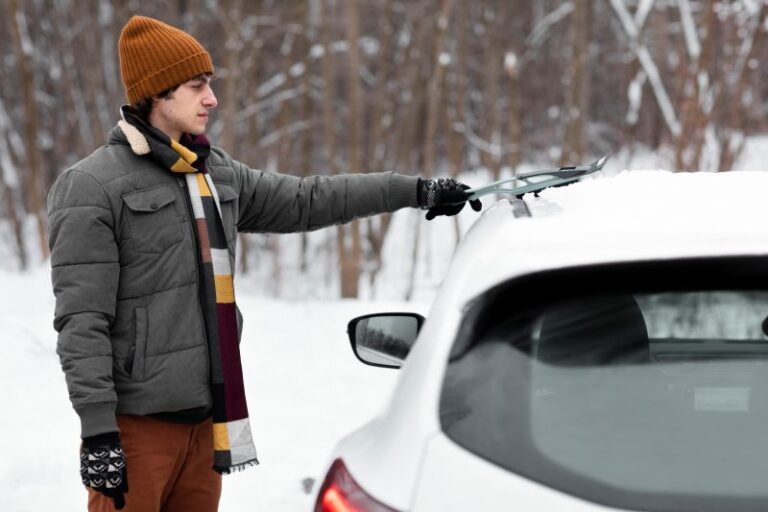
When clearing a snow-covered vehicle, start with the roof rather than the windshield. This is an important step that drivers sometimes overlook, particularly when they’re in a hurry. Snow left on the roof can slide forward onto the windshield when the vehicle begins moving or blow off while travelling, potentially creating a dangerous situation for other motorists.
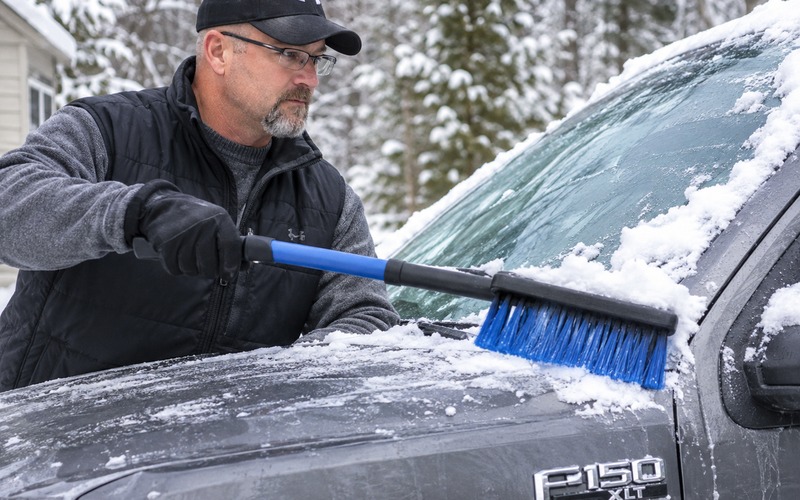
Use a snow broom designed for automotive use to push loose snow off the roof, working from one side to the other. If you drive an SUV or another taller vehicle, make sure you can reach the centre of the roof without putting yourself in an awkward position. A telescoping snow broom can be especially helpful because it provides additional reach without requiring you to stretch across the vehicle. Once the roof is clear, work your way down to the windows, hood and trunk.
Allow Your Vehicle’s Defroster to Loosen Ice
Ice that forms overnight can be stubborn, particularly after freezing rain or a sudden drop in temperature. Rather than immediately attacking a frozen windshield with an ice scraper, give your vehicle’s defrost system some time to warm the glass. Start the engine, turn on the front and rear defrosters as needed, and allow the heat to circulate while you prepare to clear the remaining snow.
As the glass gradually warms, the ice may begin to loosen, making it easier to remove without applying excessive pressure. If your vehicle has remote start, this can be particularly convenient on cold mornings. Always follow the vehicle manufacturer’s instructions and never leave a running vehicle unattended in an enclosed garage.
Use an Ice Scraper Correctly
An ice scraper is designed to remove frozen buildup from automotive glass, but how you use it matters. Begin with gentle, controlled strokes rather than pressing down hard and trying to remove everything at once. If the ice is particularly thick, allow the defroster more time to work before continuing.
Avoid using metal objects, kitchen utensils or other household items to break up ice. Although they might seem like convenient substitutes, they can scratch the glass or damage surrounding surfaces. A proper automotive ice scraper is inexpensive compared with the cost and inconvenience of repairing damaged glass.
It’s also important to avoid scraping painted areas of your vehicle. Ice scrapers are intended for glass, not the hood, roof or body panels.
Why You Should Never Pour Hot Water on Your Windshield
When you’re faced with a windshield covered in thick ice, pouring hot water over it might seem like an easy shortcut. Unfortunately, this is one winter trick worth avoiding.
The sudden temperature change can place stress on the glass and potentially cause it to crack, especially if the windshield already has a small chip or existing damage. The water can also cool quickly and refreeze, leaving you with another layer of ice to remove. Stick with your vehicle’s defroster, a suitable ice scraper and a little patience instead.
Don’t Overlook Your Side Windows and Mirrors
Your windshield isn’t the only area that needs to be clear before you drive. Side windows and mirrors are essential for checking surrounding traffic, changing lanes and backing out of parking spaces. Snow or ice covering these areas can significantly limit what you can see, even when the windshield is completely clear.
Take the time to remove frozen buildup from all the side windows and make sure your mirrors are free of snow. If your vehicle has heated mirrors, activate that feature according to the manufacturer’s instructions. Don’t assume the mirrors are clear simply because the windshield has thawed.
Remember Your Headlights, Taillights and Licence Plate
Snow can accumulate on headlights and taillights surprisingly quickly, particularly when you’re parked outside during a storm. Covered headlights can reduce the light available to illuminate the road, while snow-covered taillights and brake lights make it harder for other drivers to recognize your vehicle’s signals.
Before leaving, check the front and rear lights and remove any accumulated snow. Your licence plate should also be visible. These small details are easy to overlook when you’re concentrating on the windshield, but they’re part of properly preparing your vehicle for winter driving.
Be Gentle With Your Vehicle’s Paint
Snow itself isn’t necessarily the biggest concern when clearing your vehicle. Dirt, road salt and small particles of grit can become trapped underneath it. If these particles are dragged across the paint with a brush or other tool, they can leave fine scratches.
Whenever possible, use a snow broom with a head designed for automotive surfaces. Avoid pushing down excessively or repeatedly rubbing the same area when debris may be present. If you notice packed dirt or road grime, it’s better to clean the affected area properly when conditions allow rather than trying to scrub it away with a snow brush.
The same care applies to plastic trim, rubber seals and other exterior components. Winter temperatures can make some materials less flexible, so avoid pulling, bending or forcing frozen parts.
Give Your Wipers a Little Attention
Windshield wipers can freeze to the glass overnight, especially during freezing rain or wet snow followed by colder temperatures. Before switching them on, make sure the blades are not stuck to the windshield. Trying to operate frozen wipers can damage the rubber blades or place unnecessary strain on the wiper mechanism.
If the blades are frozen in place, use the defroster to help loosen the ice. Clear snow from around the wiper arms and the area at the bottom of the windshield as well. Once everything has thawed, check that the blades are in good condition and replace them if they leave streaks or fail to clear water effectively.
Check Cameras and Parking Sensors
Many newer vehicles have backup cameras, parking sensors and other driver-assistance technology. Snow, ice and road grime can cover these components, potentially interfering with their operation.
Take a moment to inspect the camera lenses and visible sensors around the front and rear of your vehicle. Use a soft, clean cloth to remove buildup rather than scraping these areas with a hard object. If your vehicle displays a warning that a camera or sensor is obstructed, consult the owner’s manual for the recommended cleaning procedure.
Prepare for the Next Snowfall
A little preparation before winter weather arrives can save considerable time when the first major snowfall hits. Keep your snow broom and ice scraper somewhere accessible, rather than buried underneath groceries, emergency supplies or other items in the trunk. It’s also worth checking that your tools are in good condition before you actually need them.
If you’re still looking for the right equipment, take a look at our guide to the best snow brooms and ice scrapers for your vehicle. We share several options, including the Snow Joe 4-in-1 Telescoping Snow Broom.
Take the Time to Clear Your Vehicle Properly
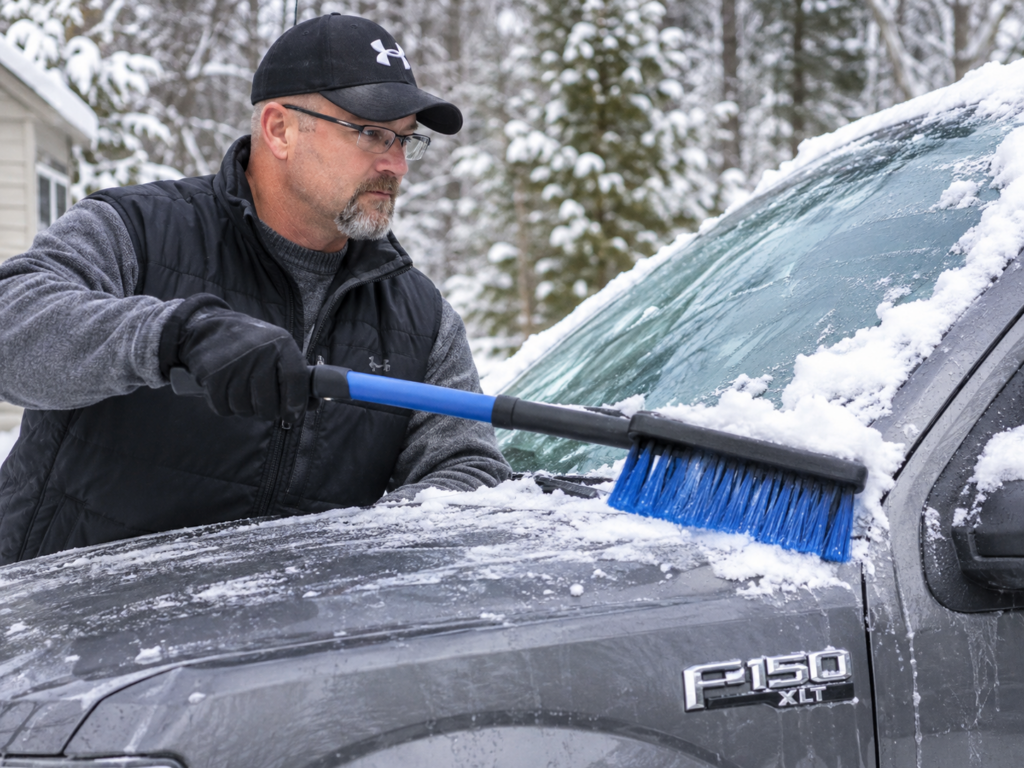
Clearing snow and ice may not be anyone’s favourite winter chore, but it’s an important part of preparing for a safe drive. Rushing through the process or clearing only a small section of the windshield can leave you with restricted visibility and create hazards for other motorists.
Start at the roof, work your way down, allow the defroster to loosen stubborn ice and check all your windows, mirrors and lights before setting off. With the right tools and a few extra minutes, you can protect your vehicle, improve your visibility and feel more confident when winter weather arrives.
A clear vehicle makes for a better start to any winter journey.