
5 min read
922 words
For many families, a trampoline is the ultimate backyard fun. It is a great way for kids to stay active and burn off energy. But this bouncy fun comes with a real side of risk. Most doctors see these risks every day. If you plan to buy a trampoline, you must know the facts. In Canada, more than 1,200 children get hurt on them every year. Because of this, many medical groups advise against home setups. Before you buy, look at the data.
The Reality of Trampoline Injuries in Canada
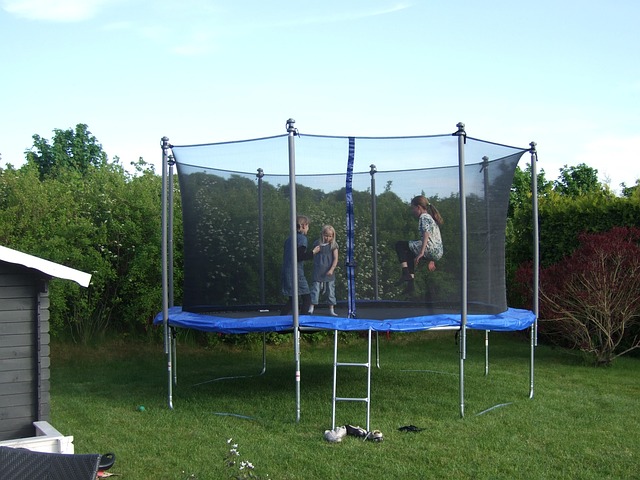
Statistically, the backyard trampoline is a hazardous piece of play equipment. Emergency room data shows that the risks are very high for specific age groups.
Who is at Risk?
The Highest Risk Group: Children aged 5 to 14 account for the most hospital visits.
The Early Childhood Factor: Children under 5 face a very high risk of serious injury. Their bones are still developing and cannot withstand high-impact forces. This often leads to painful fractures.
A Startling Statistic: In one major study, 60% of all trampoline injuries involved children between the ages of 1 and 9.
Because of these numbers, medical groups in Canada advise against backyard trampolines. They believe the danger to children and youth is too high for a home setup.
Common Injury Types: What Happens When Things Go Wrong?
Trampoline accidents are not just about “scraped knees.” The forces involved can lead to life-altering injuries. Based on Canadian hospital data, common diagnoses include:
- Fractures (Broken Bones): Approximately 40% of injuries. These often occur in the forearms and legs.
- Dislocations: Accounting for roughly 24% of cases.
- Head Injuries: Concussions are a significant concern, often occurring during collisions or bad landings.
- Soft Tissue Injuries: Sprains, strains, and deep cuts are also very common.
The “Safety Net” Myth: Why Enclosures Aren’t Enough
Many parents feel safe when they see a net around a trampoline. These nets are designed to keep children from falling onto the ground. However, they do not stop the most common causes of injury. A net provides a sense of security, but it cannot prevent what happens inside the enclosure. Most accidents occur on the mat itself.
The Top 3 Causes of Trampoline Injuries:
- Multiple Jumpers: When two or more people jump at once, it creates a “rebound” effect where the smaller child is launched with much more force than their own jump provides.
- Collisions: Children bumping into one another, often leading to head injuries or broken teeth.
- Bad Landings & Flips: Attempting somersaults or flips and landing on the neck or head is the leading cause of permanent, catastrophic spinal cord injuries.
Spring vs. Springless Trampolines: Is One Safer?
When shopping for trampolines, you will likely encounter the “Spring vs. Springless” debate.
- Traditional Spring Trampolines: Use metal coils to provide bounce. These springs can pinch skin or trap limbs, though modern padding has improved this.
- Springless Trampolines: These use flexible composite rods located beneath the jumping surface. By removing the hard metal frame and springs from the jumping level, these models significantly reduce impact-related injuries. While they are usually more expensive, they are widely considered the safer alternative.
Top 10 Trampoline Safety Tips That Actually Prevent Injuries
If you choose to have a trampoline, following these rules can drastically reduce the risk of a trip to the emergency room:
- The “One-at-a-Time” Rule: This is the most important rule. No “double bouncing.”
- Strictly No Flips: Somersaults and flips are too risky for backyard play.
- Set an Age Limit: Following medical advice, do not allow children under age 6 on a trampoline.
- Constant Adult Supervision: An adult should always be present to enforce the rules.
- Proper Placement: Place the trampoline on level ground, away from trees, fences, or structures.
- Check the Padding: Ensure the protective padding completely covers the metal frame and springs.
- Routine Inspections: Check for tears in the mat or rust in the frame every month.
- Clear the Under-Zone: Never allow children or pets to crawl under the trampoline while someone is jumping.
- No Jumping Off: Teach kids to stop jumping and climb down safely rather than leaping off the mat.
- Ladder Removal: Remove the ladder when the trampoline is not in use so toddlers can’t climb up unsupervised.
Biggest Trampoline Buying Mistakes (And How to Avoid Them)
Investing in a trampoline is a big decision. Avoid these common pitfalls to ensure you get the safest experience:
- Buying for Toddlers: Many parents buy “mini” trampolines for toddlers. Statistics show that kids under 5 simply don’t have the coordination or bone density for this activity.
- Prioritizing Size Over Quality: A massive 15-foot trampoline might look fun, but a smaller, high-quality springless model is a much smarter investment for safety.
- Ignoring Weight Limits: Always check the maximum weight capacity. Exceeding it can cause the mat to “bottom out,” leading to severe leg and spinal injuries.
- Buying Second-Hand Without Inspection: Older trampolines may have sun-damaged mats or rusted springs that are prone to snapping. If buying used, always replace the mat and netting with brand-new parts.
Final Thoughts for Parents
Trampolines offer undeniable fun and exercise. However, they are not a “set and forget” toy. Safety is an active process. It requires high-quality equipment and strict household rules. Most importantly, it requires active supervision at all times.
By understanding the risks, you can protect your children. Use the safety tips provided to build a better environment. You can keep your kids active while keeping them out of the ER. A safe backyard starts with a smart plan.
https://parachute.ca/en/injury-topic/playgrounds-and-play-spaces/trampolines/
https://www.albertahealthservices.ca/injprev/Page4863.aspx?
 Mahi Patel
  Kayla Baptiste
  Lynn Leblanc