
4 min read
604 words
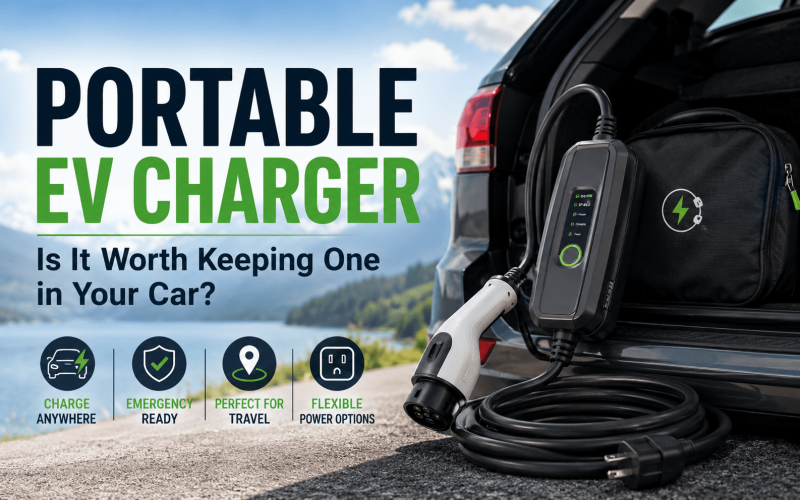
As electric vehicle (EV) adoption accelerates, the conversation is shifting from “how far can I go?” to “how can I stay charged anywhere?” While most owners rely on dedicated home charging stations, the growing need for electric vehicle charging on the go has brought a vital tool into the spotlight: the portable EV charger. But is it a must-have accessory, or just an extra piece of gear taking up trunk space? Let’s explore whether a portable charger belongs in your vehicle.
What Is a Portable EV Charger?
A portable EV charger is a compact charging cable equipped with a control box that allows you to plug your vehicle into standard wall outlets or industrial sockets. Unlike a permanent, hardwired wallbox, these chargers are designed for mobility, offering the flexibility to plug in wherever electricity is available.
Benefits of Keeping a Portable EV Charger in Your Car
- Unmatched Travel Convenience: Whether you’re visiting family, staying at a cottage, or pulling into a campsite, a portable charger turns any NEMA 5-15 or NEMA 14-50 outlet into a “fueling station.”
- Emergency Backup Charging: If you encounter a broken public charger or arrive at your destination with a lower-than-expected battery, having an EV emergency charger provides peace of mind that you won’t be stranded.
- Reduced Range Anxiety: Knowing you have the ability to trickle charge at your destination significantly eases the stress of long-distance road trips.
Level 1 vs. Level 2 Portable Chargers
- Level 1 Portable Charger: Plugs into a standard 120V household outlet. Slow (3–5 miles of range per hour) but universally compatible. Perfect for overnight “top-ups.”
- Level 2 Portable Charger: Requires a 240V outlet (like those used for clothes dryers or RVs). These significantly decrease charging time, making them the best portable EV charger choice for those who need a faster turnaround on the road.
Who Should Buy a Portable EV Charger?
- Road Trip Enthusiasts: Never rely solely on public infrastructure.
- Rural Drivers: In areas with sparse charging networks, a portable unit is essential.
- Apartment/Condo Dwellers: If you lack a dedicated home charger, a portable unit can provide charging at work or via garage outlets.
Features to Look for
- Adjustable Amperage: Allows you to lower the power draw to avoid tripping breakers in older buildings.
- Weather Resistance (IP Rating): Look for an IP65 or higher rating to ensure safety in damp conditions.
- Cable Length: Ensure at least 15–20 feet to reach outlets that aren’t conveniently placed.
- Safety Certifications: Always purchase units that are UL or ETL certified.
Portable EV Charger Safety Tips
- Inspect outlets: Do not use visibly damaged or loose wall sockets.
- Avoid extension cords: Unless specifically rated for EV charging, standard consumer extension cords can overheat and cause fires.
- Check the housing: Ensure the control box is kept off the floor if there is standing water.
A Note on Connector Types
As of 2026, the EV charging landscape is evolving. Most non-Tesla EVs currently use the J1772 connector for AC charging, but the industry is rapidly transitioning to the NACS (SAE J3400) standard. Always check your vehicle’s specific charging port or owner’s manual before purchasing a charger or adapter. If your vehicle and charger use different standards, high-quality, certified adapters are a safe and common solution.
Final Thoughts
A portable EV charger is a practical backup that every EV owner should consider. While a permanent home Level 2 station is the best long-term investment for daily convenience, a portable charger is the key to unlocking true freedom.
Have you ever had to rely on a portable charger during a road trip, or do you stick strictly to public charging stations? Let me know in the comments below!
 Valerie Cox
  Shawn DesRochers
  James Dingman