
9 min read
1621 words
Does the world beyond a few feet seem like a permanent blur? Do you find yourself reaching for your glasses the moment you wake up, unable to function without them? If this sounds familiar, you or someone you know may be experiencing more than just simple nearsightedness. You might be dealing with extreme nearsightedness, a condition medically known as high myopia. High myopia is more than just a strong prescription; it’s a significant eye health condition that can impact your daily life and increase your risk for other vision problems down the road. In this comprehensive guide, we will explore everything you need to know about extreme nearsightedness. We’ll break down the science, discuss the symptoms to watch for, and outline the modern and effective treatment options available to help you see the world with clarity and confidence.
What Exactly Is Extreme Nearsightedness?
At its core, nearsightedness (myopia) is a refractive error. In a perfectly shaped eye, light enters and focuses directly onto the retina—the light-sensitive tissue at the back of the eye—creating a clear image.
In a myopic eye, this process is disrupted. This usually happens for one of two reasons:
- The eyeball is too long from front to back (axial length).
- The cornea (the eye’s clear front surface) is too curved.
This structural difference causes light to focus in front of the retina, rather than directly on it. The result? Close-up objects remain clear, but distant objects—like road signs, a movie screen, or the face of a friend across the room—appear blurry and out of focus.
So, what makes it “extreme”? Optometrists and ophthalmologists measure refractive errors in units called diopters (D). A prescription with a minus sign (-) indicates myopia. While mild myopia might be between -0.25 and -3.00 D, high myopia is generally classified as a prescription of -6.00 D or greater.
Individuals with high myopia are not just dealing with blur; their eye’s anatomy puts them at a higher risk for more serious conditions, making proactive care essential.
Unraveling the Causes of High Myopia
Why do some people develop such a high degree of nearsightedness while others don’t? The development of high myopia is multifactorial, involving a complex interplay of genetics and environment.
Genetic Predisposition
Genetics play a starring role. If one or both of your parents are nearsighted, your risk of developing the condition increases significantly. Researchers have identified over 200 genetic regions linked to refractive error, confirming that a family history of high myopia is a major contributing factor.
Environmental and Lifestyle Factors
While you can’t change your genes, your environment and daily habits also have a profound impact. The global rise in myopia, often called the “myopia boom,” is strongly linked to modern lifestyles.
- Increased “Near Work”: Spending prolonged hours on close-up tasks like reading, studying, or using digital devices (computers, smartphones, tablets) is a primary risk factor. This sustained close focus can encourage the eyeball to elongate over time, worsening myopia.
- Lack of Outdoor Time: Conversely, studies have consistently shown that spending more time outdoors, particularly during childhood and adolescence, can have a protective effect. It’s believed that the bright, natural light helps regulate eye growth and dopamine release in the retina, slowing down the progression of nearsightedness.
Underlying Medical Conditions
In some cases, extreme nearsightedness can be associated with other health issues. Certain genetic syndromes, such as Marfan syndrome or Stickler syndrome, can affect the body’s connective tissues, including those in the eye, leading to high myopia. Premature birth can also increase the risk.
Symptoms of Extreme Nearsightedness: More Than Just Blurry Vision
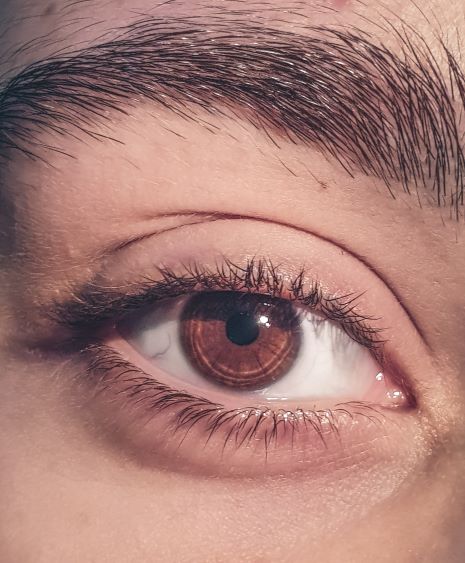
The primary symptom of high myopia is, of course, significant difficulty seeing distant objects clearly. However, the effects don’t stop there. Individuals often experience a range of related issues:
- Severe Blurriness: Objects at a distance are not just slightly fuzzy but can be completely unrecognizable without correction.
- Constant Squinting: An automatic reflex to try and narrow the pupil to temporarily improve focus and clarity.
- Chronic Eyestrain: The muscles of the eye work overtime to try and focus, leading to fatigue, soreness, and a “tired eye” feeling.
- Persistent Headaches: Eyestrain is a common trigger for tension headaches, especially after long periods of visual concentration.
- Difficulty with Night Driving: The blur and glare from headlights can be significantly worse at night, making driving challenging and unsafe.
The Hidden Dangers: Serious Eye Health Risks Associated with High Myopia
This is the most critical aspect to understand about extreme nearsightedness. The physical stretching and elongation of the eyeball can thin and weaken the retina and other vital structures. This increases the lifetime risk of developing serious, sight-threatening conditions:
- Retinal Detachment: The retina can pull away from its normal position. Warning signs include a sudden increase in “floaters” (specks in your vision), flashes of light, or a dark curtain-like shadow moving across your field of vision. This is a medical emergency.
- Myopic Maculopathy: The stretching can damage the macula, the central part of the retina responsible for sharp, detailed vision. This can lead to gradual, irreversible vision loss.
- Glaucoma: High myopia is a known risk factor for developing glaucoma, a disease that damages the optic nerve and causes peripheral vision loss.
- Cataracts: Individuals with high myopia often develop cataracts (clouding of the eye’s lens) at an earlier age than the general population.
Because of these risks, regular, comprehensive eye exams are not just about updating your prescription—they are a critical tool for monitoring your overall eye health.
Your Path to Clarity: Modern Treatment Options for Extreme Nearsightedness
Fortunately, living with high myopia no longer means being limited by thick, heavy glasses. Technology has advanced, and there are several excellent options to help you achieve clear, comfortable vision.
1. Advanced Corrective Lenses
- Eyeglasses: The go-to solution for many. For high prescriptions, high-index lenses are a game-changer. These lenses are made from a special material that bends light more efficiently, allowing them to be significantly thinner, lighter, and more comfortable than standard plastic lenses. Anti-reflective coatings are also highly recommended to reduce glare.
- Contact Lenses: Contacts offer a wider field of vision and are great for active lifestyles. They correct vision directly on the surface of the eye, providing a more natural visual experience. A variety of materials and types (soft, gas permeable) are available to suit different needs.
2. Refractive Surgery and Vision Correction Procedures
For those seeking to reduce or eliminate their dependence on glasses and contacts, surgical options can be life-changing.
- LASIK and PRK: These laser vision correction procedures reshape the cornea to change how light focuses on the retina. While highly effective, they are not suitable for everyone with high myopia. A key factor is corneal thickness; if the cornea is too thin to safely remove the necessary amount of tissue for a high prescription, these procedures may not be recommended.
- Implantable Collamer Lenses (ICLs): This is often the ideal solution for individuals with high myopia who are not candidates for LASIK. An ICL is a microscopic, soft lens that is placed inside the eye, between the iris and the natural lens. Think of it as an implantable contact lens that you never have to remove. ICLs offer several advantages:
- They can correct a very wide range of high myopia.
- They provide excellent, high-definition vision quality.
- The procedure does not involve removing corneal tissue.
- It is reversible if needed.
Taking Control of Your Vision
Extreme nearsightedness is a lifelong condition, but it is highly manageable. With the right strategies and a dedicated eye care team, you can protect your health and enjoy clear vision.
It is crucial to work with a qualified optometrist or ophthalmologist to determine the best treatment plan for your specific needs. They will conduct a thorough examination, assess your level of nearsightedness, and evaluate the health of your retina and other internal eye structures. Based on these findings, they can recommend the most appropriate and safest treatment options to help you see clearly and comfortably.
In conclusion, while extreme nearsightedness presents unique challenges, modern ophthalmology offers more hope and more effective solutions than ever before. From advanced high-index glasses to transformative procedures like ICLs, a clearer world is within your reach.
If you suspect you have high myopia or are struggling with a strong prescription, don’t wait. Proactive management is the key to preserving your vision for a lifetime.
Schedule a comprehensive eye exam with your eye care provider today. They can provide the expert guidance and support you need to maintain optimal eye health and see life in focus.
Frequently Asked Questions (FAQ)
Q: Can extreme nearsightedness be cured? A: Currently, there is no “cure” that can reverse the anatomical changes (like eyeball length) that cause high myopia. However, treatments like glasses, contacts, ICLs, and LASIK can effectively correct the refractive error, allowing you to see clearly and function without dependency on strong corrective lenses.
Q: Is high myopia considered a disability? A: It can be. Whether high myopia qualifies as a legal disability depends on the “best-corrected visual acuity” (your vision while wearing glasses or contacts) and the specific laws of your region. If vision cannot be corrected to a certain level (e.g., 20/200), it may be classified as legally blind.
Q: Can my extreme nearsightedness get worse? A: Myopia can progress, especially during the school years and into early adulthood. For adults, prescriptions tend to stabilize. However, it’s vital to monitor for changes and attend regular eye exams to catch any associated health risks early.
Q: What is the 20-20-20 rule I keep hearing about? A: The 20-20-20 rule is a great guideline to reduce digital eye strain. Every 20 minutes, take a break and look at something at least 20 feet away for 20 seconds. This helps relax your eye’s focusing muscles.
 Lynn Leblanc
  Valerie Cox
  Carly
Carly