
5 min read
982 words
A handbag is more than just a place to store your essentials; it is a critical accessory that finishes an outfit, expresses your personal style, and, most importantly, influences the overall perception of your silhouette. Just as a perfectly tailored jacket can flatter your frame, the right purse, chosen with attention to scale and placement, can enhance your natural proportions and create visual balance. This style guide goes beyond trends, offering practical advice to help you select a handbag that works with your body, ensuring you look polished and perfectly proportioned, no matter your shape or size.
The Rule of Proportional Balance
Before diving into specific body types, it’s essential to understand the core principle: balance and contrast. Generally, the best handbag choice is the one that acts as a visual contrast to your natural shape.
- If you have a very angular frame, a soft, slouchy bag can introduce gentleness.
- If you have a curvier frame, a structured, angular bag can provide clean lines and definition.
- The point where the bottom of your bag rests is where the eye will naturally be drawn. Use this to your advantage to highlight your slimmest points.
Styling Handbags by Silhouette
1. The Petite Frame (5’4” and Under)
When you have a petite stature, the goal is never to let the accessory wear you. An overly large handbag can visually overwhelm a smaller frame, making you appear shorter and heavier.
The Best Choices:
- Mini Bags and Crossbodies: These are perfectly scaled to your size. A mini-tote or small structured satchel looks intentional, not burdensome.
- Clutches: Perfect for evening wear, as they are carried and don’t hang heavily on the body.
- Structured Top-Handle Bags: These draw the eye upward and keep the bag close to the body, maintaining a clean vertical line.
What to Avoid: Very large hobo bags, oversized totes, and shoulder bags with long straps that hit below the mid-thigh.
2. The Tall and Lean Physique (5’8” and Above)
Tall individuals have the enviable ability to carry off styles that might engulf a smaller person. You can handle—and benefit from—larger scale and bold details without looking unbalanced.
The Best Choices:
- Oversized Totes and Slouchy Bags: Large, soft purses and spacious totes balance your height beautifully.
- Large Hobo Bags and Shoulder Bags: Look for bags with substantial hardware or visual texture.
- Bags with Short Straps: A shoulder bag that tucks neatly under the arm breaks up the long vertical line of your body, adding a pleasing horizontal element.
What to Avoid: Tiny micro-bags or mini-clutches, which can look disproportionately small against your scale.
3. The Curvy and Hourglass Figures
For individuals with curves, particularly an hourglass shape or general voluptuousness, the key is structured elegance. Slouchy or shapeless bags can add density where you want definition. Furthermore, be mindful of where the bag falls.
The Best Choices:
- Structured Satchels and Top-Handle Bags: These angular shapes provide clean lines that contrast nicely with natural curves.
- Medium-Sized Shoulder Bags: Choose bags that hit either well above the widest part of your hips or fall low, around the mid-thigh.
- Bags Held on the Forearm: Carrying a sophisticated structured bag on the crook of your arm draws attention to the slimmest part of your upper body.
What to Avoid: Crossbody bags or shoulder bags that rest directly on the hip line, as this placement draws the eye to the widest point of the lower body.
4. Focusing on Upper Body Emphasis (Inverted Triangle and Apple Shapes)
If you carry more weight or breadth in your shoulders, chest, or midsection (Apple shape), you want an accessory that draws the eye downward and away from the upper half.
The Best Choices:
- Long Shoulder Straps: Opt for bags (often messenger or crossbodies) that rest comfortably at or below the waistline. This creates length and draws the eye down.
- Satchels and Handhelds: Bags carried by the hand or wrist are great for balancing the silhouette, as they keep the visual focus low.
- Bags with Texture or Detail on the Bottom Half: Look for fringe, tassels, or unique hardware near the base of the bag.
What to Avoid: Very small, tight shoulder bags or crescent-shaped bags that tuck snugly under the armpit; these add visual bulk to the chest and shoulder area.
5. Focusing on Lower Body Emphasis (Pear Shape)
The Pear shape (narrower shoulders, wider hips, and thighs) benefits greatly from accessories that draw attention upwards, balancing the lower half.
The Best Choices:
- Short Shoulder Bags: Choose bags that tuck right under the armpit, ideally resting around the rib cage or waistline. This brings the focus back to your smaller upper body.
- Bright Colors and Bold Hardware: Use color and shine to draw the eye up toward the neckline and shoulders.
- Clutches and Wristlets: Keeping the bag in your hand elevates the visual interest.
What to Avoid: Bags with very long straps that fall onto the hip line, as this visual element will only highlight the widest part of the lower body.
The Universal Handbag Styling Secrets
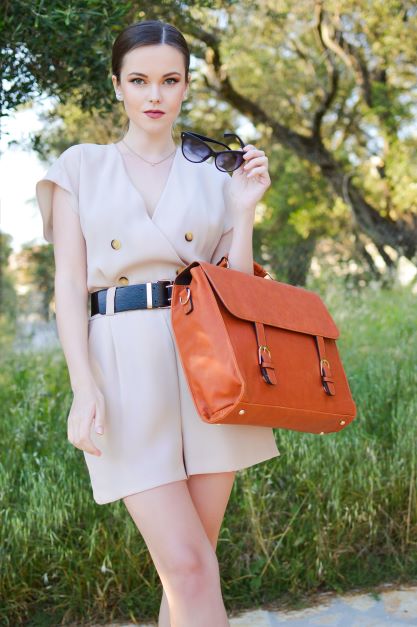
While guidelines are helpful, ultimately, style is personal. Remember these three universal truths when selecting any purse:
- Scale Always Matters: Regardless of your body type, the width and height of the bag must be proportional to your frame. A bag should never be wider than your torso.
- Use Shape as Contrast: If your body is soft and round, opt for a sharp, rectangular bag. If your body is angular, choose a soft, rounded hobo. This juxtaposition creates definition.
- Test the Placement: Always try the bag on and check where it rests in the mirror. Does it hit your body at a pleasing point? If the strap placement or bag size makes you feel uncomfortable, put it back.
By utilizing your accessories to create flattering lines and intentional visual balance, you ensure that your handbag is not just a style statement, but a smart strategic choice that enhances your natural beauty.
 Valerie Cox
  Julie Veenstra
  Stephanie P