
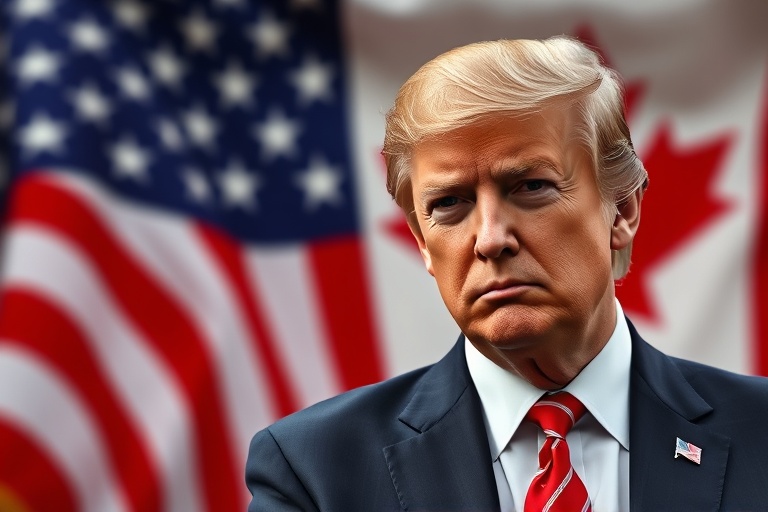
Trump’s looming trade war on Canada – Escalating Tensions
5 min read
870 words
In a recent, high-stakes press conference, Prime Minister Justin Trudeau delivered a stunning and deeply concerning message regarding the ongoing trade conflict with the United States. While trade disputes are common, Trudeau’s assertion went far beyond typical diplomatic frustration, suggesting that the current trade war is not merely damaging, but actively designed to destroy the Canadian economy.
This escalating tension between long-standing allies has left millions of Canadians feeling anxious and uncertain about the future. Given the severity of this accusation, it is essential to dive deeper into Trudeau’s comments, explore the immediate and long-term impact of US tariffs on Canada, and analyze what strategies Canada can deploy to navigate this unprecedented economic storm.
Trudeau’s Accusations: The Severity of the Rhetoric
The Prime Minister’s language was unequivocally sharp, reflecting the administration’s mounting frustration with President Trump’s trade policies. Trudeau described the trade war as “dumb,” a blunt characterization reflecting the lack of rational economic justification for imposing tariffs on a primary ally.
Crucially, his accusation that the policies are designed to destroy Canadian prosperity elevates the conflict from a simple disagreement over tariffs to a fundamental challenge to Canada’s sovereignty and economic stability. Trudeau also pointedly criticized the unpredictable behavior emanating from Washington and the lack of respect shown for traditional allies like Canada. This rhetoric signals that Canada views the current US-Canada trade war less as a temporary rift and more as a deliberate economic blockade.
The Immediate Impact on the Canadian Economy
The reality of the trade dispute is already being felt across Canada. The imposition of US tariffs on Canadian goods, particularly in key sectors, has initiated a chain reaction that directly threatens the broader Canadian economy.
- Increased Costs and Consumer Strain: Tariffs act effectively as a tax, passed along the supply chain. Canadian businesses are facing increased production costs for imported materials, which ultimately translates into higher prices for consumers. This inflation weakens purchasing power and slows domestic economic growth.
- Dampened Investor Confidence: Economic growth relies heavily on predictability. The uncertainty surrounding future trade relations between the two countries has severely dampened investor confidence. When investors fear sudden policy shifts or the breakdown of historic trade agreements, they are far less likely to commit capital to Canadian ventures, potentially leading to immediate job losses and stalled development.
These consequences underscore the systemic risk posed by the tariffs, moving far beyond mere inconvenience to affecting the foundational stability of the market.
Targeting Industry: The Threat to the Canadian Manufacturing Sector
One of the most concerning aspects of the current trade war is the specific threat it poses to Canada’s industrial backbone, particularly the Canadian manufacturing sector.
The decision by the US to impose sweeping steel and aluminum tariffs has been particularly damaging. Canadian manufacturers rely heavily on both domestic and imported materials, and these tariffs mean higher input costs, making Canadian finished goods less competitive both domestically and in the global market.
For industries dependent on exporting to the US—Canada’s largest trade partner—the tariffs erode profitability and force difficult decisions regarding employment. This pressure could result in widespread job losses, a decline in overall industrial output, and the potential relocation of manufacturing operations to more stable trade environments. If Trudeau’s assertion of “design to destroy” rings true, the targeting of foundational sectors like steel and aluminum is the clearest evidence.
Canada’s Strategy: Defense, Diplomacy, and Diversification
In response to the economic and rhetorical challenge posed by the trade war, the Canadian government has adopted a multifaceted approach aimed at mitigating damage and defending national interests:
1. Legal and Diplomatic Defense
Trudeau has remained vocal in defending Canadian interests on the global stage, emphasizing that the US tariff actions violate international trade agreements. Canada has formally initiated legal challenges against the United States at the World Trade Organization (WTO), seeking to overturn the imposed tariffs and highlight the inconsistency of the US trade policies.
2. Trade Diversification
Recognizing the danger of over-reliance on a single partner, Canada has intensified efforts to strengthen trade relationships with other nations. By securing trade agreements with Europe (CETA) and strengthening ties across the Asia-Pacific (CPTPP), Canada is actively seeking new export markets to buffer the impact of restricted access to the US.
Navigating the complexities of this highly charged situation requires a delicate balance of strong diplomacy and decisive economic strategy. Canada must remain steadfast in its commitment to protecting its citizens and businesses while simultaneously preparing for a future where traditional alliances may be less reliable.
Standing Firm: Economic Resilience in the Face of Adversity
The US-Canada trade war represents a significant and severe challenge to the economic stability of Canada. Prime Minister Trudeau’s assertion that the conflict is designed to collapse the Canadian economy underscores the gravity of the situation and the high-stakes nature of modern trade politics.
As the conflict continues to unfold, Canada’s success will rely on its ability to stand firm in defense of its economic interests. By leveraging international legal avenues, pursuing strategic diversification, and maintaining national resolve, Canada can weather this storm and emerge stronger, ensuring the long-term prosperity of its citizens despite the pressure exerted by punitive US tariffs on Canada.





It is a dumb trade war!