
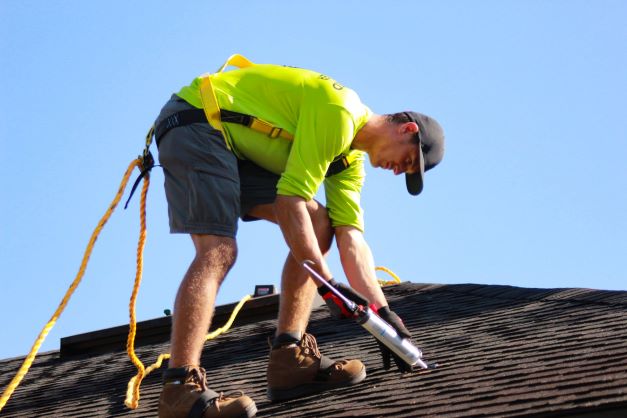
How to Choose the Right Roofing Contractor for Your Home
8 min read
1561 words
Your roof does more than complete the look of your home. It helps protect your property from rain, wind, snow, and changing temperatures throughout the year. When repairs become necessary or you’re planning a roof replacement, choosing the right roofing contractor is an important decision.
With so many companies offering roofing services, knowing which one to trust can feel overwhelming. You want someone who understands your roofing needs, communicates clearly, and has the experience to carry out the work properly. Taking time to research your options can help you find a contractor who is a good fit for your home and your budget.
Whether you’re dealing with a persistent leak, replacing aging shingles, or planning a major roofing project, these practical tips can help you narrow down your options and choose a professional with greater confidence.
1. Ask for Recommendations and Research Local Roofers
A good starting point is to ask people you trust about their experiences with roofing contractors. Friends, family members, neighbours, and colleagues may be able to recommend a company they have hired for repairs or a roof replacement.
Ask what they liked about the experience. Was the contractor easy to reach? Did the crew arrive when expected? Was the finished work satisfactory? Learning how a company handled the entire project can be just as useful as hearing whether the roof looked good when the job was complete.
Once you have a few names, research each company online. Read reviews on platforms such as Google and other independent review websites. Look beyond the overall star rating and pay attention to recurring comments about communication, workmanship, reliability, and how the company responds when customers raise concerns.
No contractor will necessarily have a perfect record, and an occasional negative review doesn’t automatically mean a company should be avoided. However, repeated complaints about unresolved leaks, unexpected charges, or difficulty contacting the business deserve attention.
You can also check whether the company has an established local presence and provides clear contact information. These checks won’t guarantee a trouble-free project, but they can help you identify contractors worth contacting.
2. Look for Relevant Roofing Experience
Not every roofing project is the same. Replacing asphalt shingles on a typical residential home involves different considerations from repairing a flat roof or installing metal roofing.
Look for a contractor with experience relevant to your particular project. If your home has an unusual roof design, multiple roof slopes, skylights, or an older roofing system, ask whether the company has handled similar jobs.
A knowledgeable contractor should be able to explain the options available, identify potential concerns, and describe why a particular approach may suit your home. They should also be willing to explain the limitations of their recommendations rather than promising that every problem has an easy or inexpensive solution.
Ask to see examples of completed projects or references from customers with similar roofing needs. If manufacturer training or certification is relevant to the materials being considered, ask what qualifications the contractor holds and what those qualifications mean for your project.
Experience alone doesn’t guarantee quality, but choosing someone familiar with your type of roof can make it easier to discuss the work and evaluate the proposed solution.
3. Verify Insurance and Applicable Credentials
Before allowing a contractor to work on your property, ask about their insurance coverage and any licences, registrations, or safety requirements that apply in your area.
Roofing work involves heights, tools, heavy materials, and the possibility of accidental property damage. Appropriate insurance can help protect against certain claims, depending on the coverage and circumstances. Ask to see current documentation rather than relying solely on a verbal assurance.
In Ontario, homeowners should also ask about applicable Workplace Safety and Insurance Board (WSIB) requirements and verify whether the contractor has the necessary coverage. Requirements can vary according to the business and work arrangement, so check the rules that apply to your particular situation.
If your project involves a specialized roofing product, you can also ask about manufacturer certifications or training. Find out whether any certification is relevant to the installation requirements or warranty being offered.
For homeowners outside Ontario, check provincial, territorial, and municipal requirements. Taking a little time to verify the contractor’s credentials before hiring can help you avoid problems later.
4. Compare Estimates Carefully
Once you have identified a few suitable contractors, request written estimates for the proposed work. Where practical, obtaining estimates from three companies can help you understand the available options and typical costs.
Make sure you’re comparing similar work. One estimate may include removing the existing roofing materials, replacing certain components, and disposing of construction waste, while another may cover only the installation of new shingles.
Ask each contractor to explain the proposed materials, the work involved, and any assumptions that could affect the final price. If the roof has visible damage or the contractor suspects an underlying problem, ask how that possibility will be assessed and priced.
Avoid making your decision on price alone. A low estimate may reflect a smaller scope of work, different materials, or costs that haven’t been included. A higher estimate isn’t automatically better, either.
Consider the contractor’s experience, the clarity of the proposal, the materials being recommended, the expected schedule, and the quality of the answers you receive. The goal is to understand what each company is offering so you can make a fair comparison.
Before accepting an estimate, ask for any outstanding questions to be answered in writing. Once you select a contractor, review the final contract carefully before signing it.
5. Pay Attention to Communication and Professionalism
The way a contractor communicates during the initial stages can give you a useful sense of how the project may be managed. Notice whether the company responds to questions, explains its recommendations, and provides information without making you feel rushed.
A professional roofer should be able to explain the proposed work in terms you understand. If you ask why a repair is necessary or why one material is being recommended over another, you should receive a clear explanation rather than vague assurances.
It’s also reasonable to ask who will supervise the work, whether the company uses its own employees or subcontractors, and whom you should contact if a problem arises.
Pay attention to how the contractor handles uncertainty. A roof inspection may reveal issues that cannot be fully assessed until old materials are removed. An honest professional should explain what is known, what remains uncertain, and how unexpected findings would be handled.
Good communication doesn’t guarantee perfect workmanship, but it makes it easier to discuss expectations, resolve questions, and address problems if they arise.
6. Understand the Materials Being Recommended
Roofing materials differ in appearance, durability, maintenance requirements, installation needs, and cost. The best option depends on your home’s design, local climate, budget, and the structure of the existing roof.
Ask the contractor to explain the advantages and limitations of the materials being proposed. For example, asphalt shingles are a common residential choice, while metal roofing and other systems may suit different budgets or architectural styles.
You should also ask whether the proposed materials are appropriate for your roof’s slope and design, whether ventilation or underlayment improvements are recommended, and whether any existing components can reasonably remain in place.
If appearance matters to you, request samples or photographs showing the available colours and finishes. For a larger project, it may also be helpful to look at completed installations using the same product.
Don’t hesitate to ask why the contractor prefers one option over another. A good recommendation should be based on your home’s needs rather than simply on the most expensive product available.
7. Check References and Examples of Previous Work
Before making a final decision, ask the contractor for references from previous customers. If possible, choose references whose projects are similar to yours in size, materials, or complexity.
You might ask whether the work was completed within the expected timeframe, whether the final cost matched the agreed terms, and how the contractor responded to questions or concerns.
If you have the opportunity to see a completed project in person, look at the overall appearance and ask the homeowner about their experience. Remember, though, that a roof can look good from the ground without revealing every detail of its installation.
Online project galleries can also provide examples of the company’s work, but photographs alone don’t establish workmanship quality. Consider them alongside references, reviews, credentials, and the information you receive directly from the contractor.
A company willing to discuss its previous work and provide reasonable references can give you more information to consider before making your choice.
Make an Informed Choice for Your Home

Choosing a roofing contractor involves more than finding the lowest price or selecting the first company that answers your call. It means considering the contractor’s relevant experience, checking credentials, comparing proposals, and paying attention to how clearly the company communicates.
Take the time to ask questions and compare your options. If something doesn’t make sense, request an explanation before making a commitment.
Once you’ve selected a contractor, the next step is to review the written agreement carefully. Our guide to what to check before signing a roofing contract explains the costs, payment terms, warranties, and other details homeowners should understand before work begins.
A little research at the beginning can help you choose a roofing professional who understands your project and gives you greater confidence in the work ahead.





I find it fascinating that you could use durable roofing materials to beef up your home’s protection against strong winds and hurricanes. My brother discussed how he wants to try living in the countryside as a change of pace. We should probably find a roofer that can suggest which roofing materials he could use for this plan.