How to French knot Embroidery – Step by Step Guide
8 min read
1519 words
The French knot, a small but mighty stitch, is a cornerstone of hand embroidery. It’s renowned for its ability to inject exquisite texture, intricate detail, and a touch of undeniable elegance into any fabric art project. For many beginners, the idea of tackling this seemingly complex knot can feel intimidating. Images of tangled floss and frustrating attempts might come to mind.
But fear not, aspiring embroiderers! I’m here to assure you that with a clear guide and a little dedicated practice, you’ll soon be confidently sprinkling perfect French knots across your fabric. This comprehensive tutorial will walk you through the process, step-by-step, ensuring you master this essential embroidery technique, transforming your work from flat to fabulous.
Unlocking the Magic of the French Knot in Embroidery
Why is the French knot so celebrated in the world of embroidery? Its power lies in its versatility. While tiny, a well-executed French knot creates a delightful three-dimensional bump that can mimic everything from delicate flower centers and twinkling eyes on an embroidered animal to scattered seeds, tiny berries, or even curly hair. It adds depth and visual interest that flat stitches simply cannot achieve. Mastering this stitch opens up a whole new realm of creative possibilities for your hand embroidery projects, making it a critical skill for anyone serious about embroidery techniques.
Gathering Your Essential French Knot Supplies
Before we dive into the stitching fun, let’s ensure you have all the necessary embroidery supplies at hand. Having the right tools makes the learning process significantly smoother and more enjoyable.
- Fabric: Choose a fabric that holds tension well and is suitable for embroidery. Good options include natural fibers like cotton, linen, or even felt. A medium-weight fabric is often easiest for beginners, as excessively thin fabrics can allow the knot to pull through, and very thick ones can be harder to pierce.
- Embroidery Floss: Select the color and type of floss that speaks to your project. Standard 6-stranded cotton embroidery floss is commonly used. You can vary the number of strands you use (e.g., 2, 3, or all 6) to achieve different knot sizes and textures.
- Embroidery Needle: A sharp-pointed embroidery needle (also known as a crewel needle) with an eye large enough to accommodate your chosen floss is crucial. The sharp point will help you re-enter the fabric precisely.
- Embroidery Hoop (Optional but Highly Recommended): An embroidery hoop keeps your fabric taut and stable, preventing puckering and making the French knot tutorial much easier to follow. A taut surface gives you better control over your tension.
- Scissors: Small, sharp embroidery scissors are perfect for trimming your floss neatly.
The Step-by-Step French Knot Tutorial: How to French Knot Like a Pro
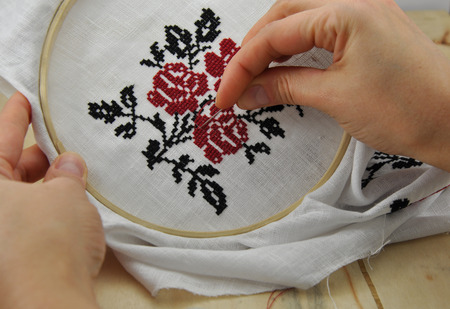
Now, for the exciting part! Follow these instructions carefully, and you’ll be creating beautiful French knots that elevate your embroidery projects in no time.
Step 1: Bring the Needle Up: Start by bringing your threaded needle up through the fabric from the back to the front at the exact point where you want your French knot to reside. Pull the floss all the way through until the knot at the back of your fabric is snug.
Step 2: Wrap the Floss Around Your Needle: This is the heart of the French knot technique.
- Hold the working floss taut (but not too tight) with your non-dominant hand, keeping it parallel to your fabric.
- With your dominant hand, bring your needle towards the taut floss. Place the tip of your needle under the floss, close to the fabric.
- Wrap the floss around the needle. For a standard, neat knot, one or two wraps are typically sufficient. More wraps will create a larger, fuller knot. Keep the wraps snug against the needle but not overly tight.
Step 3: Insert the Needle Close By Keeping the floss you’ve just wrapped around the needle taut with your non-dominant hand, insert the tip of your needle back into the fabric very close to where you initially came up. Critically, do not insert the needle into the exact same hole, as this can cause the knot to pull through. Insert it just a hair’s breadth away.
Step 4: Pull Through Slowly and Evenly: Now for the crucial part of forming the knot. With your non-dominant hand still holding the wrapped floss taut (this maintains the knot’s shape), slowly pull the needle and the rest of the floss through to the back of the fabric. Guide the wraps down the shaft of the needle until they tighten against the fabric, forming a neat coil.
Step 5: Secure Your Beautiful Knot: Once the knot is fully formed and pulled snugly against the fabric’s surface, you can release the tension from your non-dominant hand. Continue pulling the rest of the floss through to the back until the knot is firmly secured.
Step 6: Repeat and Practice! Congratulations! You’ve successfully created a French knot. Repeat these steps to create more knots. Remember, practice makes perfect. Don’t be discouraged if your first few attempts aren’t flawless; consistency will come with repetition.
Expert Tips & Troubleshooting for Perfect French Knots
Even experienced embroiderers sometimes struggle with a rogue French knot. Here are some pro tips and solutions to common issues:
- Consistency is Key: Master Your Tension. This is arguably the most important factor in creating beautiful, uniform French knots. Maintain consistent, gentle tension on your working floss throughout steps 2, 3, and 4. Too loose, and the knot will be sloppy; too tight, and it will be difficult to pull through.
- Varying Your Knot Size. Experiment with the number of wraps around the needle. One wrap creates a small, delicate knot, while two wraps result in a slightly larger, bolder knot. Three or more wraps can create a very plump, prominent knot.
- Addressing Loose or Unraveling Knots. If your knots are loose or seem to unravel, it’s often due to insufficient tension or inserting the needle too far away from the initial entry point. Make sure you are pulling the floss tighter as you draw the needle through and always insert the needle very close to where you came up.
- Choosing the Right Floss & Needle. Thicker floss (more strands) will naturally create larger knots. A needle with a slightly larger eye can sometimes help guide the wrapped floss more smoothly, but ensure its point is still sharp enough to re-enter the fabric precisely.
- Don’t Let Go Too Soon! Keep tension on the wrapped floss until the knot is almost fully formed on the fabric surface. Releasing it too early is a common reason for loose or messy knots.
Creative Ways to Incorporate French Knots into Your Embroidery Projects
Once you’ve mastered the easy French knot, you’ll discover endless applications for this charming stitch. Here are just a few ideas to inspire your next beginner embroidery project:
- Floral Accents: Create realistic flower centers, stamen, or tiny buds.
- Animal Details: Give your embroidered creatures expressive eyes, textured fur, or tiny spots.
- Natural Elements: Form realistic berries, seeds, or pebbles.
- Abstract Textures: Fill areas with French knots for a unique, raised texture that adds dimension to abstract designs.
- Decorative Borders: Stitch a repeating pattern of French knots along an edge for a whimsical border.
- Text and Letters: Use French knots to add a playful, tactile quality to embroidered typography.
Your Journey to French Knot Mastery Begins Now!
The French knot is more than just a stitch; it’s an artistic tool that can transform your embroidery. With a little patience and consistent practice, you’ll be amazed at how quickly you can master this challenging yet rewarding embroidery stitch. Soon, you’ll be incorporating it seamlessly into all your creative projects, adding that perfect touch of detail and elegance.
Happy stitching! We’d love to see your French knot creations. Share them with us in the comments below or tag us on social media!
Frequently Asked Questions (FAQ) about the French Knot
Q: How many wraps should I use for a French knot? A: Typically, one or two wraps around the needle are sufficient. One wrap creates a smaller, more delicate knot, while two wraps result in a larger, more pronounced knot. Experiment to see what you prefer for your project!
Q: Why are my French knots loose or messy? A: Loose knots are usually a sign of inconsistent tension. Ensure you keep the working floss taut (but not too tight) throughout the wrapping and pulling-through steps. Also, make sure you insert the needle very close to where you came up, not in the same hole.
Q: Can French knots be done on any fabric? A: While French knots can be made on most embroidery-suitable fabrics, a medium-weight, tightly woven fabric like cotton or linen is often easiest for beginners. Very thin fabrics might allow the knot to pull through, and very thick fabrics can be harder to penetrate precisely.
Q: Is there a difference between a French knot and a colonial knot? A: Yes, both create a similar textured bump, but the wrapping method differs. A French knot involves wrapping the floss around the needle. A colonial knot involves making a figure-eight wrap over and under the needle. Both are beautiful, but the French knot is generally more widely taught and used.