How to Prepare Your Perennial Gardens for the First Frost
8 min read
1508 words
There is something a little bittersweet about the first signs of fall in the garden. The flowers are fading, the evenings are getting cooler and you know that the growing season is winding down. Before the first frost arrives, there are a few things worth doing in your perennial gardens and flower beds. But that does not mean everything needs to be cut back, dug up or perfectly tidy.
In fact, leaving some plants and plant material in place can benefit your garden through the winter.
The goal is simply to help your perennials get through the colder months while preparing the garden for an easier start next spring.
Keep an Eye on the Weather
The timing of the first frost varies from one part of Canada to another, and even from year to year.
Rather than choosing a particular date on the calendar, pay attention to your local forecast.
A light frost may damage tender annuals while many established perennials will tolerate it without much trouble. Some plants can even handle temperatures below freezing for a short period.
If you have tender plants that you want to save, knowing when frost is expected gives you time to bring containers indoors or protect particularly vulnerable plants.
Don’t Cut Everything Back
One of the biggest mistakes gardeners can make in the fall is assuming the entire garden needs to be cut down to the ground.
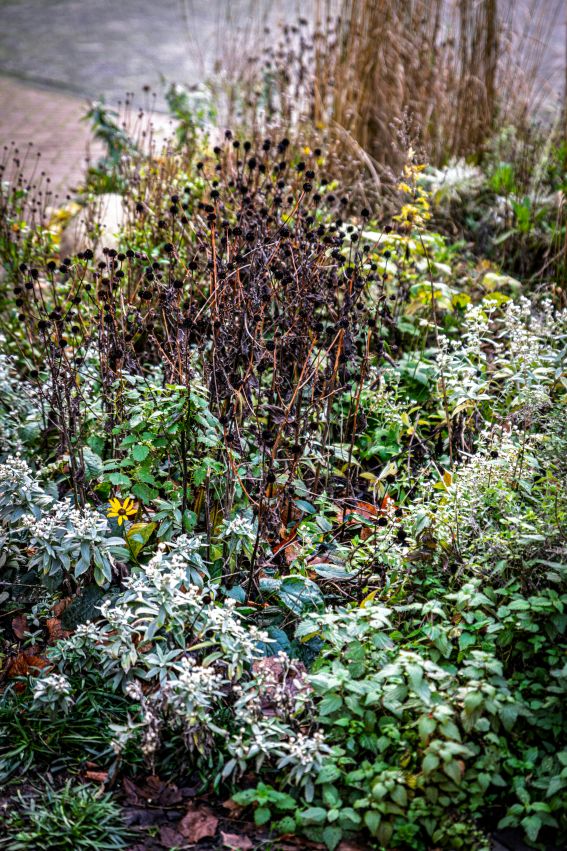
Many perennials can be left standing through winter.
The stems and seed heads can provide food and shelter for birds and other wildlife. They can also add winter interest to an otherwise dormant garden.
Plants such as coneflowers, ornamental grasses and sedums can look quite attractive covered with frost or snow.
There is also something satisfying about seeing the structure of your garden remain through the winter instead of looking completely bare.
Remove Diseased Plant Material
While there is no need to make your garden spotless, diseased plants are a different matter.
If you have foliage or stems showing signs of a serious fungal disease or other plant problem, removing the affected material can help reduce the amount of disease left in the garden.
Do not automatically put diseased plant material into your home compost. Depending on the disease and your composting setup, it may be better to dispose of it according to your municipality’s guidelines.
Clean your garden tools after working with diseased plants as well.
Pull Out Finished Annuals
Annual flowers generally will not survive an Ontario winter, so once they are finished, you can remove them from your garden beds.
If the plants are healthy, they can often be added to a suitable compost pile.
You may also want to collect seeds from certain annuals and other plants if you enjoy growing flowers from seed.
Just remember to label what you collect. It is surprisingly easy to forget what those little bags of seeds contain by the time spring arrives.
Give Weeds One Last Look
Fall is a good time to deal with weeds that have managed to hide among your perennials.
Pulling weeds now means fewer established plants competing with your garden when spring arrives.
You do not have to spend an entire weekend making the beds perfect. Even a quick walk around the garden to remove larger weeds and unwanted seedlings can make spring cleanup easier.
Add a Layer of Mulch
Mulch can be helpful during the winter, particularly around plants that are vulnerable to temperature fluctuations.
A layer of organic mulch can help insulate the soil and reduce repeated freezing and thawing.
Shredded leaves, compost and other suitable organic materials can be useful additions to a garden bed.
Avoid piling mulch directly against the crowns or stems of plants. Too much moisture and poor air circulation around the base of a plant can create problems.
Wait Before Covering Plants
It can be tempting to cover everything as soon as the nights become chilly.
Usually, there is no need to rush.
Many perennials benefit from experiencing cooler temperatures before entering winter dormancy. Covering plants too early can also trap moisture and create an environment where problems can develop.
If a hard frost is forecast and you have tender plants that need protection, follow the specific recommendations for those plants.
Water Before the Ground Freezes
If autumn has been particularly dry, give your garden a good drink before the ground freezes.
Plants continue to use water late into the growing season, even though you may not see much growth above the soil.
Evergreens can be particularly vulnerable to winter moisture loss because they continue losing water through their foliage during winter.
Water deeply when conditions are dry, but avoid leaving garden beds waterlogged.
Protect Young or Tender Perennials
Established perennials are generally better equipped to handle winter than newly planted or particularly tender plants.
If you planted something new this year, check its winter hardiness and determine whether it needs additional protection.
Some plants benefit from a layer of mulch after the ground has begun to cool.
The important thing is to know what you are growing rather than treating every perennial in the garden the same way.
Divide Perennials When Appropriate
Fall can be a good time to divide certain overcrowded perennials, although timing depends on the plant and your local growing conditions.
If a perennial has become very crowded, flowering has declined or the centre of the plant is dying back, it may be time to divide it.
Do not feel that you need to divide everything just because it is fall. Some plants prefer spring division, while others dislike being disturbed altogether.
When in doubt, check the requirements for the specific plant.
Clean Up Fallen Leaves, But Don’t Throw Them All Away
Leaves can be both a nuisance and a useful garden resource.
A thick layer of wet leaves sitting directly on some plants can trap moisture and reduce air circulation. Remove leaves where they are smothering plants or covering areas where they could cause problems.
But there is no reason to remove every leaf from your property.
Shredded leaves can be used as mulch and can eventually add organic matter to the soil. Leaving some leaves in suitable areas can also provide habitat for insects and other small creatures.
Your garden does not need to look like a golf course going into winter.
Clean and Store Your Garden Tools
Once you are finished with your major garden work, take a few minutes to clean your tools.
Remove soil from shovels, trowels and garden forks. Clean pruning shears and other cutting tools, and make sure everything is dry before storing it.
If your tools are going into an unheated shed or garage, proper storage can help prevent unnecessary rust and deterioration.
It is also a good time to make a note of anything that needs replacing before next spring.
Don’t Forget Your Containers
If you have perennial plants growing in containers, remember that their roots are more exposed to winter temperatures than plants growing in the ground.
Some containers can be moved to a sheltered location, while others may need additional winter protection.
Terracotta pots can be particularly vulnerable to freezing and thawing, so check the manufacturer’s recommendations for storing them through the winter.
Empty containers should be cleaned and stored where appropriate.
Take a Few Photos
This may sound unnecessary, but taking photographs of your garden in the fall can be surprisingly useful.
Take pictures of perennial borders, containers and areas where you have planted bulbs or divided plants.
By spring, you may not remember exactly where everything was.
Photos can also help when you are planning changes for the following growing season.
Plant Spring Bulbs Before the Ground Freezes
Fall is also the time to plant many spring flowering bulbs.
Tulips, daffodils, crocuses and other spring bulbs are generally planted in the fall so they can establish roots before winter.
Follow the planting instructions for the particular bulbs you purchase, including the recommended depth and spacing.
Then, with a little patience, you can look forward to those first flowers appearing after a long Canadian winter.
A Simple First Frost Garden Checklist
Before winter settles in, walk around your garden and consider:
☐ Check the local frost forecast
☐ Bring tender container plants indoors or protect them as needed
☐ Remove diseased plant material
☐ Pull larger weeds
☐ Remove finished annuals
☐ Leave suitable perennial stems and seed heads standing
☐ Add an appropriate layer of mulch
☐ Water deeply if the soil is dry
☐ Protect young or tender perennials as recommended
☐ Clean and store garden tools
☐ Check and protect containers
☐ Plant spring bulbs before the ground freezes
Let Your Garden Rest
Fall garden preparation does not have to mean spending days cutting everything down and hauling bags of garden waste to the curb.
A little cleanup, some thoughtful pruning and appropriate winter protection can go a long way.
I have also learned that there is something to be said for leaving some of the garden alone. Those dried flower heads and grasses may not look like much in November, but they c