How Much Does a Smart Thermostat Really Save
12 min read
2290 words
You’ve probably seen the promise. Buy a smart thermostat, connect it to Wi-Fi, download an app and suddenly your heating and cooling bills are supposed to shrink.
Sounds pretty good, doesn’t it?
But does a smart thermostat really save that much money, or are we simply paying more for a thermostat that we can control from our phone?
The honest answer is that a smart thermostat can save money, but it isn’t going to magically cut your heating bill in half.
How much you save depends on your home, your heating and cooling system, the weather where you live and, perhaps most importantly, how you use your thermostat now.
If you’re someone who forgets to turn down the heat before bed or leaves the air conditioning running while you’re out for the day, a smart thermostat could be particularly useful.
If you’re already good about adjusting your thermostat and have a programmable model, the savings may be much smaller.
So before you spend your money, let’s look at what a smart thermostat can actually do and whether it’s worth the investment.
1. What Is a Smart Thermostat?
A smart thermostat does more than simply let you set the temperature.
Most models connect to your home’s Wi-Fi, allowing you to control the temperature from your smartphone. Depending on the model, it may also learn your schedule, detect when you’re home, send you alerts and provide information about your energy use.
Common features include:
- Wi-Fi control: Adjust the temperature from your phone, even when you’re away.
- Scheduling: Set different temperatures for different times of the day.
- Occupancy detection: Some models can tell when people are home.
- Geofencing: Your thermostat can use your phone’s location to know when you’ve left or returned.
- Learning: Some models learn your habits and make automatic adjustments.
- Energy reports: See when you’re using the most heating or cooling.
- Alerts: Receive notifications about unusual temperatures or other issues.
You don’t necessarily need every feature.
Sometimes the simplest one, such as automatically lowering the heat while everyone is asleep, is the feature that makes the biggest difference.
2. So How Much Can a Smart Thermostat Save?
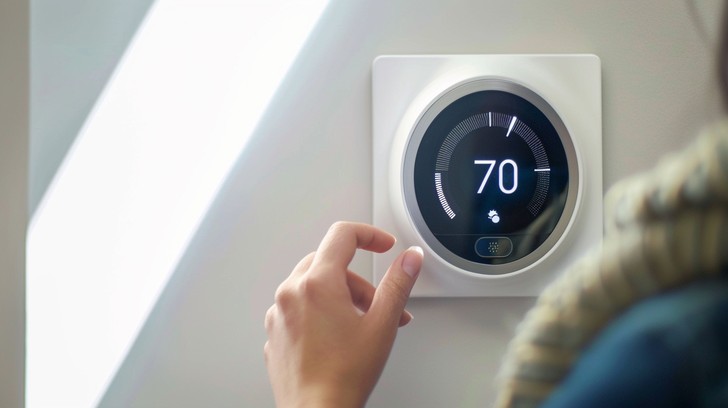
This is where things get a little less exciting than the advertisements make it sound.
There isn’t one savings number that applies to every household.
A smart thermostat doesn’t make your furnace, heat pump or air conditioner more efficient. What it can do is make it easier to avoid heating or cooling your home when you don’t need to.
Think about it this way.
If everyone leaves for work or school in the morning, do you really need the house at the exact same temperature until everyone comes home?
The same goes for nighttime. If everyone is tucked into bed under warm blankets, you may be comfortable with the thermostat set a little lower.
A smart thermostat can make those changes automatically, so you don’t have to remember.
For some households, that can result in noticeable savings. For others, particularly those already using a programmable thermostat properly, the difference may be fairly small.
3. Your Existing Thermostat Makes a Difference
This is something that often gets overlooked.
If you’re replacing an old manual thermostat that stays at the same temperature all day and night, a smart thermostat could make a noticeable difference.
But what if you already have a programmable thermostat?
If you’re actually using its schedule, you’re already getting many of the energy-saving benefits.
In that case, the biggest reason to upgrade may be convenience and automation.
You can change the temperature from bed. You can adjust it while you’re away. You can have it change automatically when you leave the house.
Those features can certainly be useful, but don’t expect a huge drop in your energy bill simply because you upgraded from programmable to smart.
4. Heating Is Where You May Notice the Biggest Difference
For many Canadian households, heating is where a smart thermostat has the greatest opportunity to help.
Winter heating bills can be substantial, especially during a long, cold season.
Lowering the temperature while you’re sleeping or away reduces the amount of heat your home needs during those hours.
You can create a schedule that lowers the temperature overnight and while everyone is out, then brings it back up before you wake up or return home.
And you don’t have to remember to do it every day.
That’s really the beauty of a smart thermostat.
It takes the remembering out of the equation.
Don’t Turn the Heat Off Completely
There is an important difference between lowering your thermostat and shutting the heat off.
During a Canadian winter, you shouldn’t simply turn your heating system off when you leave for the day or go away.
A reasonable temperature setting can reduce energy use while still helping protect your home from problems such as frozen pipes.
If you’re going away during cold weather, follow the recommendations for your particular home and heating system rather than relying on a one-size-fits-all temperature.
5. What About Air Conditioning?
Smart thermostats can help with cooling too.
The basic idea is the same.
If nobody is home during the day, you may not need the house cooled to the same temperature you prefer when you’re relaxing at home.
You can schedule the thermostat to allow the temperature to rise while you’re away and cool the house before you return.
Some models can also detect when the home is empty and make adjustments automatically.
Of course, the potential savings depend heavily on how much you use your air conditioner. Someone who only runs the AC during a handful of hot days won’t have the same opportunity to save as someone who uses it regularly throughout the summer.
6. Your Habits Matter More Than the Thermostat
Here’s something worth remembering.
A smart thermostat isn’t going to fix an inefficient home.
If your windows are drafty, your insulation is poor or your furnace needs maintenance, buying an expensive thermostat isn’t going to solve those problems.
Think of the thermostat as the control panel. It can tell your heating and cooling system what to do, but it can’t fix everything else.
You may get better results by combining a smart thermostat with simple improvements such as:
- Sealing drafts around doors and windows
- Improving insulation
- Replacing dirty furnace filters
- Maintaining your heating and cooling equipment
- Keeping doors and windows closed when heating or cooling
- Using curtains and blinds to reduce summer heat gain
Sometimes the cheapest energy-saving improvements are the ones you barely notice.
7. How Much Does a Smart Thermostat Cost?

Smart thermostats come at a range of prices.
Basic models can be relatively affordable, while premium models with multiple sensors and advanced features can cost considerably more.
Then there’s installation.
Some homeowners can install a compatible thermostat themselves. Others may need professional help, particularly if their existing wiring or heating system isn’t straightforward.
Before buying, check compatibility with your particular heating and cooling system.
This is especially important if you have a heat pump, boiler, electric baseboard heating, multi-stage equipment or another system that isn’t a standard furnace and central air setup.
The cheapest thermostat isn’t necessarily the cheapest option if you discover after buying it that you need additional equipment or professional installation.
8. Could a Smart Thermostat Pay for Itself?
This is probably the question most homeowners really want answered.
The answer depends on how much the thermostat costs and how much energy you actually save.
For example, suppose your thermostat and installation cost $300.
If you save about $75 a year on your energy bills, it would take roughly four years to recover that initial cost.
If you save less, it will take longer. If you save more, you’ll reach that point sooner.
That’s why I wouldn’t buy a smart thermostat simply because someone tells you it will “pay for itself.”
Look at your current habits.
If you already keep your home on an efficient schedule, your financial savings may be fairly small.
If you regularly heat or cool an empty home because you forget to make adjustments, you have more opportunity to benefit.
9. Features That Are Actually Worth Paying For
Smart thermostats can come with plenty of bells and whistles.
Some are useful. Others are mostly there to make the product sound impressive.
If saving money is your main goal, pay attention to these features.
Scheduling
One of the most useful features is the ability to automatically adjust the temperature throughout the day.
Geofencing
Your thermostat can use your phone’s location to determine when you’ve left and when you’ve returned.
Occupancy Sensing
Some models can detect whether someone is home and adjust the temperature accordingly.
Energy Reports
These can help you understand when your heating or cooling system is working hardest.
Vacation Settings
Going away? A vacation setting can keep your home at a more appropriate temperature while you’re gone.
You don’t need all of these features. Choose the ones that actually fit your lifestyle.
10. Do You Really Need the Most Expensive Model?
Probably not.
It’s easy to get caught up in the latest smart-home features, especially when you’re shopping online.
But ask yourself what you’re actually going to use.
If all you want is the ability to create a schedule and change the temperature from your phone, you may not need the most expensive thermostat available.
If you have a more complicated heating system or want room sensors and advanced automation, spending more may make sense.
The best thermostat isn’t necessarily the fanciest one. It’s the one that’s compatible with your system and has features you’ll actually use.
11. Smart Thermostat vs. Programmable Thermostat
Before spending your money, take a look at what you already have.
A programmable thermostat can already save energy when you use its schedule properly.
The main advantages of going smart are convenience and automation.
With a programmable thermostat, you may have to remember to change the schedule.
With a smart thermostat, you can control everything from your phone and, depending on the model, let the thermostat make some adjustments automatically.
For someone who travels frequently or has an unpredictable schedule, that convenience can be valuable.
For someone who already has a good routine and rarely changes the thermostat, replacing a perfectly good programmable model may not make much financial sense.
12. Simple Ways to Get More Savings From Your Smart Thermostat
Buying the thermostat is only the beginning.
To get the most from it, actually use the features that can save energy.
Create a schedule that matches your real life rather than a complicated schedule you’ll constantly override.
Lower the heat while you’re sleeping if you’re comfortable doing so.
Adjust the temperature when everyone leaves for the day.
Use vacation settings when you’re away for an extended period.
Take advantage of occupancy or geofencing features if your thermostat offers them.
Pay attention to your energy reports.
And don’t constantly fight with your thermostat.
If you tell it to lower the temperature and then immediately raise it again because you forgot about the schedule, you’re not exactly giving the poor thing a chance.
13. When Is a Smart Thermostat Worth It?
A smart thermostat may be worth considering if:
- You frequently forget to adjust your thermostat
- Your home is empty for several hours a day
- You travel often
- You want to control your heating or cooling remotely
- You currently have an old manual thermostat
- You want to automate your heating and cooling schedule
You may see less financial benefit if:
- You already have a programmable thermostat
- You already use temperature setbacks
- Your home is highly energy efficient
- You rarely use air conditioning
- Your heating costs are already low
In those situations, the convenience may still be worth it, but energy savings probably shouldn’t be your only reason for upgrading.
14. Other Ways to Lower Your Heating and Cooling Bills
A smart thermostat is only one piece of the puzzle.
Check around doors and windows for drafts, make sure your furnace filter is clean and make sure furniture or curtains aren’t blocking heating vents.
Your insulation matters too. If your attic isn’t properly insulated, you’re essentially paying to heat the outdoors. Sealing gaps and adding insulation where it’s needed can help your home hold onto the heat you’re already paying for.
For more ideas about different heating systems, maintenance, insulation and ways to make your home heating dollars go further, see our earlier article, Budgeting for Your Home Heating: How Different Heating Solutions Work.
You may also want to consider an energy audit if your heating bills seem unusually high. It can help identify where your home is losing heat and which improvements are likely to make the biggest difference.
And don’t forget the simple stuff. Closing curtains at night, keeping heating vents clear and wearing a warm sweater instead of immediately turning up the thermostat can all help.
Sometimes saving money on heating isn’t about buying another expensive gadget. It’s about making sure the heat you’re already paying for stays where you want it.
So, How Much Does a Smart Thermostat Really Save?
There isn’t a magic number.
And that’s probably the most honest answer.
A smart thermostat can reduce energy use by making it easier to stop heating or cooling your home when nobody needs it. But the amount of money you save depends on your house, your climate, your heating and cooling equipment and your habits.
If you’re already careful about your energy use, don’t expect a dramatic transformation.
If you’re the person who regularly realizes at bedtime that you’ve forgotten to turn down the heat, however, a smart thermostat could be a worthwhile upgrade.
The biggest advantage may not even be the technology itself.
It’s the fact that you don’t have to remember.
And let’s be honest, anything that saves money without adding another chore to the list has my attention.