Home EV Chargers: What Homeowners Need to Know
13 min read
2474 words
More Canadians are bringing electric vehicles home, and Home EV Chargers are becoming part of the daily routine for many households.
The good news is that home charging is usually straightforward. The part that can get complicated is choosing the right equipment. A charger that works perfectly for one household may be unnecessary for another, depending on the vehicle, how far it is driven each day, the home’s electrical service and where the vehicle is parked.
For most homeowners, the choice comes down to two options: Level 1, which uses a regular 120-volt household outlet, and Level 2, which uses a 208- or 240-volt circuit and charges considerably faster. Natural Resources Canada says Level 1 typically adds about 3 to 8 kilometres of range per hour, while Level 2 can add roughly 16 to 97 kilometres per hour, depending on the vehicle and equipment.
1. What Is a Home EV Charger?
When shopping for Home EV Chargers, it helps to understand what you’re actually buying.
The wall-mounted unit people commonly call an EV charger is technically Electric Vehicle Supply Equipment, or EVSE.
That distinction can sound overly technical, but it matters when you’re shopping. The EVSE controls and safely delivers electricity from the home’s electrical system to the vehicle. The vehicle’s onboard charging equipment then converts the incoming AC electricity into the DC electricity stored in the battery.
This is also why buying the highest-powered wall unit available doesn’t necessarily mean your vehicle will charge faster.
For example, if your vehicle’s onboard AC charging system can only accept a certain amount of power, installing a more powerful Level 2 unit won’t make the car exceed that limit. Before paying extra for higher output, check the charging specifications for your particular vehicle.
2. Level 1 vs. Level 2: What’s the Difference?
Level 1
Level 1 is the simplest option. It uses a standard 120-volt household outlet and is often enough for people who don’t drive very far each day.
It can make sense for:
- Plug-in hybrid owners
- Drivers with shorter daily commutes
- Households where the vehicle sits for many hours overnight
- People who don’t want to pay for additional electrical work
The trade-off is speed. NRCan estimates Level 1 charging at approximately 3 to 8 kilometres of driving range for every hour of charging.
Level 2
Level 2 uses a 208- or 240-volt electrical supply. It’s the option many homeowners consider when they want to charge a fully electric vehicle more quickly at home.
Level 2 may make more sense if:
- You drive considerable distances every day
- Your vehicle has a larger battery
- You want to recover more range overnight
- You regularly return home with a low battery
- You don’t have convenient workplace or public charging
NRCan estimates Level 2 charging can add approximately 16 to 97 kilometres of range per hour, although the actual result depends on the vehicle, charger and conditions.
3. Do You Really Need a Level 2 Charger?
This is where homeowners can save themselves some money.
It’s easy to assume that a Level 2 charger is automatically the better choice. It is faster, but faster isn’t necessarily better if your driving habits don’t require it.
Think about a normal week rather than your longest road trip.
How far do you actually drive each day? How long does the vehicle sit at home? Do you have access to charging at work? Is it usually parked overnight for eight, 10 or 12 hours?
NRCan notes that the average Canadian drives about 20,000 kilometres a year, or roughly 55 kilometres a day.
For someone who drives relatively little and leaves the vehicle parked overnight, Level 1 may be perfectly adequate. Someone with a long commute or a larger battery may appreciate the additional charging speed of Level 2.
The best charger is the one that fits the way you actually use the vehicle.
4. Can Your Electrical Panel Handle an EV Charger?
Before buying a Level 2 charger, have the home’s electrical capacity checked.
This is particularly important in older homes. A panel may have an available breaker space without necessarily having enough overall capacity for another large electrical load.
An electrician will look at the existing electrical service and the other equipment drawing power in the house. That can include an electric furnace, heat pump, electric water heater, stove, dryer, hot tub or central air conditioning.
In some homes, adding an EV charger is straightforward. In others, the electrical service may need to be upgraded. Load-management equipment may also be an option in some installations.
NRCan recommends determining the home’s electrical capacity before installing an EV charger.
5. Where Should You Install a Home EV Charger?
The ideal location depends on where the vehicle is normally parked and how far that location is from the electrical panel.
Garage
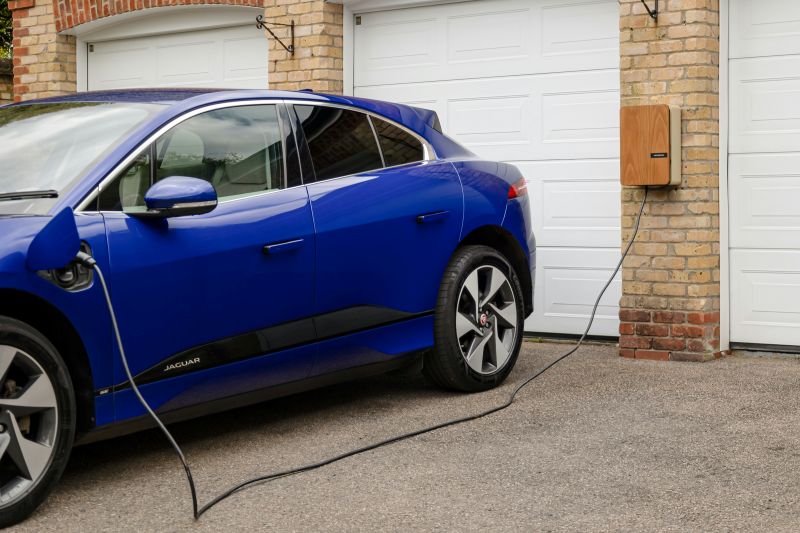
A garage offers obvious advantages. The equipment is protected from snow, ice and rain, and there is usually less concern about weather exposure.
Cable management is also easier when the vehicle and charger are both inside.
Driveway
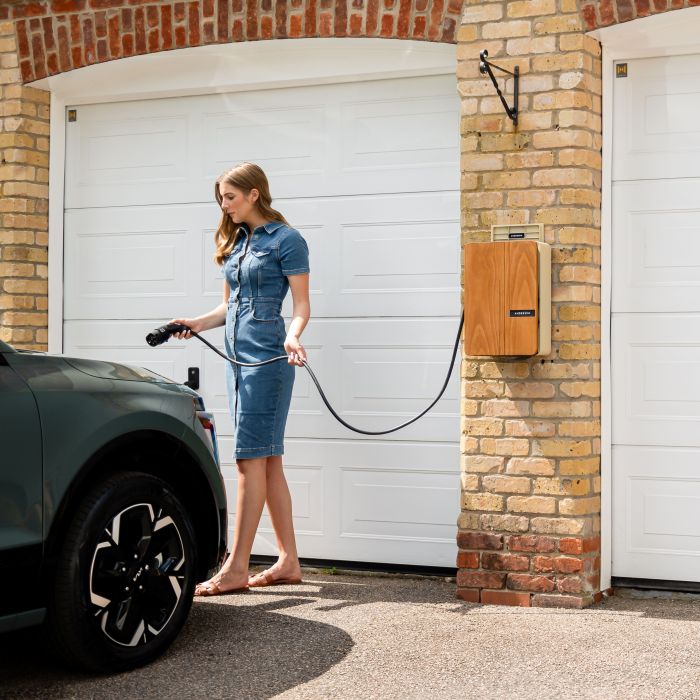
Outdoor charging is perfectly possible, but the equipment needs to be suitable for outdoor use.
Snow, rain, ice and temperature changes all need to be considered. The charging cable should also be positioned so it doesn’t become a trip hazard or interfere with snow removal.
NRCan specifically recommends an appropriate outdoor rating when the charging location is outside.
What about the cable?
Don’t overlook cable length when choosing a charger.
Look at where the charging port is located on your vehicle and where the charger would be mounted. A cable that barely reaches the vehicle may become frustrating every time you park slightly differently.
Ontario’s Electrical Safety Authority also recommends keeping charging cables off the floor where possible to reduce tripping hazards and protect the cable.
6. Hardwired vs. Plug-In EV Chargers
Level 2 chargers can be installed as either plug-in or hardwired equipment, depending on the model and installation.
A plug-in charger connects to a suitable receptacle. Some homeowners like this option because the equipment can be disconnected more easily if they move or replace the charger.
A hardwired charger is permanently connected to the home’s electrical wiring. It can provide a clean installation and may be appropriate when the charger is intended to remain in one location.
There isn’t one option that is right for every home. The electrical equipment, charger specifications and local requirements all need to be considered.
In Ontario, electrical work for an EV charger must be handled by a Licensed Electrical Contractor, and an electrical notification must be filed with the Electrical Safety Authority before the work begins.
7. What Does EV Charger Installation Cost?
The total cost of installing Home EV Chargers can vary considerably from one property to another.
The charger itself is only part of the bill. Installation costs can depend on:
- The charger you choose
- Existing electrical capacity
- The distance between the electrical panel and charger
- Wiring and conduit requirements
- Whether the installation is indoors or outdoors
- Whether the driveway or other surface needs to be opened for wiring
- Permit or inspection requirements
- Labour
- Whether an electrical service upgrade is needed
NRCan specifically lists the charging unit, electrical capacity, permit requirements and labour as factors affecting installation costs.
For that reason, getting an electrician to look at the actual installation site before buying equipment is often more useful than relying on an online installation estimate.
8. Do You Need an Electrician?
For a Level 2 installation, this isn’t a good place to cut corners.
A Level 2 charger uses a high-voltage electrical circuit, and NRCan recommends having this type of equipment installed by a licensed electrician.
In Ontario, the Electrical Safety Authority says EV charger installations require an electrical notification and that electrical work in a home must be performed by a Licensed Electrical Contractor. The contractor should provide the homeowner with a Certificate of Acceptance once the work has passed the required review.
A qualified electrician can also determine whether your existing service can handle the charger and whether an upgrade or other solution is needed.
9. What Safety Certification Should You Look For?
Safety certification is one of the most important things to check when comparing Home EV Chargers.
Look for an appropriate Canadian safety approval mark from a recognized certification or evaluation agency. In Ontario, the Electrical Safety Authority says electrical products must carry the official mark or label of a recognized certification or evaluation agency before they can be used, sold, displayed or advertised for sale.
This is particularly important when shopping online. A charger may look identical to a certified product while having very different safety testing behind it.
NRCan also warns that chargers without safety certification can pose risks of injury or property damage.
If you’re unsure whether a particular charger is approved for use in Canada, don’t rely on a seller’s description alone. Check the certification information.
10. Are Smart EV Chargers Worth It?
Smart chargers aren’t essential for everyone, but they can be useful.
Depending on the model, smart features may allow you to:
- Schedule charging
- Monitor electricity use
- Start or stop charging remotely
- Receive charging notifications
- Coordinate charging with household energy use
Scheduling can be especially useful if your electricity plan has different rates at different times of day. NRCan recommends checking with your electricity provider about available time-of-use plans and incentives.
There’s another reason not to automatically pay extra for smart features: some EVs already allow owners to schedule charging through the vehicle itself.
If your car can handle the scheduling you want, a basic charger may be all you need.
11. What About Charging in Winter?
Canadian winters add another consideration.
Cold temperatures can affect battery performance, charging time and driving range. The exact effect varies considerably by vehicle, battery temperature and weather conditions, so there isn’t one percentage that applies to every EV.
Preconditioning can help. Many vehicles allow the owner to warm the cabin and, depending on the model, prepare the battery while the vehicle is still plugged in.
If the charger is outdoors, keep snow and ice from building up around the charging equipment and vehicle connection. Use equipment designed for outdoor conditions and follow the vehicle and charger’s instructions for winter use.
The important point is simple: an EV doesn’t stop working because winter arrives, but Canadian drivers should expect winter conditions to affect how the vehicle performs.
12. What Will Home Charging Add to Your Electricity Bill?
Home charging uses electricity from the same household supply as everything else in the house, so your electricity consumption will increase.
How much it costs depends on the vehicle’s efficiency, how far you drive, how much electricity the vehicle uses to replace that energy and the electricity rate you’re paying.
A simple way to think about it is:
Electricity used × your electricity rate = charging cost
Your actual bill will be somewhat more complicated because charging losses and other household electricity use are also involved.
For many EV owners, the convenience of charging at home is one of the biggest advantages. NRCan says more than 80% of EV owners charge at home.
If your utility offers lower rates at certain times, scheduled charging may also help reduce the cost.
13. What If You Live in a Condo or Apartment?
Home charging can be more complicated when your home is part of a multi-unit building.
You may need approval from a condo board, property manager or other party before installing a charger. The building may also need to determine how much electrical capacity is available and how electricity use will be measured and billed.
NRCan notes that EV charging in multi-unit residential buildings involves additional decision-makers, including owners, tenants, building owners, strata councils and property managers.
Some buildings are also turning to shared load-management systems so multiple vehicles can charge without requiring a major electrical service upgrade.
If you live in a condo, find out what the building’s EV charging policy is before buying a charger.
14. Are There Rebates for Home EV Chargers?
This is one section that needs to be checked before every purchase because incentive programs can change.
Rebates may come from a provincial government, municipality or electricity utility, depending on where you live. Eligibility can also depend on the charger, installation and whether the application was submitted before the work began.
NRCan recommends checking current rebates and incentives in your area rather than assuming a program is still available.
If you’re planning to install a Level 2 charger, check for incentives before ordering the equipment or hiring the electrician. Some programs have specific equipment or installation requirements.
15. Common Home EV Charger Mistakes
A few mistakes come up repeatedly when homeowners plan their first charging setup.
- Buying the charger before checking the home’s electrical capacity
- Choosing the highest-powered model simply because it is faster
- Forgetting to check the vehicle’s maximum AC charging rate
- Installing equipment that isn’t rated for outdoor use
- Buying an uncertified charger because it is substantially cheaper
- Choosing a cable that doesn’t comfortably reach the vehicle
- Ignoring where the vehicle’s charging port is located
- Assuming a smart charger is necessary when the vehicle already has scheduling features
- Forgetting to investigate rebates before installation
- Attempting electrical work that should be handled by a qualified professional
The biggest mistake may be treating the charger as a standalone purchase. It is part of the home’s electrical system, so the house and vehicle need to be considered together.
16. How to Choose the Right Home EV Charger
Before buying, work through these questions:
- What does the vehicle support? Check its maximum AC charging rate.
- How far do you normally drive? Your everyday mileage matters more than the occasional long trip.
- Would Level 1 meet your needs? If the vehicle sits overnight for many hours, it may.
- Can your electrical system handle Level 2? Have the capacity checked before purchasing.
- Where will the charger go? Garage, driveway or carport?
- Is the equipment approved for the location? Outdoor installations need appropriately rated equipment.
- How long should the cable be? Make sure it reaches the vehicle without stretching across a walkway.
- Do you want plug-in or hardwired? Consider how permanent the installation will be.
- Do you need smart features? Look at what your vehicle already offers.
- Is the charger safety certified? Don’t skip this step.
- What will installation actually cost? Get a quote based on your home rather than an online average.
- Are rebates available? Check before purchasing or beginning the work.
Conclusion
Choosing the right Home EV Chargers starts with understanding your vehicle, your home and how you drive.
Start with the vehicle, then look at how much you drive and how long the car normally sits at home. From there, consider the electrical capacity of the house, where the charger will be installed and whether you actually need the extra speed of Level 2.
For some households, a standard Level 1 setup may be enough. For others, a professionally installed Level 2 charger will make daily charging much easier.
The goal isn’t to buy the biggest or most expensive charger. It’s to choose a safe, properly approved system that works with your vehicle, your home and the way you actually live.