My Power Bowl for energy Journey: Managing Pre-Diabetes
8 min read
1447 words
I have to be honest with you. Two weeks ago, I was at my wit’s end. As a woman in her mid-fifties, I have spent years battling weight issues and recently received a wake-up call from my doctor about my pre-diabetic blood sugar levels. For years, my strategy was simply to force my way through the day. I would skip breakfast and lunch, thinking I was saving calories, only to find myself hungry by 5:00 PM. I am certainly no health expert, but I knew I had to change how I looked at my plate. That is when I discovered the concept of the power bowl for energy. In just fourteen days, I have fallen completely in love with this way of eating. While I still prefer to skip breakfast, these lunch bowls have become my metabolic anchor. They keep me perfectly full, focused, and steady until dinner.
I. More Than Just a Trendy Meal
A Power Bowl is often called a grain bowl or a healthy bowl, but I like to think of it as a collection of nutrients. It is not just a random pile of food thrown into a bowl. When I first started, I thought the order of the ingredients did not matter as long as the food was healthy. I was wrong. How you put your meal together is just as important as the food itself. The way you layer your food actually helps your body work better. For someone like me who needs to manage blood sugar, using a power bowl for energy is a great tool for steady health. It is designed to keep your blood sugar stable so you can avoid those afternoon energy crashes.
II. The Anatomy of Metabolic Balance
The secret to why I feel so much better lies in the 50/25/25 rule. This simple formula helps me plate my food without overthinking it.
- The Fiber Core (50 percent): Half of my bowl is always filled with high-fiber vegetables. This creates a “glucose buffer” in my gut.
- The Sustained Protein (25 percent): A quarter of the bowl is quality protein like chicken or lean sausage.
- The Complex Carbs (25 percent): The final quarter is a small portion of slow-burning fuel like Basmati rice or quinoa.
I have learned that eating my fiber first is a real game-changer. When I eat my vegetables at the start of the meal, they create a protective layer in my digestive system. This slows down how fast my body absorbs sugar from the rest of the food.
Also, the protein helps signal my brain that I am full much sooner. I actually find myself feeling satisfied and full before my meal is even done.
III. Healthy Fats as a Metabolic Brake
One mistake I made for years was simply eating the wrong kinds of fats. I wasn’t focused on health, and my diet was full of unhealthy choices that left me feeling sluggish. Now, I understand that healthy fats are a total game-changer. Think of fats from things like avocados or olive oil as a metabolic brake. They slow down how fast your body digests food. This is vital, preventing the quick energy crashes that used to leave me feeling exhausted.
These fats are also important for your hormones and help your body absorb nutrients. Many essential vitamins, like Vitamins A, D, E, and K, are fat-soluble. This means my body cannot even use the nutrients from my spinach unless I have a healthy fat present to help with absorption. Jarred olives offer an easy, unprocessed way to add healthy fats to your meal without complicated cooking.
IV. Complex Carbs and the Resistant Starch Hack
Carbohydrates matter. I choose options like Basmati rice because they do not spike my blood sugar the way pasta does. In fact, Basmati rice naturally has a lower glycemic index than most other white rices. I also learned a brilliant trick called the cooling method. If I cook my rice the night before and let it cool in the fridge, something called resistant starch forms. When I reheat it the next day, it is much gentler on blood sugar. It is a simple science hack that makes a huge difference for your health.
V. Why Warm Food Matters
I am also learning how food actually feels in my body. It is not just about the nutrients; it is about how my body responds to the meal.
Cooked vs. Raw: I find that warm, sautéed, or roasted vegetables like broccoli and cauliflower are much easier on my digestive system. Raw vegetables can sometimes feel heavy or make me feel bloated. Cooking them slightly helps my body process them better.
The Frying Pan Method: My husband does almost all our cooking in a simple frying pan. It is a quick and easy way to sauté the vegetables and sausage so they have a lot of flavor. He can get a nice sear on the edges of the food without needing to use heavy sauces or extra sugar to make it taste good.
VI. Practical Application: The 15-Minute Harvest Power Bowl
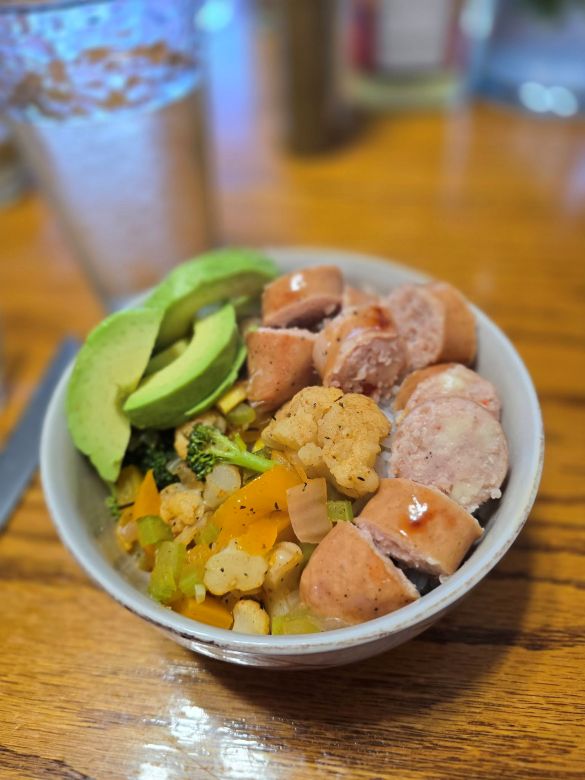
Even though I am only two weeks into this journey, this is one of my favorite ways to prep a power bowl for energy. It is fast, filling, and delicious.
Ingredients
- Base: 1/2 cup cooked Basmati rice (ideally chilled and reheated).
- Protein: 1 Chicken pepper sausage link, sliced into rounds.
- The Fiber 50: 1 cup broccoli, 1/2 cup cauliflower, 1/2 sliced bell pepper, and 1/4 sliced onion.
- Healthy Fat: 1/2 medium avocado, sliced.
- Flavor Topper: 1 tablespoon of corn kernels for a tiny bit of crunch.
- Seasoning: Salt, cracked black pepper, and a drizzle of olive oil.
Instructions
- Sear the Sausage: Heat your cast iron skillet with a tiny bit of oil. Sauté the sausage and onions for 3 to 4 minutes until they are browned and fragrant.
- Blister the Veggies: Toss in the broccoli, cauliflower, and peppers. Add a tiny splash of water and cover the pan for 2 minutes to steam them. Remove the lid and sauté for 3 more minutes until the edges are slightly charred.
- Build the Bowl: Put your rice at the bottom. Pile the sausage and veggie mix over the top so the rice is mostly covered.
- The Finishers: Add your avocado slices and that small sprinkle of corn. The corn is my “flavor spark.” It provides a sweet crunch that makes the meal feel like a treat.
- Season: Finish with black pepper and perhaps a squeeze of fresh lime for a bit of zip.
The Mediterranean Power Bowl for Energy
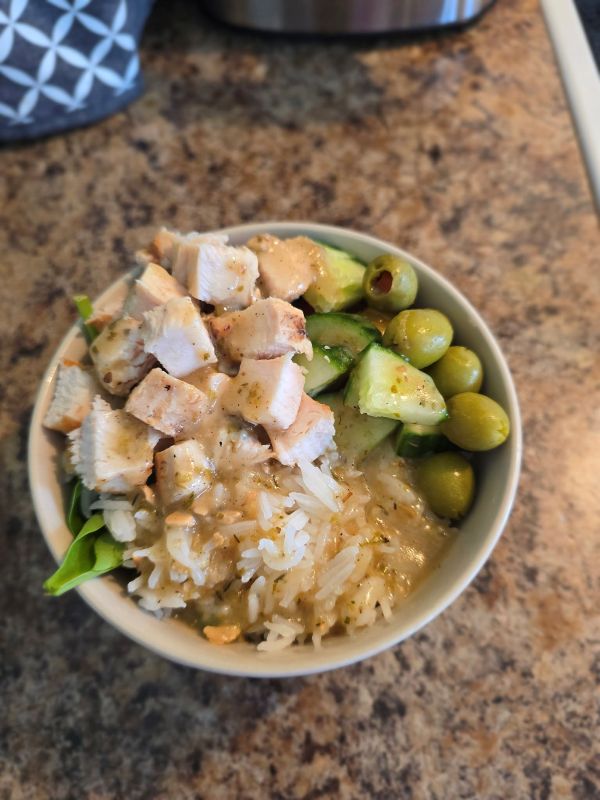
This bowl is a fresh, zesty way to stay full and focused. By using the cooling method for your rice and layering your fiber first, you create a meal that tastes great and keeps your energy steady all afternoon.
Ingredients
Base: 1/2 cup cooked Basmati rice (ideally chilled and reheated).
The Fiber 50: 1 cup fresh spinach, 1/2 cup chopped cucumbers, and 1/2 cup cherry tomatoes.
The Sustained Protein: 3 to 4 oz of grilled or sautéed chicken breast.
Healthy Fat: A handful of jarred olives.
The Finish: A drizzle of Greek dressing (olive oil and herb-based).
Instructions
Prep the Base: Place your reheated Basmati rice at the bottom of the bowl.
Layer the Fiber: Pile the fresh spinach, cucumbers, and tomatoes on top. Remember, eating these high-fiber veggies first helps create that “glucose buffer” for your system.
Add the Protein: Place your sliced chicken on top. The protein works with the fiber to help you feel satisfied longer.
Top with Healthy Fats: Add your olives. These act as your “metabolic brake” to slow down digestion and help you absorb the nutrients from the spinach.
Drizzle and Enjoy: Finish with a bit of Greek dressing and a pinch of black pepper.
VII. Conclusion: A Blueprint for Longevity
I am realizing that weight loss and health are not about being perfect. They are about consistency. By eating just one Power Bowl a day, I am already seeing a big shift in my energy levels. I no longer feel the need to crash in the afternoon.
My next goal is to start adding a bit of movement to my daily routine. I plan to start out slow, just by getting up and going for a short walk. You don’t have to run a marathon to make a difference; I know that just starting out at a slow pace and being consistent will be enough to help my body feel even better.
Taking control of my health through intentional plating and setting goals for movement has been incredibly empowering. You do not need to be a chef or a doctor to start. You just need a bowl, a few good ingredients, and the willingness to try. Here is to our health and many more delicious bowls!