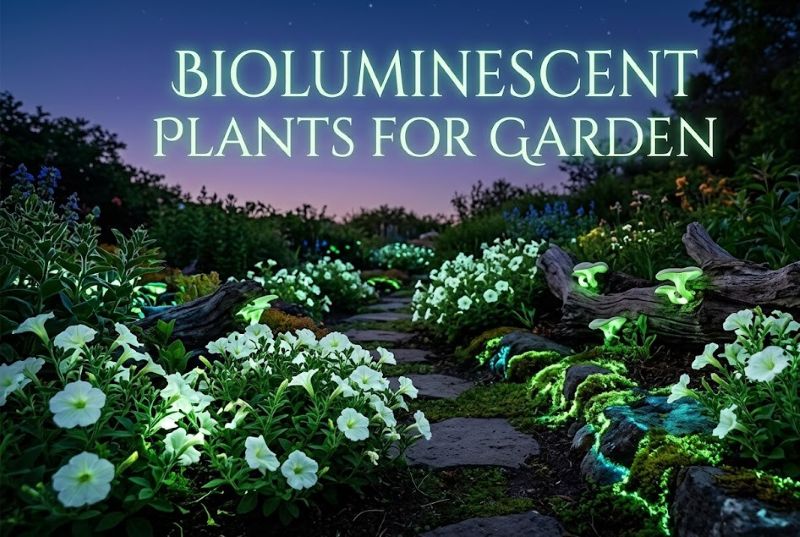
Bioluminescent Plants for Garden: Design a Living Neon Oasis
7 min read
1268 words
At a Glance: Growing Your Glow
- Top 2026 Pick: The Firefly Petunia (powered by internal mushroom DNA).
- Design Rule: Eliminate ambient light; human eyes need 20 minutes to adjust to “scotopic” vision.
- Eco-Benefit: Protects nocturnal pollinators and helps restore natural dark-sky cycles.
We are currently witnessing a massive shift in how we perceive outdoor spaces. As we move through 2026, the trend has pivoted away from the harsh, blue-spectrum glare of artificial LED “light pollution” toward something far more organic. We are entering the era of the “Living Neon Landscape.” This isn’t just about aesthetics; it’s about biophilic night gardening, a practice that connects us to the natural world even after the stars come out.
Before we dive into the dirt, it is important to understand what we are actually planting. To create a true living landscape, you need to know the difference between bioluminescence and photoluminescence. Many “glow” products you see online are simply photoluminescent—meaning the plants are coated in a temporary UV-reactive paint. True bioluminescence, however, is a biological miracle. It is a chemical reaction—specifically the oxidation of a molecule called luciferin—that happens inside the plant’s own cells. It isn’t just glowing; it’s breathing light.
I. Choosing Bioluminescent Plants for Garden Success
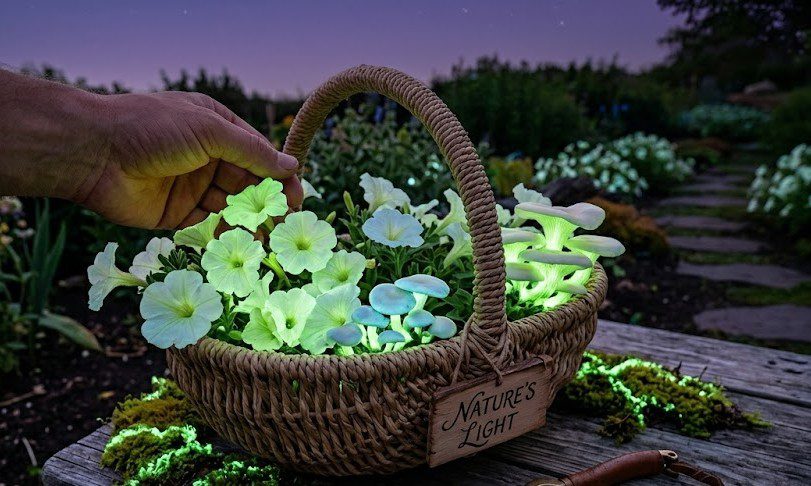
Choosing the right species is the foundation of your glowing sanctuary. While the technology is still evolving, 2026 has brought us several reliable “stars” that can turn a backyard into a scene from a sci-fi masterpiece.
The Firefly Petunia: The Flagship of the Movement
The Firefly Petunia is the plant that changed everything. It’s the result of incredible bioengineering where DNA from bioluminescent mushrooms was integrated into the petunia’s genome. Unlike previous attempts at glowing plants that required special chemicals to “feed” the light, the Firefly Petunia glows continuously. In my experience, the glow is most intense in the new growth and the flowers themselves. If you provide proper Firefly Petunias care—plenty of sunlight during the day and consistent watering—the glow is bright enough to see from several feet away once your eyes adjust.
Bioluminescent Moss: Creating “Glowing Carpets”
For those damp, shaded corners under a deck or around a water feature, bioluminescent moss is a game-changer. I love using these to line the “micro-climates” of my garden, creating a velvet-like glow that guides your feet through the dark.
Ghost Fungi and Glowing Mulch
One of the most rewarding additions to a glow-in-the-dark landscape design isn’t a traditional flowering plant at all, but fungi. The “Ghost Fungus” (Omphalotus nidiformis) can be incorporated into your garden by “seeding” damp logs or using specialized glowing mulch. These mushrooms emit a surprisingly strong white-to-green light.
| Plant Name | Light Source | Best Placement | Care Level |
|---|---|---|---|
| Firefly Petunia | Internal (Mushroom DNA) | Full Sun (Day), Pots | Moderate |
| Bioluminescent Moss | Internal (Enhanced) | Full Shade, Damp Soil | Low |
| Ghost Fungus | Natural Fungal Glow | Shady Logs, Mulch | Low |
Sourcing Your Glow: A Canadian Gardener’s Guide
While US residents play with bioengineered petunias, our Canadian neighbors are going back to basics with ancient, cold-hardy fungi that actually belong in the North American landscape. Because of current regulatory environments, the path to a “Living Neon Landscape” in Canada is paved with fungi and bryophytes (mosses). These options are often more resilient to local climate and don’t face the same GMO import hurdles.
1. Ghost Fungi (Omphalotus nidiformis)
While technically an Australian native, glowing “Ghost Mushroom” kits are a favorite for North American hobbyists.
Sourcing: Check with specialized suppliers like Stargazer Exotics or Wonder Seeds Canada. They offer large-scale glowing mushroom kits (typically $38–$45 CAD) that include spore plugs or liquid culture.
The Look: Inoculate a local hardwood log (Oak or Maple works best) in a shaded corner. It takes a few months to colonize, but once established, the log will glow with a steady, white-to-green light for several seasons.
2. Bitter Oyster (Panellus stipticus)
This is the “reliable” choice for northern woods. It is naturally found across North America and is remarkably cold-hardy.
Sourcing: You can often find these through Etsy Canada or lab suppliers like The Mycelium Emporium. Liquid cultures usually retail for around $20 CAD.
The Look: These emit a soft, emerald light from their gills. They are best displayed by tucking them into the bark of a decorative stump or a “fairy house” feature in your garden.
3. Luminous Moss (Goblin Gold)
If you want a fairytale glow without the laboratory kits, look for Schistostega pennata.
Sourcing: These are best sourced through native plant specialists or terrarium designers like Fungi Akuafo.
The Look: It doesn’t generate its own light; it reflects it using unique, lens-like cells. It’s the perfect companion for the “Moon Garden” layering we discussed earlier, providing a golden-green shimmer in the dark.
II. Design Principles: Organizing Your Layout
Designing a night garden requires a different mindset. You aren’t just looking at color and height; you’re looking at luminosity and contrast.
The “Darkness First” Rule
To make your bioluminescent plants for garden spaces pop, you must eliminate ambient light. This means turning off security floodlights and chatting with neighbors about shielding streetlights. Our eyes take about 20 minutes to fully adjust to the dark. Once your pupils are dilated, the soft glow of a Petunia looks like a bright lantern.
Layering Textures with Moon Garden Classics
I recommend layering your glowing plants with “Moon Garden” staples. Plants with silver foliage, like Lamb’s Ear or Dusty Miller, act as natural mirrors. When the faint light from your bioluminescent petunias hits the silvery leaves of a neighboring plant, the effect is multiplied.
III. Maintaining Health: Caring for Your Vigor
Bioluminescence is metabolically expensive; it takes energy to create light. For Firefly Petunias care, I’ve found that maintaining a steady supply of micronutrients is essential. These plants use a “caffeic acid cycle” to produce light. If the plant is stressed—either from lack of water or poor soil—the first thing it will do is “dim the lights” to save energy.
IV. The Environmental Impact
Transitioning to bioluminescence is a major step toward sustainable outdoor lighting. Traditional LED outdoor lighting can be devastating for nocturnal ecosystems. By switching to the soft, narrow-spectrum light of plants, we align with the mission of DarkSky International. This is a core pillar of our Earth Day 2026 sustainability project.
V. Planning the Future
The future of gardening isn’t just green—it’s glowing. By embracing bioluminescent plants for garden design, you are stepping into a world where biology and beauty are one and the same. Let’s turn off the switches and let the earth provide the light.