The Rise of Fake Service Dogs and Why It’s a Big Problem
6 min read
1164 words
If you visit a shopping centre, restaurant, or airport today, you likely notice more dogs than ever before. While this shift brings joy to many people, it also creates a rising issue that causes widespread confusion and frustration: the prevalence of fake service dogs.
From the United States to Canada, legitimate service dog handlers face increased scrutiny from the public. At the same time, business owners struggle to navigate complex access laws. At the heart of this issue is the easy availability of fake service dog registrations and IDs found online.
Why People Are Questioning Service Dogs More Than Ever
The rise in fake service dogs creates a “boy who cried wolf” scenario. When people pass off untrained pets as service animals, those dogs often show disruptive behaviors like barking, lunging, or even relieving themselves in public. (canadianveterinarians.net)
These events create a ripple effect:
- Public Doubt: If a dog acts out in a “No Pets Allowed” place, people start to doubt the validity of all service dogs.
- Challenges for Genuine Handlers: Authentic handlers and their medical alert or mobility support dogs experience more scrutiny, doubt, and sometimes even refusal of entry.
- Health and Safety Concerns: Untrained dogs can create health hazards in clean areas and might distract or disrupt working dogs that are doing critical tasks.
Fake vs. Real Service Dogs: How to Spot the Difference
Understanding the distinction between a real service dog and a pet is essential for the public, business owners, and travelers. In both the US and Canada, the standards are similar, though the specific laws differ slightly.
1. Task-Specific Training
- Real Service Dog: A service dog is individually trained to perform specific tasks that mitigate a person’s disability. This could include guiding the visually impaired, alerting a deaf person to sounds, or detecting a drop in blood sugar for a diabetic.
- Fake Service Dog: A pet may be well-behaved, but they have not been trained to perform a disability-related task. They are often in public simply for companionship or convenience.
2. Behaviour and Control
- Real Service Dog: A legitimate service dog is under the control of its handler at all times. They typically work in a “heel” position, are indifferent to distractions, and are focused on their handler.
- Fake Service Dog: These dogs are often easily distracted. They may pull on a leash, bark at other animals, sniff merchandise, or seek attention from strangers.
3. Equipment and Identification
- Real Service Dog: While not legally required to wear a vest or carry ID in the US or Canada, most handlers choose to use gear (harnesses, vests, or patches) to signal that the dog is working. This helps prevent access challenges.
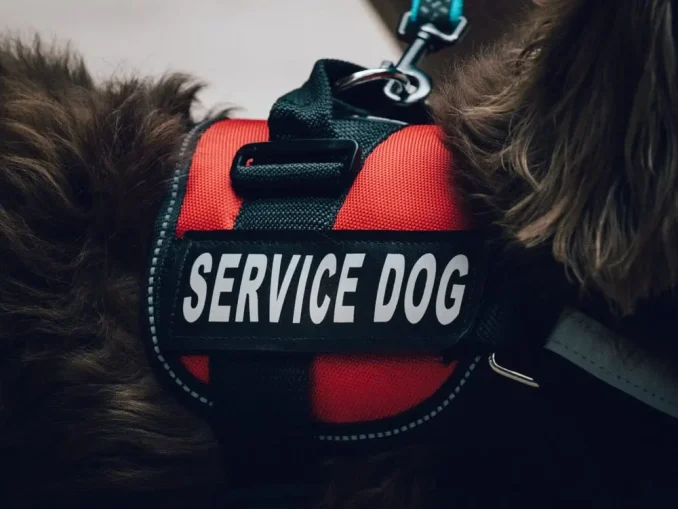
- Fake Service Dog: You may notice “official-looking” vests purchased online that say “Service Dog” or “Do Not Pet.” However, the presence of a vest alone does not prove legitimacy. Behaviour is the key indicator.
The Problem With Fake Service Dog IDs
One of the biggest drivers of this issue is the multi-million dollar industry selling fake service dog registrations and IDs online.
The “Registration” Loophole
In both the United States and Canada, there is no official government registry or universal certification system for service dogs. Despite this, many websites claim to offer “certification” or “registration” for a fee—often requiring nothing more than a quick online form and a credit card. These services can be misleading, giving the impression of legitimacy without ensuring any real training or qualifications, which contributes to the growing problem of fake service dogs.
These sites provide:
- Plastic ID cards
- Vests with patches
- Certificates with official-looking seals
Why this is problematic:
- It’s a Scam: These registries have no legal standing. They prey on people who want to bring their pets into restricted areas.
- It Confuses the Public: When business owners see a fake ID, they assume the dog is legitimate. This undermines the integrity of the system.
- It Violates Privacy Laws: In the US (under the ADA) and Canada (under provincial human rights codes), businesses are limited in what they can ask. A certificate or ID is not required, and demanding one can be a violation of a handler’s rights.
Legal Distinctions: US vs. Canada
While the core definition of a service dog is consistent, the laws governing them differ slightly between the two countries.
In the United States: Under the Americans with Disabilities Act (ADA), service dogs are defined as dogs trained to perform tasks for people with disabilities. In most public settings, staff may only ask two questions:
- Is the dog a service animal required because of a disability?
- What work or task has the dog been trained to perform?
In Canada: Service dog laws are a mix of federal and provincial regulations. For example, Ontario’s Accessibility for Ontarians with Disabilities Act (AODA) and British Columbia’s Guide Dog and Service Dog Act provide specific protections. While the questions asked are similar to the US, some provinces have voluntary certification programs for service dogs, though these are distinct from the fake online registries.
The Impact on Emotional Support Animals (ESAs)
A major source of confusion is the difference between a Service Dog and an Emotional Support Animal (ESA).
- Service Dogs: Have public access rights in non-sterile environments (restaurants, stores, etc.) and are task-trained.
- ESAs: Provide comfort through presence but are not task-trained. They do not have public access rights in restaurants or shops (though they may have housing rights).
Many people attempting to pass off pets as service dogs are actually confusing ESAs with service dogs. The rise of fake ESA letters has further blurred these lines, leading to increased scrutiny for everyone.
Why This Matters for Everyone
The issue of fake service dogs is not just about breaking rules; it is a serious matter of safety and dignity. When an untrained pet enters a “No Pets Allowed” space, it creates a high-stakes environment for those who truly rely on their animals.
- For the Handler: A fake dog that barks or lunges can trigger a real service dog, causing it to break focus. This could be dangerous if the dog is alerting to a medical emergency.
- For the Business: Untrained animals can cause hygiene issues or liability risks.
- For the Public: It erodes trust and makes it harder for those with invisible disabilities to be understood.
Moving Forward: Education Over Documentation
The answer to the increasing issue of fake service dogs isn’t about creating more fake IDs or having tougher paperwork. It’s about educating people.
By realizing that there isn’t an official certification and that a service dog’s behaviour is what really matters, we can provide better support for those who depend on these animals.
If you spot a dog in public, keep in mind: don’t pet it, don’t distract it, and evaluate it based on its behaviour, not just its vest.
Disclaimer: This article is for informational purposes only and does not constitute legal advice. Service dog laws vary by state, province, and country. Always consult local regulations for specific requirements.