The Decline in Childhood Vaccinations: Risks and Realities
6 min read
1070 words
The first day of kindergarten is a milestone, a rite of passage marked by new backpacks, nervous smiles, and the formal entry into a community of learning. For decades, this transition has also been protected by an invisible shield—a robust public health framework of mandatory childhood vaccinations. This framework was designed not only to protect the individual child but to create a ‘community immunity’ that safeguards everyone, especially the most vulnerable. However, recent data from the Centers for Disease Control and Prevention (CDC) reveals a worrying trend: this shield is beginning to fray. Childhood Vaccinations rates for kindergarteners are declining, and concurrently, the number of non-medical exemptions granted to schoolchildren is on the rise. This shift represents a significant challenge to one of the most successful public health achievements in modern history, forcing us to examine the reasons behind this trend and the profound consequences it holds for community well-being.
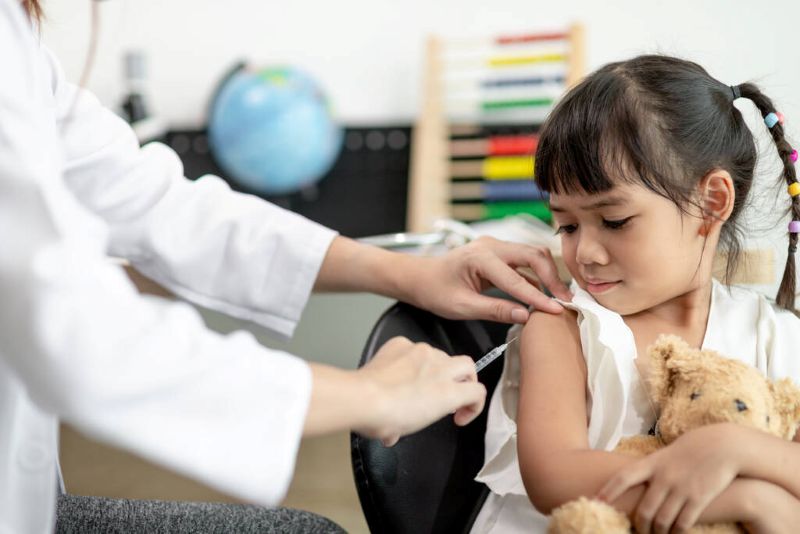
Before the widespread adoption of school vaccine mandates, diseases like measles, mumps, rubella, and polio were common, often leading to severe illness, lifelong disability, or death. School mandates transformed this reality. By requiring proof of vaccination for enrolment, public schools became critical gatekeepers of public health. This system operates on the principle of herd immunity, where a high percentage of a vaccinated population (typically 95% for a highly contagious disease like measles) provides indirect protection to those who cannot be vaccinated. This includes infants too young for certain vaccines, individuals with compromised immune systems from conditions like leukemia, or those with severe allergies to vaccine components. Medical exemptions have always been a necessary part of this system, ensuring that children with legitimate health contraindications are not forced to vaccinate. The growing concern, however, lies not with these essential medical exemptions, but with the increasing use of non-medical exemptions, which are typically granted for religious or philosophical reasons.
The Complex Web of Declining Vaccination Rates
The decline in vaccination coverage is not the result of a single cause but rather a complex interplay of social, political, and technological factors that have eroded public trust in established health institutions. Chief among these drivers is the proliferation of misinformation, particularly online. The digital age has democratized information, but it has also created echo chambers where scientifically baseless claims can flourish. The long-debunked and fraudulent 1998 study linking the MMR vaccine to autism, for example, continues to cast a long shadow, its claims persistently circulated on social media platforms and anti-vaccination websites despite being thoroughly discredited and retracted. For parents navigating a sea of conflicting information, distinguishing between credible scientific consensus and persuasive pseudoscience can be incredibly difficult.
This environment of misinformation preys on a natural parental instinct: the desire to protect one’s child from any potential harm. Ironically, the very success of vaccines has contributed to this vulnerability. Because diseases like measles and diphtheria are no longer a visible, everyday threat for most families in developed nations, the perceived risk of the disease has diminished. In this context, a parent might weigh the abstract, unseen danger of a nearly eradicated disease against the immediate, tangible act of vaccination, which can have minor side effects like fever or soreness. When misinformation magnifies the perceived risks of the vaccine, the risk-benefit calculation becomes dangerously skewed.
Furthermore, the COVID-19 pandemic significantly intensified this trend. Public health measures became highly politicized, and debates over vaccine mandates, personal freedom, and government authority became deeply entangled. This has fostered a broader skepticism toward public health recommendations, with some viewing school vaccine requirements not as a collective good but as an infringement on individual liberty. In some states, the process for obtaining a non-medical exemption is administratively simple—requiring little more than signing a form—making it an easier path for hesitant or busy parents compared to scheduling and attending multiple vaccination appointments.
The Tangible Consequences of a Weakened Shield
The consequences of declining vaccination rates are not theoretical; they are tangible, measurable, and potentially devastating. The most immediate result is the resurgence of vaccine-preventable diseases. Measles, a disease that was declared eliminated in the United States in 2000, now experiences regular outbreaks. These outbreaks often begin when an unvaccinated individual travels to a region where measles is common and brings it back to a community with low vaccination coverage. Because measles is one of the most contagious viruses known—capable of lingering in the air for up to two hours after an infected person has left a room—it can spread like wildfire through an under-vaccinated population.
Recent outbreaks, such as the one in Ohio in 2022 that primarily affected unvaccinated preschool-aged children, serve as a stark reminder of this reality. These events place an immense strain on public health systems, requiring extensive contact tracing, quarantine measures, and public information campaigns. The economic costs are also substantial, encompassing hospitalization expenses, lost productivity for parents who must stay home with sick children, and the costs of outbreak response.
Beyond the immediate impact of an outbreak, the erosion of herd immunity creates a constant, low-level threat to the most vulnerable members of our society. The child undergoing chemotherapy for cancer, the infant too young for their first MMR shot, or the elderly individual with a weakened immune system depend entirely on the vaccinated community around them for protection. When a school’s vaccination rate drops below the 95% threshold for measles, it ceases to be a safe environment for these individuals. A non-medical exemption is often framed as a personal choice, but in the context of infectious disease, it is a choice with profound public consequences, directly impacting the health and safety of others who do not have the choice to be protected. The classroom, once a symbol of shared learning and growth, can become a vector for diseases that modern medicine had already conquered.
In conclusion, the trend of decreasing childhood vaccinations rates and rising non-medical exemptions is a critical public health challenge that demands a thoughtful and multi-faceted response. It requires a concerted effort from healthcare providers, public health officials, and community leaders to rebuild trust through clear, empathetic, and science-based communication. Addressing parental concerns with respect, making vaccination easily accessible, and countering misinformation with credible, easy-to-understand resources are essential steps. Reaffirming the foundational principle that vaccination is not merely an individual act but a communal responsibility is paramount to protecting the health of all children and preserving the integrity of the public health shield that has served society so well for generations.