Global Peace Index Puts Canada in the Top 15
5 min read
935 words
Every year, the Institute for Economics and Peace (IEP) releases its much-anticipated Global Peace Index (GPI)—the world’s most comprehensive report card on safety and stability. For 2025, the results are in, and Canada has once again reaffirmed its commitment to being one of the world’s most peaceful nations, securing a coveted spot in the top 15 safest countries worldwide. While we are certainly swimming in a current of maple syrup and tranquility, the Global Peace Index 2025 is not without its nuances for our northern home. This year’s index analyzed 163 countries, and although Canada experienced a minor dip in its overall score—think of it as dropping from a solid ‘A’ to a very respectable ‘A-minus’—we remain firmly planted in the global elite when it comes to peace. This report serves as both a proud affirmation of our national character and a gentle wake-up call regarding certain domestic pressures. Here is a closer look at what the 2025 report means for Canada, and how we stack up against our neighbors.
What Does the Global Peace Index (GPI) Actually Measure?
Before diving into Canada’s ranking, it’s helpful to understand the monumental task the GPI undertakes. The index evaluates the state of peace across three core domains, using 23 qualitative and quantitative indicators:
- Societal Safety and Security: This includes internal factors like crime rates, levels of violent demonstration, political instability, and internal conflict.
- Ongoing Domestic and International Conflict: Measures a country’s involvement in both internal and external wars and conflicts.
- Militarization: Looks at military expenditure, access to weapons, and the size of armed forces.
Essentially, the GPI aims to look beyond simple metrics to determine how much of a country’s national resource is dedicated to managing conflict instead of driving prosperity. A high ranking on the Global Peace Index means a nation is generally a great place to live, work, and, yes, binge-watch Netflix without major worry.
Canada’s Solid A-Minus: Still Top Tier in 2025
Canada’s presence in the top 15 is largely due to our consistently high performance across the conflict and militarization domains. Our political system remains highly stable, our military expenditure is reasonable relative to GDP, and we have steered clear of major international conflicts—a true testament to Canada’s reputation as a reliable and non-aggressive international partner.
We continue to shine in several key areas that underpin our peaceful reputation:
- Political Stability: Canada maintains high scores for stable governance and low levels of political violence.
- Low International Conflict: Our geographic isolation and diplomatic focus contribute significantly to low scores in external conflict measures.
- Social Cohesion: Despite regional differences, Canada generally scores well for its internal mechanisms supporting a cohesive society.
However, the slight decline in our overall score suggests that internal pressures are increasing, preventing us from climbing back toward the top 10.
A Wake-Up Call: Where Canada Needs to Improve
The Global Peace Index 2025 is clear: while Canada is safe, certain sectors are showing strain, requiring attention before they significantly impact our stability.
1. The Concerning Rise in Violent Crime
The most significant factor contributing to Canada’s score dip was the recorded increase in violent crime. While we are nowhere near the levels seen in less peaceful countries, this upward trend is a serious indicator of shifting societal dynamics. As a nation known for its politeness and peaceful demeanor, addressing this rise in violence is crucial to maintaining our world-class safety profile.
2. Increasingly Frosty International Relations
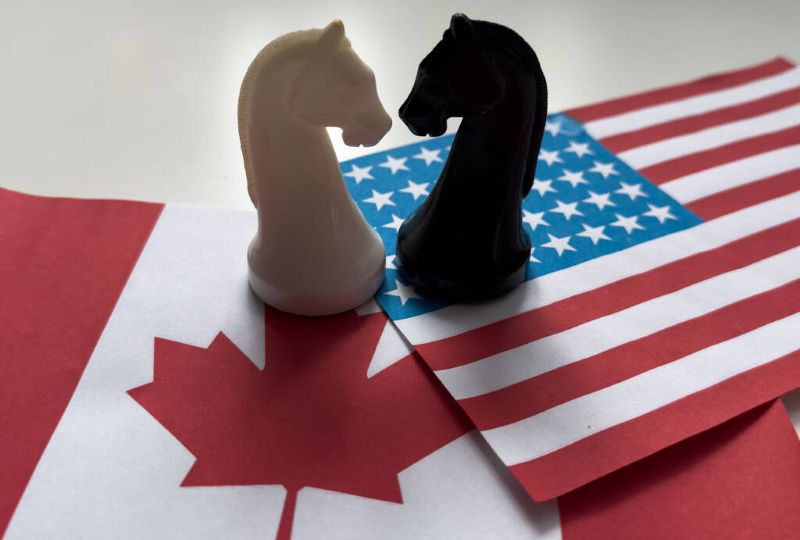
Perhaps the most eyebrow-raising observation in the report was the mention of our “increasingly frosty relationship” with the United States.
While the two countries share the world’s longest undefended border, diplomatic and economic tensions have been subtly growing. It seems even peace indexes are picking up on the strain! This measured tension reminds us that even historically strong alliances require careful cultivation. (Perhaps a peace offering of poutine and hockey tickets is in order?)
The Continental Divide: Canada vs. the US
The immense disparity between Canada and the U.S. remains one of the most striking features of the 2025 index.
While Canada enjoys its cozy spot in the top 15, the United States clocked in significantly lower at 128th place, landing firmly in the “low” peace category. This places the U.S. uncomfortably close to nations facing serious internal or external strife.
The gap between the two North American nations is defined by stark differences, particularly in the categories of Societal Safety and Militarization. High rates of internal conflict, elevated levels of violent crime, and factors like weapons access contribute to the U.S.’s consistently low ranking.
This isn’t just a minor difference; it’s a full-blown continental divide. It’s the difference between a relaxing canoe trip on a serene lake and white-water rafting down a raging river—blindfolded.
Moving Forward: Protecting Canada’s Peace
Ultimately, the Global Peace Index 2025 provides more than just bragging rights; it offers a vital snapshot of where we excel and where we are vulnerable.
Canada’s continued presence among the top 15 safest nations highlights our collective success in building a stable, democratic, and globally minded society. We are fortunate to live in a country where peace is the norm, not the exception.
However, the warnings about rising violent crime and strained diplomatic relations cannot be ignored. The slight slip in our score should serve as motivation to strengthen our internal safety nets and recommit to the diplomatic values that have defined us globally.
We have earned our A-minus, but with conscious effort and focus, we can aim for that solid ‘A’ once again. Because in a turbulent world, the value of Canadian tranquility is priceless.