WordPress Security Audit: Protect Your Site Before Q4
6 min read
1093 words
The last thing you want during a busy shopping season is for your website to go down. For businesses that rely on WordPress, the months leading up to the holiday season are a good time to take a closer look at website security. More visitors, online sales, contact forms and customer activity can make your website an even more attractive target for automated attacks. A WordPress security audit does not have to be complicated. It is essentially a checkup of your website to identify security weaknesses, outdated software, suspicious activity and other problems that could cause trouble later. If your website has not had a proper security review recently, early fall is a good time to do one.
What Is a WordPress Security Audit?
A security audit involves reviewing different parts of your WordPress website to look for potential vulnerabilities.
Depending on the website, this may include checking:
- WordPress core and software versions
- Plugins and themes
- User accounts and administrator access
- Password and login security
- Security settings
- Malware or suspicious files
- Website backups
- SSL and HTTPS configuration
- Database and file permissions
- Unused plugins and themes
- Hosting security
The goal is to find problems before they become a bigger issue.
Check Your WordPress Version
Keeping WordPress updated is one of the simplest ways to improve website security.
Updates can include security fixes as well as improvements and new features. If WordPress, plugins or themes are significantly out of date, your website may be exposed to known vulnerabilities.
Before making major updates, make sure you have a current backup.
Review Your Plugins
Plugins add useful features to a WordPress website, but every additional plugin can also introduce another potential security concern.
Go through your installed plugins and ask yourself whether you still need each one.
If you have plugins that are no longer being used, remove them rather than simply leaving them inactive.
Also check whether the plugins you rely on are still actively maintained and receiving updates.
Do Not Forget Your Themes
Themes should be reviewed just like plugins.
If you have old themes sitting in your WordPress installation that you are no longer using, consider removing them.
Your active theme should also be kept up to date.
A security audit is a good opportunity to clean up anything that has accumulated over the years.
Review Administrator Accounts
Take a look at everyone who has access to your WordPress dashboard.
Do you still need every administrator account?
Former employees, developers, contractors or other people who no longer work on the website should not continue to have unnecessary access.
Remove accounts that are no longer required and make sure current users have the appropriate level of access.
Not everyone who needs to edit a page needs administrator privileges.
Strengthen Login Security
Your WordPress login page deserves particular attention.
Use strong, unique passwords for administrator accounts and consider enabling two factor authentication where available.
It is also worth using a security solution that can help identify repeated login attempts and other suspicious activity.
Never use the same password for your WordPress administrator account that you use for other important accounts.
Check Your Backups
A backup is one of the most important parts of website security.
But simply having a backup plugin installed does not necessarily mean you have a usable backup.
Check when your most recent backup was created and where it is stored. If possible, keep backups somewhere separate from your website hosting account.
Most importantly, know how you would restore your website if something went wrong.
A backup that cannot be restored when you need it is not much help.
Look for Suspicious Activity
A security audit should include checking the website for unusual activity.
Depending on your hosting provider and security tools, you may be able to review login attempts, newly created users, modified files and other activity.
Look for anything you do not recognize.
If you discover unfamiliar administrator accounts, unexpected files or other suspicious changes, do not simply delete things at random. Removing the wrong file can make the problem worse.
Check Your SSL Certificate
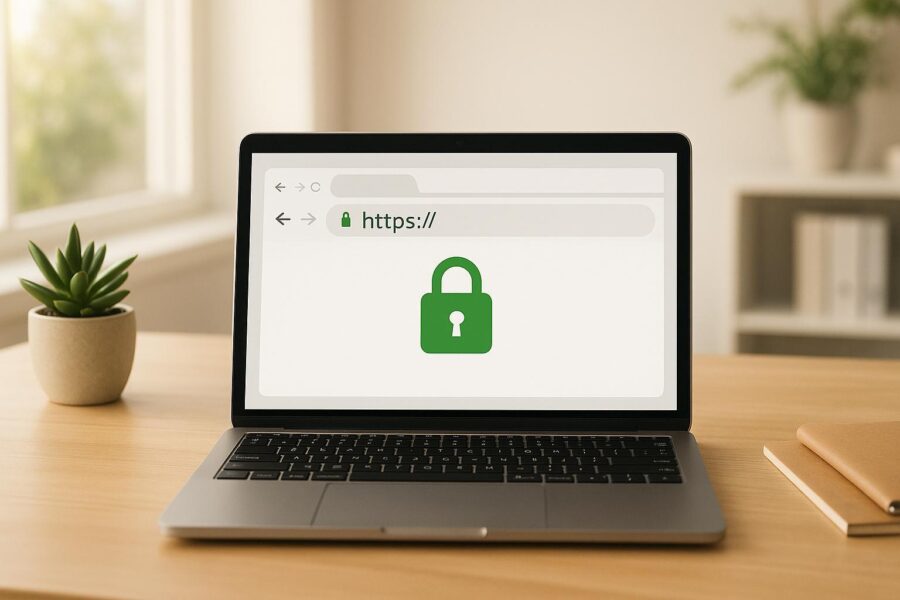
Make sure your website is using HTTPS and that its SSL certificate is valid.
Most visitors expect to see the padlock or secure connection indicator in their browser, particularly when entering personal information or making a purchase.
If your certificate is expired or incorrectly configured, visitors may receive security warnings when trying to access your website.
Review Contact Forms
Contact forms are often overlooked during website maintenance.
Test your forms to make sure messages are actually being delivered. Check that spam protection is working and that you are not receiving large amounts of unwanted automated submissions.
If your website uses forms for orders, customer questions or appointment requests, this becomes even more important during a busy season.
Think About Your Hosting
Website security is not only about WordPress itself.
Your hosting environment also matters.
Make sure you understand what security features your hosting provider offers, including backups, malware scanning, server updates and account protection.
If your website has grown significantly since it was first created, it may also be worth reviewing whether your current hosting plan is still appropriate.
Test Your Website Before Q4
Security is only one part of preparing for increased traffic.
Before the busy holiday season arrives, test your website from a visitor’s perspective.
Check that:
- Pages load properly
- Contact forms work
- Shopping carts function correctly
- Checkout works
- Images display properly
- Links are not broken
- Mobile pages are easy to use
- Customers can find important information
- Your website has enough hosting resources for increased traffic
A small problem discovered in September is much easier to deal with than the same problem appearing during a major holiday promotion.
Do Not Wait Until Your Website Is Attacked
Many website owners think about security only after something goes wrong.
By then, you may be dealing with a hacked website, lost information, downtime or a long cleanup process.
A WordPress security audit is about prevention. It gives you an opportunity to identify weaknesses while your website is still operating normally.
Give Your WordPress Website a Fall Checkup
Q4 can be an important period for businesses, especially those selling products or services online.
Taking some time in early fall to review your WordPress installation, plugins, themes, users, backups and security settings can give you greater peace of mind when traffic increases.
You do not have to wait for a security problem to remind you that your website needs attention.
A little maintenance now can help keep your WordPress website secure, functional and ready for the busy months ahead.