
5 min read
932 words
Ever watched a video online that seemed just a little… off? Maybe a celebrity said something shocking, or a politician appeared in a place they shouldn’t be. In today’s digital world, separating fact from fiction is getting trickier thanks to a technology called deepfakes. But don’t worry! You don’t need to be a tech wizard to become a savvy digital detective. This friendly guide will walk you through the simple, common-sense clues that give away even the most convincing AI-generated deepfake. Let’s dive in and learn how to protect yourself from misinformation.
Become a Digital Detective: Examine the Details
The most telling signs of a deepfake are often hiding in plain sight. AI is getting good, but it still struggles with the complex, unique details of a real human being. When you’re watching a video or looking at a photo, get up close and personal with these features.
Tattoos, Moles, and Scars
Think of these as personal, permanent landmarks on a person’s body. In a deepfake, these features often get erased or distorted. Watch a video closely and see if a tattoo disappears in one frame and reappears in another. Do moles or scars seem to shift slightly on the face? This is a huge red flag. In still images, they might look unnaturally sharp or perfectly consistent, lacking the subtle changes of real skin.
Hands and Feet
This is one of the most famous giveaways. AI models have a notoriously hard time with complex structures like hands. Look for:
- Extra or missing fingers (six fingers is a classic sign!)
- Fingers that are unusually long, bent at weird angles, or blend together.
- Awkward hand movements that don’t seem natural.
- Feet that are distorted or look unnaturally smooth.
Eyes and Eyewear
They say the eyes are the window to the soul, but for a deepfake, they’re often a window to the glitches. Pay attention to:
- Blinking: Does the person blink too little, too much, or not at all? Early deepfake models struggled to replicate a natural blink rate.
- Eye movement: Do the eyes seem to wander unnaturally or fail to track with the person’s head movement?
- Reflections: Do reflections in the eyes match the light sources in the room?
- Glasses: Are the frames perfectly straight even when the person moves? Do they warp the face behind them in a strange way?
Hair and Teeth
Hair is notoriously difficult for AI to render realistically. Look for hair that seems to have a “painted on” quality, lacks individual strands, or merges with the background. As for teeth, check for inconsistencies. Do they look unnaturally perfect, or do they change shape or alignment from one moment to the next?
Ears and Jewelry
Just like with moles and tattoos, ears can be a point of failure. Are the ears a different shape from one side to the other? Does jewelry, like earrings or necklaces, defy gravity, disappear, or warp as the person moves?
Look for the Big Picture: General Inconsistencies

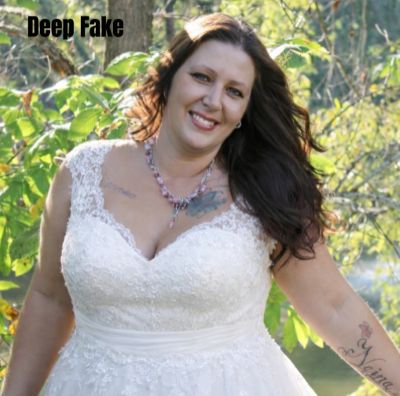
Sometimes the flaws aren’t in the details, but in the overall composition. Take a step back and look at the whole scene.
Skin Texture
Does the skin look too smooth, waxy, or plastic-like? AI often over-smooths skin, eliminating the natural texture of pores, fine lines, and blemishes. This can create a creepy “uncanny valley” effect where the person looks like an eerily perfect doll.
Lighting and Shadows
This is a critical one. Light behaves in predictable ways. Ask yourself:
- Do shadows on the person’s face and body match the direction and intensity of the light source in the room?
- Is the person lit from the front while the background is lit from behind?
- Do the shadows look blurry or pixelated?
Background Anomalies
While your eyes are on the person, don’t forget what’s behind them. The background can reveal a lot. Look for blurring, warping, or glitching, especially around the edges of the person. Sometimes, a deepfake algorithm will struggle to distinguish the foreground from the background, causing a strange “halo” effect.
Asymmetry
Real human faces are naturally asymmetrical. One eyebrow might be slightly higher than the other, or one side of the smile might be a little different. Strangely, AI can sometimes make a face too perfect, creating a level of symmetry that doesn’t exist in nature. Conversely, it can also create bizarre, mismatched asymmetries, like one eye being noticeably larger or lower than the other.
Go Beyond Your Eyes: Use Verification Tools and Methods
Your own eyes are your first line of defense, but a good detective confirms their findings.
- Check the Source: Where did this video come from? Is it from a reputable news organization with a history of journalistic integrity, or is it from a random, newly created social media account with a strange name? Always be skeptical of the source.
- Do a Reverse Image Search: Take a screenshot from the video and run it through a reverse image search (like Google Images or TinEye). You might find the original, unaltered video or photo, proving it’s been manipulated.
- Listen Closely: Audio deepfakes are also a thing. Does the voice sound robotic? Is the emotional tone flat? Does the audio line up perfectly with the person’s lip movements? Discrepancies here are a major warning sign.
Stay Curious, Stay Vigilant
Spotting a deepfake is a skill that gets easier with practice. By knowing what to look for—from weird hands to mismatched lighting—you can navigate the digital world with more confidence. The best defense is a healthy dose of skepticism and a commitment to checking your sources. Stay curious, stay vigilant, and happy investigating
 Victoria Jain
  Rose DesRochers