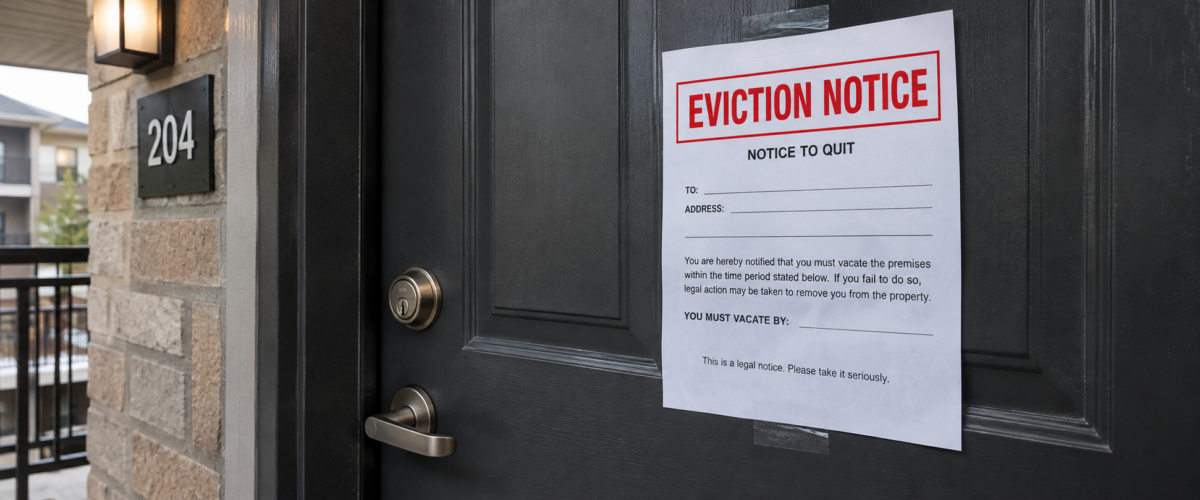
Ontario Eviction Rules: What Tenants Need to Know
9 min read
1653 words
Ontario’s rental rules are changing on September 21, 2026, bringing several important changes to the way landlords and tenants deal with unpaid rent, eviction applications and other rental disputes.
One of the most significant changes concerns the N4 notice, which is used when a landlord wants to terminate a tenancy because rent has not been paid.
For tenants who are already struggling to keep up with rent, the shorter timeline could make it even more important to act quickly after receiving an N4.
For landlords, the changes create new rules and procedures to understand before starting an eviction application.
The N4 Timeline Is Changing
An N4 is the notice a landlord uses when a tenant has not paid rent.
Beginning September 21, 2026, the new rules reduce the minimum notice period for an N4 for most tenancies to seven days.
That is a significant change from the previous 14-day period that applied to many monthly and yearly tenancies.
The Landlord and Tenant Board has confirmed that an updated N4 form will take effect on September 21, 2026. The Board specifically warns that the new version cannot be used to give notice before that date.
The shorter period means a tenant who receives an N4 may have considerably less time to deal with the arrears before the landlord can move forward with an application to the LTB.
An N4 Does Not Mean You Are Immediately Evicted
Receiving an N4 does not mean that a landlord can immediately change the locks or remove a tenant.
The N4 is a notice of termination. If the tenant does not move out or resolve the issue, the landlord can generally apply to the Landlord and Tenant Board for an eviction order.
The LTB has a specific application, the L1 Application to evict a tenant for non-payment of rent and to collect rent the tenant owes.
This distinction is important.
There is a process between receiving an N4 and actually being evicted.
Why the Seven-Day Change Matters
Seven days can go by quickly.
A tenant may need to find money, check whether the amount claimed is correct, contact the landlord, arrange assistance or seek legal advice.
A mistake on an N4 or a misunderstanding about the amount owing may also need to be addressed quickly.
Tenants should not assume that ignoring the notice will make the problem disappear.
At the same time, landlords need to make sure they are using the correct form and following the applicable rules. The LTB warns that applications can be refused or dismissed when forms are incomplete, incorrect or filed improperly.
New Rules About Repeatedly Paying Rent Late
The changes coming into effect September 21 also establish a clearer definition of what can constitute a persistent failure to pay rent on time.
Under the new regulation, a tenant who fails to pay rent within seven days of the date it is due on at least three occasions within a six-month period can fall within the specified definition of persistent late payment, provided the late payments were not caused by the landlord applying a payment to another amount owing.
This does not mean that every tenant who pays late three times is automatically evicted.
Rather, the regulation provides a defined example of persistent late payment for purposes of the Residential Tenancies Act.
For tenants who regularly pay rent late, even if they eventually catch up, this is an important change to understand.
More Than One Late Payment Could Become Important
Under the new rules, a tenant may want to look at their payment history rather than focusing only on the most recent missed payment.
For landlords, keeping accurate records of when rent was due and when it was actually received will become increasingly important.
Bank records, receipts, electronic payment records and written communication can all become relevant when there is a dispute.
Changes to What Tenants Can Raise at Some LTB Hearings
Another important change affects non-payment-of-rent hearings.
Under the new regulation, when certain issues are raised by a tenant as a defence in an LTB application involving rent arrears, the tenant may have to pay specified amounts no later than seven days before the hearing in order to raise those issues under the new rules.
This is one of the areas where the details matter.
A tenant who has an upcoming hearing should not assume that every issue can simply be raised at the hearing without first checking the applicable requirements.
Changes to Landlord Personal-Use Evictions
The September 21 changes also affect certain evictions where a landlord, purchaser or qualifying family member requires the rental unit for personal use.
These situations are commonly associated with an N12 notice.
The new rules introduce changes involving the timing and compensation requirements for certain personal-use evictions.
The details can depend on the circumstances, so both landlords and tenants should review the current rules rather than relying on older information about N12 notices.
This is particularly important because information about Ontario rental law found online may still describe rules that applied before the September 2026 changes.
Renoviction Rules Are Also Changing
Renovations and major repairs can create some of the most complicated landlord and tenant disputes.
An N13 notice can be used in certain situations involving demolition, conversion, repairs or renovations.
The new rules introduce additional requirements involving information landlords must provide during certain renovation-related processes. This can include information about the expected completion of the work and when the rental unit is expected to be available again.
For tenants who are asked to leave because major work is planned, it may be important to understand what the landlord is proposing and what documentation supports the application.
The Rules Can Be Complicated
Eviction disputes are not always as straightforward as an unpaid rent amount.
A case may involve questions about:
- Whether the correct notice was used
- Whether the notice was completed properly
- How much rent is actually owing
- When payments were made
- Repeated late payments
- Maintenance problems
- Landlord entry
- Alleged interference or damage
- Personal-use evictions
- Renovations
- Compensation
- Evidence
- Previous LTB orders
- Settlement agreements
The September 2026 changes add another layer to an already complicated area of Ontario law.
What Should Tenants Do After Receiving an N4?
If you receive an N4, don’t simply put it aside.
Start by checking:
The date on the notice.
The date can affect your deadline.
The amount claimed.
Compare it with your rent records and payments.
The reason for the notice.
Make sure you understand why the landlord says your tenancy should end.
Your payment records.
Keep copies of bank statements, electronic transfers, receipts and messages concerning rent.
The current rules.
Because Ontario’s rental laws are changing, information published before September 21, 2026 may not accurately describe the current process.
If you are unsure what the notice means or what options you have, consider getting advice from a lawyer or licensed paralegal who handles landlord and tenant matters.
What Should Landlords Do Before Serving an N4?
Landlords also need to pay attention to the changes.
Before serving an N4, a landlord should make sure the correct form is being used and that the information on the notice is accurate.
Landlords should maintain clear records showing:
- The amount of rent due
- The date rent was due
- Payments received
- Outstanding amounts
- Communications with the tenant
- Copies of notices
- Proof that notices were properly served
A landlord who makes a procedural mistake may create additional problems when trying to proceed with an LTB application.
Don’t Rely on an Old N4 Form
The LTB has specifically announced that a new N4 form takes effect September 21, 2026.
The Board says the updated form is for reference before the effective date and cannot be used to give notice before September 21.
That means landlords should be particularly careful when downloading forms from websites other than the official LTB.
The same caution applies to tenants researching their rights online.
An article written several years ago may accurately describe the law at the time it was published but no longer reflect Ontario’s current rules.
When Should You Talk to a Lawyer or Paralegal?
Some rental disagreements can be resolved directly between a landlord and tenant.
Others can become considerably more complicated.
Legal advice may be worth considering when:
- You have received an eviction notice
- You disagree with the amount of rent claimed
- You believe the notice is incorrect
- You have an upcoming LTB hearing
- You are facing a personal-use eviction
- You have been asked to leave because of renovations
- You believe an eviction is being pursued in bad faith
- There are substantial amounts of money involved
- You are unsure what evidence you need
- A previous LTB order or settlement is involved
Landlord and tenant lawyers and licensed paralegals regularly deal with these types of disputes and can explain how the rules apply to a particular situation.
A New Era for Ontario Rental Disputes

The September 21, 2026 changes are significant for both sides of the rental relationship.
For tenants, the shorter N4 timeline means there may be less time to respond when rent falls into arrears.
For landlords, the changes create new rules to understand when dealing with unpaid rent, repeated late payments and certain eviction applications.
The safest approach for either side is to keep good records, read notices carefully and make sure you are working from the current Ontario rules.
The Landlord and Tenant Board provides current forms and information through Tribunals Ontario. Its forms page confirms the September 21 effective date for the new N4 form and provides access to current landlord and tenant applications.
A Note About Ontario Rental Law
Ontario’s rental laws and Landlord and Tenant Board procedures can change. The information in this article is intended for general information only and is not legal advice. The rules that apply can depend on the specific circumstances of a tenancy.
If you have received an eviction notice, are facing an LTB hearing or are unsure about your rights or obligations, consider speaking with a lawyer or licensed paralegal who handles landlord and tenant matters.