Small Lamp Details That Elevate a Room’s Design
5 min read
813 words
While small lamps may not take center stage, they do influence the interplay between furnishings, accents, and ambient lighting. Thoughtful small lamp decor choices, such as a carefully chosen shade, base, or switch, can make a console feel intentional and a reading corner feel settled. These details reveal whether a room follows one visual language or contains competing elements.
The key to successful updates is careful observation, which should then inform decisions about adjacent objects, such as framed artwork, books, and decorative collections.
Start With the Lamp’s Visual Weight
A lamp’s visual weight should match the surface beneath it. A narrow console needs a compact base, while a deep side table can carry a wider silhouette. Bookends create a similar sense of proportion, especially beside a lamp on a shelf. Pairing a pale stone base with marble bookends can keep the shelf grounded, while a darker base can connect with walnut, bronze, or charcoal accents.
Height matters as much as width. A lamp beside a sofa should rise above the arm without blocking artwork or conversation across the room. On a console, the base and shade need enough height to balance a mirror, vase, or framed photograph nearby.
Treat the Shade as a Room Detail
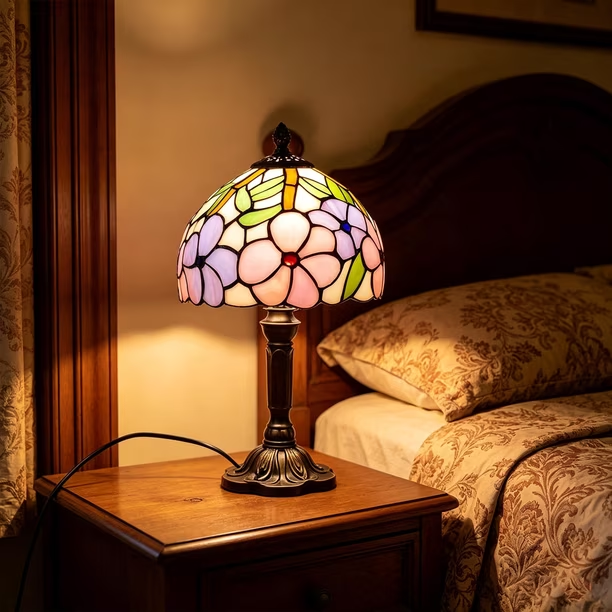
The shade determines the lamp’s outline, light direction, and visual softness. A tapered shade creates a traditional profile, while a drum shade gives contemporary furniture a cleaner shape. In a seating area, the lower edge should sit above eye level so the bulb does not become the first detail people notice.
Material changes the quality of the light. Linen diffuses brightness and adds relaxed texture, while paper creates a lighter appearance. A dark shade draws attention to the lamp, so the base needs enough visual weight to prevent the arrangement from feeling top-heavy.
Choose Light for the Task
A lamp should suit the activity around it. A reading lamp needs focused light that reaches the page without casting a heavy shadow across the chair. A lamp on a buffet or console works better with softer illumination that supports the room without competing with it.
The bulb also affects nearby colors. Warm light tends to bring out wood, brass, cream, and terracotta, while cooler light can create a crisper effect with gray, blue, and green surfaces. The best choice depends on the room’s color palette and intended use. Testing the lamp after sunset gives a more accurate impression than judging it beside a bright window.
For more ideas on creating the right atmosphere in your home, explore our essential guide to lighting for any space, which explains how ambient, task, and accent lighting work together.
Notice the Base and Hardware
The base supplies details people notice at close range. Ceramic, wood, glass, metal, and stone each create a different relationship with surrounding furniture. A polished base suits glossy surfaces, while a matte finish gives lacquer, glass, or polished hardware a quieter counterpoint.
Small hardware choices deserve equal attention. A visible switch, finial, cord, or socket should relate to the lamp’s material and nearby finishes. Brass hardware beside warm wood feels deliberate, while black hardware can connect the lamp to dark picture frames, cabinet pulls, or a fireplace screen.
Build a Clear Surface Arrangement
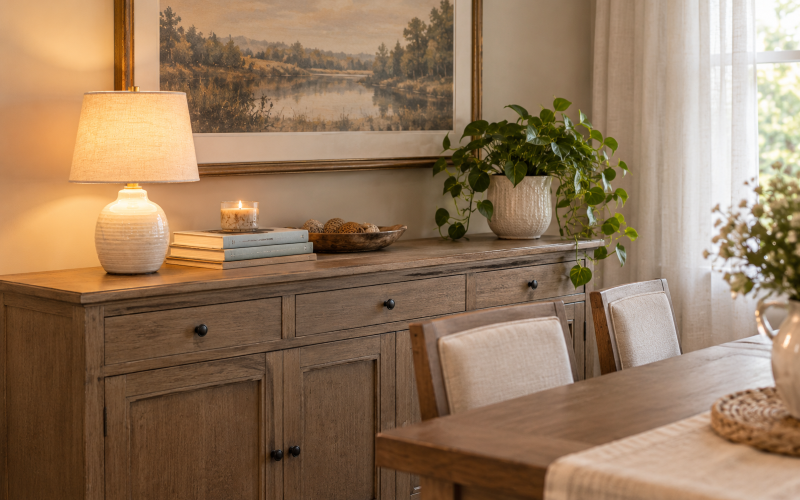
A lamp looks more settled when nearby objects vary in height and shape. A low bowl beside a taller lamp creates space between forms, while a stack of books gives the base a visual anchor. One sculptural object often works better than several small accessories competing for attention.
Leave enough surface around the lamp for practical use. A side table still needs room for a drink, glasses, or a book. On a console, spacing matters because crowded objects make well-chosen pieces appear accidental.
If you’re styling a reading corner or bookshelf, our guide to creating the ultimate cosy home library offers more ideas for combining lighting, books, and decorative accessories.
Repeat One Detail Nearby
Repetition creates continuity without requiring matching sets. A black lamp cord can relate to a black frame, while a cream shade can connect with a nearby ceramic vessel. Repeating one material or color twice usually gives the arrangement enough connection to feel intentional.
The repeated detail should remain subtle. If every object shares the same finish, the surface loses variation and becomes predictable. A lamp with a brushed metal accent needs just one nearby reference, such as a tray edge or picture frame, to establish a visual link.
Conclusion
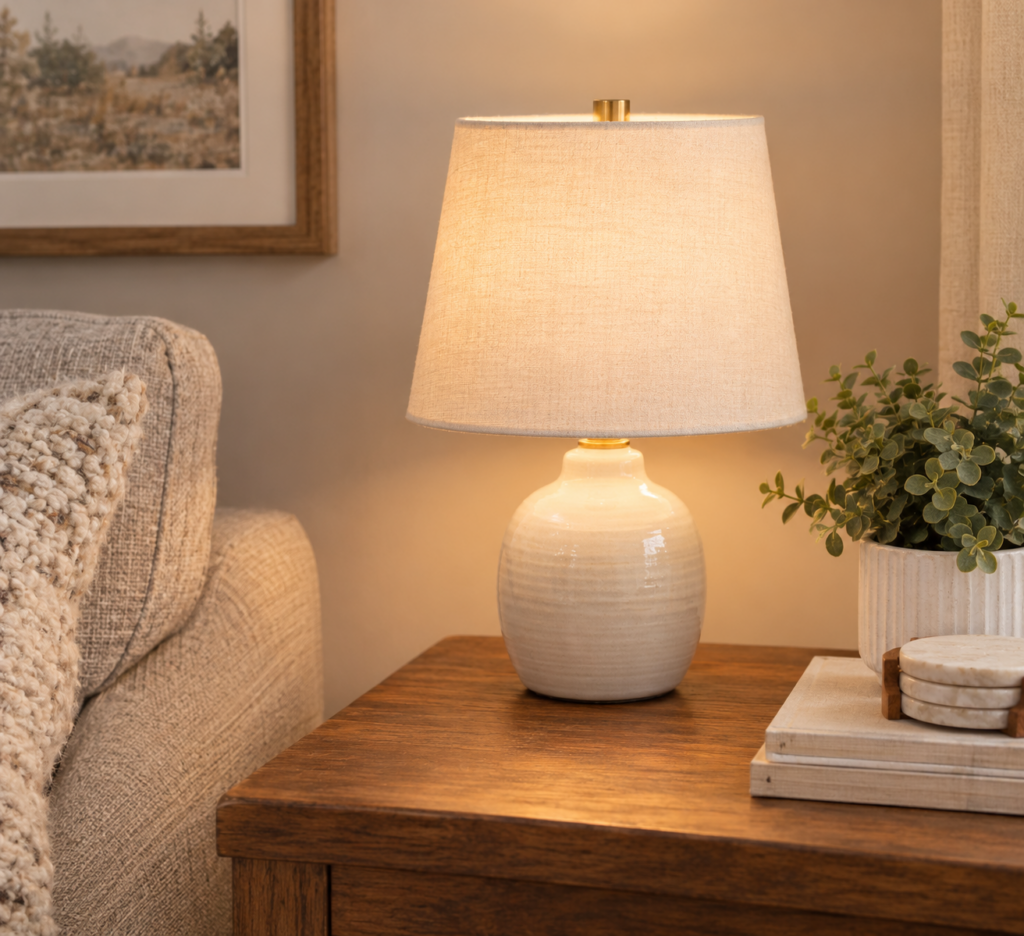
A small lamp changes a room through proportion, light direction, surface texture, and repeated details. The best choice begins with the furniture already in place, then responds to its scale and materials without copying them exactly. Before buying anything, measure the table or console, check the lamp from seated eye level, and inspect the room after dark. That review will show whether the next adjustment involves a shade, bulb, base, or surrounding object.